Beyond the Horizon: Why America''s Maritime Decline Threatens National Security

Emily Rodriguez
Cross-Border Trade Reporter
March 28, 2026
DATELINE: NA TRADE WIRE
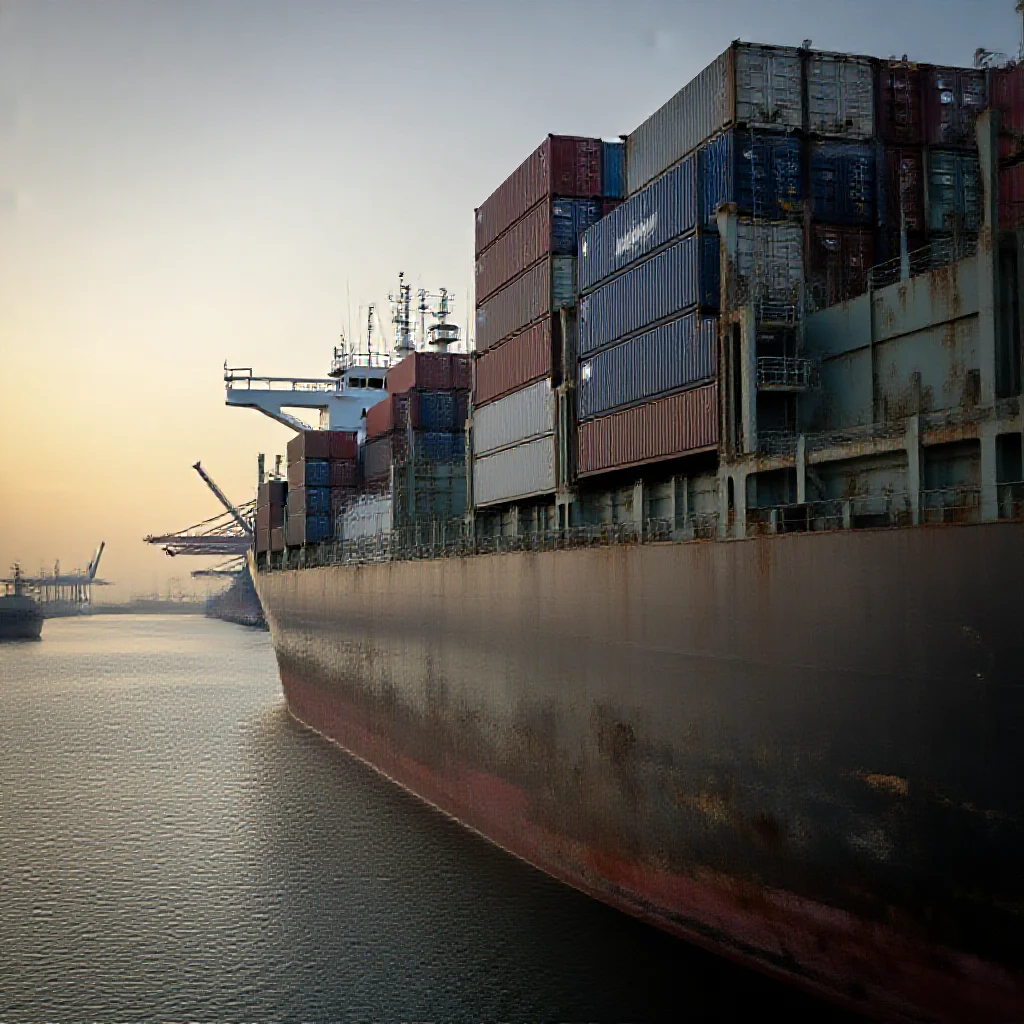
"The U.S. maritime system, once a global powerhouse, is in a state of strategic"
Beyond the Horizon: Why America's Maritime Decline Threatens National Security and Economic Sovereignty
Introduction: The Silent Crisis on America's Waterfront
The U.S. maritime industry supports over 650,000 jobs (Source 1: [Primary Data]). This economic figure exists in stark contrast to the system's underlying condition, which is characterized by multi-decade strategic atrophy. The decline is not isolated to a single sector but represents a compound failure impacting logistics, economics, and national defense. At the recent TPM25 conference in Long Beach, California, a panel of experts framed the challenge in unambiguous terms. The call by Lucia Cruz to "build a new maritime system" signals a recognition that incremental adjustments are insufficient for the scale of the problem.
The Triple Constraint: Ports, Shipyards, and People
The systemic decline manifests across three interdependent pillars: physical infrastructure, industrial capacity, and human capital.
Ports as Chokepoints: U.S. ports face constraints that extend beyond physical space. Inefficiencies in intermodal transfer—the movement of containers between ships, trucks, and trains—and lagging digitization create bottlenecks even when docks are available. These inefficiencies increase lead times and costs throughout domestic supply chains.
The Shipbuilding Desert: The U.S. accounts for less than 2% of the world's shipbuilding (Source 2: [Primary Data]). This statistic underscores a fundamental erosion of industrial capability. The strategic implications are acute when contrasted with naval ambitions. The U.S. Navy maintains a goal of a 350-ship fleet, yet current public shipyards possess a construction capacity of approximately 1.5 ships per year (Source 3: [Primary Data]). This mismatch reveals a critical vulnerability in the defense-industrial base, where recapitalization timelines are disconnected from strategic requirements.
The Graying Fleet: The human infrastructure is similarly strained. The average age of a U.S. mariner is over 46 (Source 4: [Primary Data]). This demographic trend is a symptom of systemic neglect, indicating failures in recruitment, training pipeline development, and the long-term attractiveness of maritime careers. The depletion of this skilled workforce represents a slow-motion crisis that cannot be rapidly reversed.
The Hidden Economic Logic: From Trade Enabler to Strategic Vulnerability
The maritime system's decay transforms it from an economic enabler into a vector of strategic risk.
The Cost of Dependence: The U.S.-flag fleet has declined from approximately 2,500 ships in the 1950s to under 200 today (Source 5: [Primary Data]). This collapse outsources control of strategic sealift and a vast majority of commercial logistics to foreign-flagged vessels and entities. In a crisis or conflict, this dependence creates immediate leverage points for adversaries, who could interdict or prioritize shipping contrary to U.S. interests.
The Jones Act Paradox: The Jones Act, a cabotage law requiring goods moved between U.S. ports to be carried on U.S.-built, -owned, -crewed, and -flagged vessels, was designed to protect the domestic maritime industry. Its current operation, however, functions within a withered ecosystem. The law may contribute to higher domestic shipping costs without ensuring a robust, competitive, and scalable domestic capacity, creating a complex trade-off between protection and vitality.
Beyond the Navy: Military power projection is reliant on sealift. The National Defense Reserve Fleet (NDRF) and the commercially viable, militarily useful segment of the merchant marine are essential for mobilizing equipment, fuel, and supplies for sustained operations. The degradation of the commercial maritime base directly undermines this sealift capability, creating a readiness gap that naval combatants alone cannot fill.
Building Anew, Not Just Repairing: The Case for Systemic Re-Industrialization
The statement by Ann Phillips that "We have a capacity issue" is an understatement. The challenge is not merely one of volume but of foundational structure. As Mike Roberts stated, "We have to build ships," a simple declaration that underscores the need for a reconstitution of heavy industrial capacity.
The logical deduction from current data indicates that without a coordinated, long-term national strategy, the trends will persist. The aging workforce will continue to retire without adequate replacement. The industrial base will remain unable to respond to naval or commercial demand surges. Port inefficiencies will be magnified by future supply chain disruptions.
Future trends analysis suggests that the convergence of geopolitical instability, climate-related disruptions to logistics, and the demands of new energy infrastructure will place unprecedented strain on maritime systems. A nation lacking sovereign control over the means of its maritime transport is a nation with compromised economic and security options. The call for a new system is, therefore, a call for re-industrialization—a deliberate, strategic effort to rebuild the physical and human capital required for economic sovereignty and resilient national defense. The market and industrial response will remain subcritical without sustained public and private investment aligned by clear policy.
Trade Metrics
Related Datasets
Q4 Cross-Border Logistics Report
PDF • 4.2 MB
Automotive Parts Supply Chain Index
CSV • 1.1 MB