U.S. Final Rules on Cross-Border Data Flow: Reshaping North America’s Cross-Border

Emily Rodriguez
Cross-Border Trade Reporter
April 30, 2026
DATELINE: NA TRADE WIRE
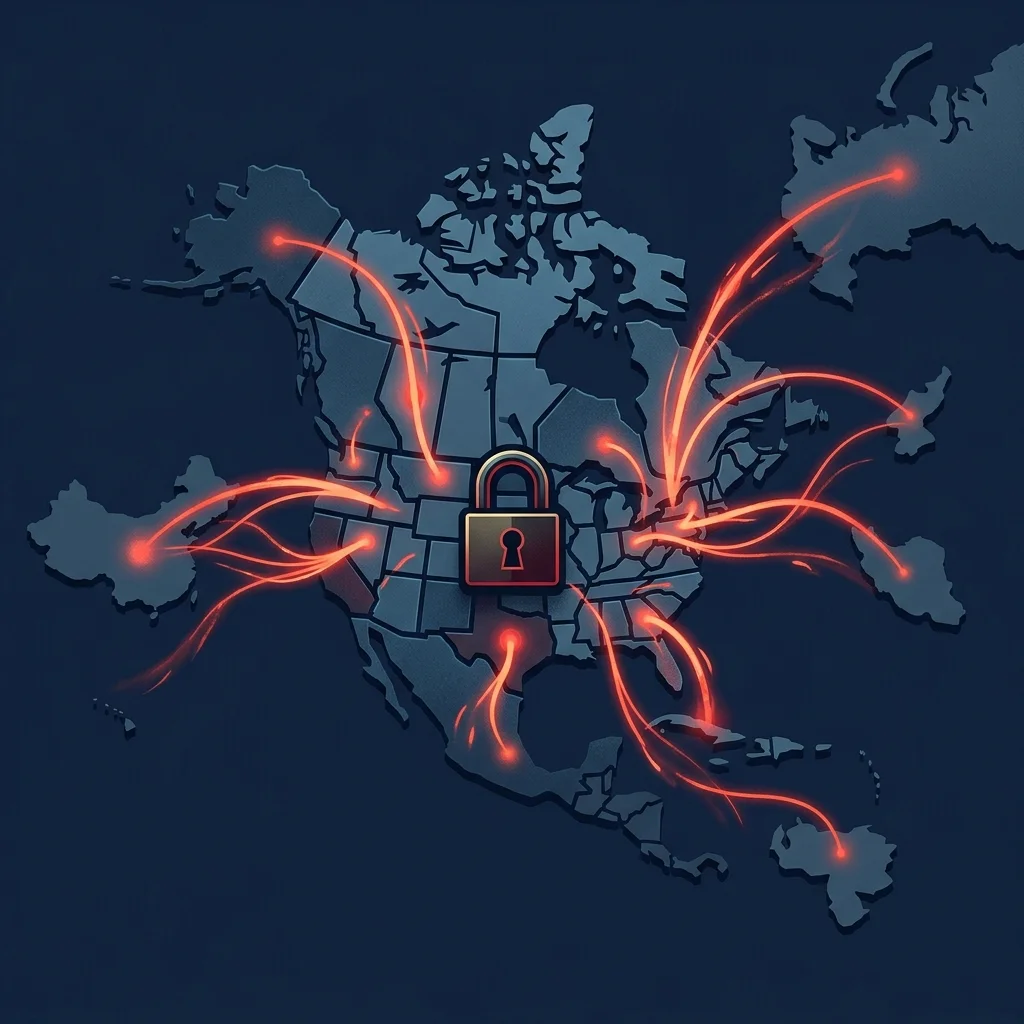
"The U.S. Final Rules on cross-border data flow, effective March 2025, create"
U.S. Final Rules on Cross-Border Data Flow: Reshaping North America’s Cross-Border Business and Tech Supply Chains
March 2025 — A new regulatory architecture governing the cross-border transfer of sensitive data from the United States to six designated countries of concern will take effect on March 27, 2025. The Final Rules, issued by the Department of Justice on December 27, 2024, represent the first comprehensive U.S. framework specifically targeting bulk sensitive personal data and government-related data flows to China (including Hong Kong and Macau), Cuba, Iran, North Korea, Russia, and Venezuela (Source 1: [DOJ Final Rules, 2024]).
The implications for North American cross-border business operations extend well beyond compliance checklists. These rules compel corporations to fundamentally restructure data supply chains, rethink cloud storage geography, and renegotiate cross-border vendor relationships—or face legal exposure from transactions that were routine six months prior.
Why These Final Rules Are a First in U.S. History
The Final Rules originate from President Biden’s Executive Order issued on February 28, 2024, which directed the DOJ to address "the national security risks posed by the transfer of bulk sensitive personal data to countries of concern" (Source 2: [Executive Order, Feb 2024]). The timeline of regulatory development was compressed: the Advanced Notice of Proposed Rulemaking and the Executive Order were concurrent on February 28, 2024; the Notice of Proposed Rulemaking followed on October 21, 2024; and the Final Rules were issued on December 27, 2024—a total rulemaking cycle of approximately ten months.
Unlike the Committee on Foreign Investment in the United States (CFIUS) regime, which governs foreign equity investments and control transactions, or export controls, which target military and dual-use technologies, the Final Rules directly regulate data itself as an asset class. The regulatory trigger is not the nature of the acquiring entity but the nature and volume of the data being transferred. Bulk sensitive personal data thresholds—covering health, biometric, genomic, financial, geolocation, and other categories—activate the prohibitions irrespective of whether the receiver is a commercial entity, research institution, or government actor.
The three-month implementation window—from December 27, 2024 to March 27, 2025—is unusually short for a regulatory framework of this scope. North American businesses face an abbreviated audit period during which they must inventory all cross-border data flows, identify counterparties with ties to countries of concern, and either terminate data sharing or build new compliance infrastructure.
The Hidden Economic Logic: Data as a Trade Asset Under Siege
The economic logic underlying the Final Rules is best understood as a regulatory arbitrage reversal. Prior to these rules, many multinational corporations structured their data operations to minimize costs—routing data processing, storage, and analytics through low-cost jurisdictions, including Hong Kong and mainland China, which offered inexpensive cloud services, favorable tax treatment, and less stringent privacy regulations. Under the Final Rules, this arbitrage is no longer viable: any data transfer to China (including Hong Kong and Macau) that meets bulk thresholds triggers prohibited transaction classification.
This creates a new cost-of-compliance premium for North America cross-border business. Firms face three strategic options:
- Full data localization: Store and process all sensitive data within the United States or non-restricted countries, incurring higher infrastructure and bandwidth costs.
- Alternative routing: Route data through intermediate jurisdictions not designated as countries of concern—such as Singapore, Japan, or Australia—but this introduces latency, additional compliance layers, and potential secondary exposure.
- Data minimization and disaggregation: Restructure data collection to fall below bulk thresholds, which may limit business intelligence and operational efficiency.
A particularly revealing element is the treatment of human genomic data. The Final Rules prohibit access to genomic data by covered persons from countries of concern, even in the context of research collaborations or clinical trials. Genomic data is non-replicable—each individual's genome is unique and cannot be regenerated if extracted or de-anonymized. The strategic bet is on protecting biotech intellectual property: U.S. pharmaceutical and biotechnology companies that outsource genomic sequencing or share raw genomic data with Chinese contract research organizations now face outright prohibition, not graduated licensing requirements.
Who Is a ‘Covered Person’? The Trap for Subsidiaries and Contractors
The Final Rules define "covered persons" through an expansive framework that extends beyond geographic boundaries. Covered persons include:
- Foreign governments of countries of concern
- Legal entities with their principal place of business in a country of concern
- Entities 50% or more owned by a country of concern government or entity
- Employees, contractors, and agents of the above entities
This definition creates a compliance minefield for multinational corporations with complex ownership structures. A U.S. corporation with a Canadian subsidiary that is 51% owned by a Chinese parent company qualifies as a covered person—even though the subsidiary operates entirely within Canada and has no physical presence in China (Source 3: [Clyde & Co analysis, 2025]).
The practical implication: a North American business that shares customer data with its Canadian-based, Chinese-owned subsidiary for marketing analysis may inadvertently engage in a prohibited transaction. The same logic applies to joint ventures, strategic partnerships, and vendor relationships where Chinese entities hold controlling stakes—even if the specific data processing occurs outside China.
Prohibited Transactions: Data Brokerage and Genomic Access Under the Microscope
The Final Rules enumerate specific transaction types that are per se prohibited—that is, no general license or exception applies. Two categories warrant particular attention:
Data brokerage—the sale, licensing, or otherwise commercial transfer of sensitive data—is outright prohibited when it involves a country of concern or covered person. This directly impacts third-party data aggregators that collect, package, and resell consumer data to market research firms, advertising networks, and analytics providers. For North American businesses that rely on data brokers to generate cross-border market intelligence, the prohibition eliminates a foundational input for international expansion strategies.
Human genomic data access—including raw sequencing data, unprocessed genetic samples, and phenotypic data linked to genetic profiles—is prohibited even when the transfer is for non-commercial purposes such as academic research or clinical trial data sharing. This provision targets the global biotechnology supply chain, where genomic data frequently crosses borders for analysis, comparison, and collaboration. A U.S. university collaborating with a Chinese research institution on cancer genomics must now verify that no raw genomic data crosses the jurisdictional boundary—or risk criminal and civil penalties.
Impact on Cloud Storage Geographies and Vendor Agreements
The Final Rules implicitly mandate a geographic reorientation of cloud infrastructure. Cloud service providers—Amazon Web Services, Microsoft Azure, Google Cloud—operate data centers globally, including in countries of concern. A North American company using a cloud provider that automatically replicates data across multiple regions, including China, may violate the Final Rules even if the primary processing occurs in the United States.
This necessitates contractual renegotiation of service-level agreements to specify geographic data residency, replication restrictions, and sub-processor restrictions. Cloud providers must now offer guarantees that data will not be routed through, stored in, or accessible from countries of concern—a requirement that may increase cloud service costs by 15-30% depending on the provider and region (Source 4: [Industry estimates, Q1 2025]).
Compliance Costs and Legal Exposure
The Final Rules carry significant enforcement consequences. Violations are subject to civil penalties under the International Emergency Economic Powers Act, with maximum penalties adjusted for inflation. Criminal penalties may apply for willful violations.
Estimated compliance costs for mid-to-large North American corporations range from $500,000 to $5 million in the first year alone, encompassing:
- Data flow mapping and classification audits
- Legal review of vendor and subsidiary contracts
- Implementation of data localization infrastructure
- Employee training on covered person identification
- Ongoing monitoring and reporting systems
For smaller businesses with cross-border operations—such as logistics firms, professional services providers, or technology startups—the fixed costs of compliance may prove prohibitive, potentially forcing market exit or restructuring of business models.
Forward-Looking Market Predictions
Three observable trends will emerge from the Final Rules:
First, the North American market for data localization services will expand significantly. Cloud providers, secure data centers, and encryption service providers in non-restricted jurisdictions will see increased demand from companies seeking alternative routing options.
Second, biotechnology and pharmaceutical M&A activity in North America will shift. Chinese entities acquiring U.S.-based genomic data platforms or contract research organizations faces new hurdles; conversely, U.S. firms may divest Chinese-held data assets to avoid classification as covered persons.
Third, contract renegotiation windows will narrow. Vendor agreements, data processing agreements, and joint venture contracts drafted before March 27, 2025, that contain unfavorable data routing provisions will require immediate renegotiation. Legal teams in technology, logistics, and financial services sectors should prioritize contract audits before the effective date.
The Final Rules represent not a temporary regulatory adjustment but a permanent structural change in how North American businesses treat data as a cross-border asset. Companies that treat compliance as a binary checklist item—rather than a strategic rethinking of data supply chains—will face legal exposure and operational disruption. Those that recalibrate now will absorb manageable costs; those that delay will confront cascading penalties as enforcement actions commence post-March 2025.
Trade Metrics
Related Datasets
Q4 Cross-Border Logistics Report
PDF • 4.2 MB
Automotive Parts Supply Chain Index
CSV • 1.1 MB