Navigating the New Normal: US-Canada Cross-Border Logistics Risk and Regulation

Emily Rodriguez
Cross-Border Trade Reporter
May 2, 2026
DATELINE: NA TRADE WIRE
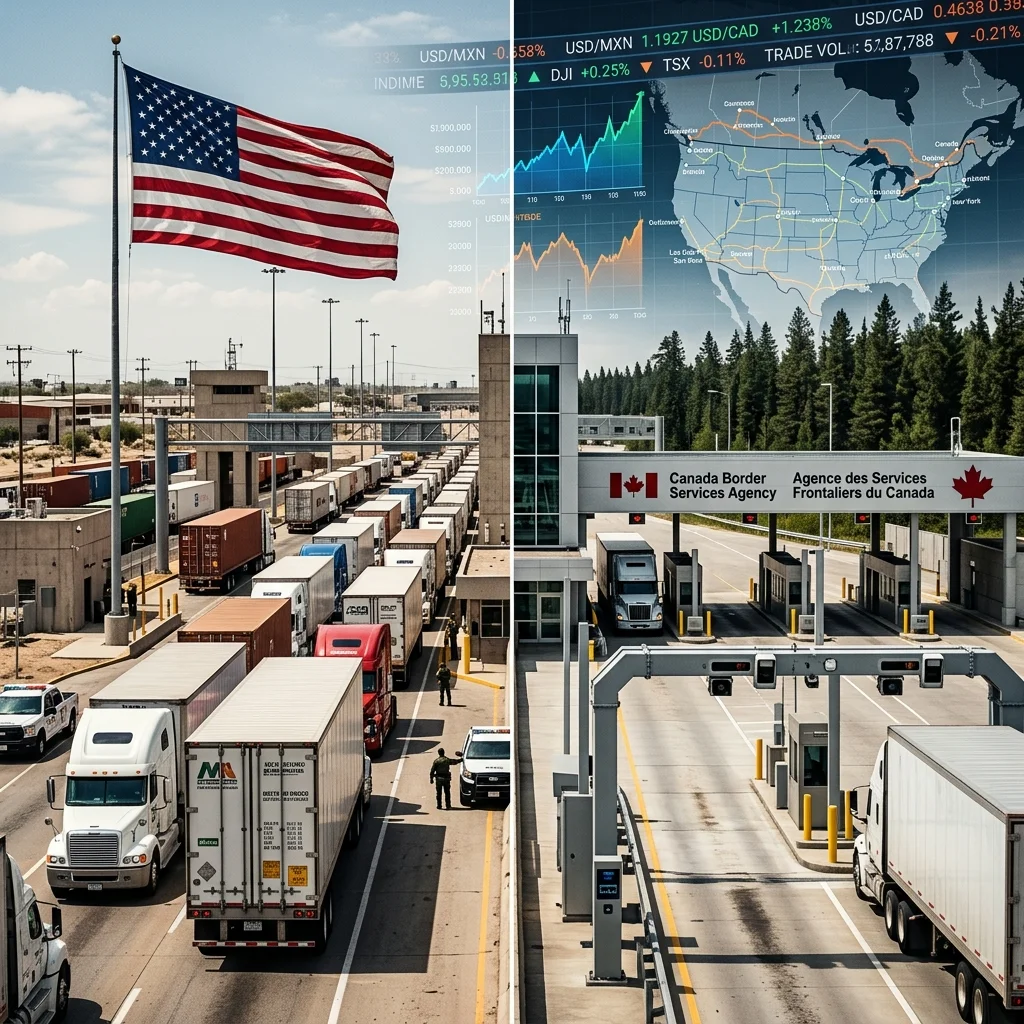
"As the October 2024 rollout of the CBSA Assessment and Revenue Management"
Navigating the New Normal: US-Canada Cross-Border Logistics Risk and Regulation Management
Publication Date: August 28, 2024
Introduction: The Hidden Economic Logic Behind Regulatory Divergence
The Canada Border Services Agency's (CBSA) Assessment and Revenue Management (CARM) initiative, now scheduled for external launch on October 21, 2024, represents a permanent structural shift in how duties and taxes are managed along the US-Canada border (Source 1: CBSA Regulatory Timeline). After multiple delays—including the initial May 13, 2023 target—the system's implementation signals a fundamental reorientation of financial risk allocation in cross-border trade.
The core axis of regulatory divergence between the two trading partners rests on opposing economic philosophies. The United States relies on post-loss liability through Carmack Amendment rules, which can require carriers to pay the full cost of cargo loss. Canada, through CARM, moves toward pre-funding financial security, requiring importers to post capital before goods cross the border. This distinction reflects a deeper structural choice: the US prioritizes risk transfer through litigation and contractual allocation, while Canada demands risk assurance through upfront financial collateral.
This asymmetry creates a critical tension for importers and logistics providers: they must simultaneously navigate low liability limits in Canada ($2 per pound) and unlimited liability exposure in the US, all while CARM automates compliance enforcement with real-time data integration. The true economic impact lies not in procedural compliance but in the fundamental reshaping of supply chain finance and insurance strategy.
CARM: More Than a Customs System – A Financial Security Revolution
CARM's core requirement represents a dramatic departure from Canada's historical deferred payment model. Importers must now post either a 100% cash deposit with the CBSA or secure a Registered Payment Program (RPP) surety bond through an approved financial institution (Source 2: CBSA CARM Documentation). This requirement transforms customs compliance from a back-office accounting function into a working capital management decision.
"CARM is Happening – Get Ready Now." This directive, issued repeatedly by industry bodies and the CBSA, underscores the irreversible nature of the transition. Grant Goldsmith and Glenn Patton of Roanoke Insurance Group, which maintains bicoastal operations across the US and Canada, have emphasized that surety bonds are evolving from mere compliance instruments into critical working capital tools. The bond structure allows importers to preserve liquidity that would otherwise be trapped in cash deposits with the CBSA.
Smaller importers face disproportionate pressure. Companies with thin margins or seasonal cash flow cycles may find the 100% cash deposit requirement prohibitive. This creates a new market for specialist surety products designed for mid-market and small importers who lack the credit histories or balance sheets to secure traditional bonding facilities. The bond market, historically reactive to large corporate clients, must now develop underwriting models that assess trade volume volatility rather than simple credit scores.
Liability Asymmetry: The $2/lb Trap vs. Carmack's Unlimited Exposure
The liability mismatch between US and Canadian regimes creates a structural risk that many cross-border operators underappreciate. US Carmack Amendment rules can force carriers to pay the full replacement cost of cargo in the event of loss or damage, with no statutory limitation unless specifically negotiated in a written contract (Source 3: 49 U.S.C. § 14706, Carmack Amendment). In contrast, Canada limits motor carrier liability to $2 per pound under standard bill of lading terms, unless the shipper declares higher value and pays additional charges.
This asymmetry creates a dangerous false sense of security for shippers operating across the border. A cargo valued at $100,000 weighing 10,000 pounds would be subject to a $20,000 liability cap in Canada under default terms. The same cargo, moving under US Carmack rules, could expose the carrier to the full $100,000 value. When a shipment traverses both jurisdictions—as most cross-border freight does—the governing law and jurisdiction clauses in transportation contracts become the single most important risk allocation mechanism.
Roanoke Insurance Group's bicoastal positioning—with dedicated operations in both the US and Canada—provides evidence that insurers are actively structuring products to cover both regimes. However, the market observation is clear: importers consistently underestimate their border risk exposure, particularly for high-value, low-weight goods such as electronics, pharmaceuticals, and specialized machinery where the $2 per pound cap creates a severe valuation gap.
The Unseen Supply Chain Impact: Cash Flow and Insurance Strategy
CARM's financial security requirements interact with liability asymmetry to produce compound effects on supply chain finance. Importers who select the cash deposit route with CBSA must accept a direct reduction in working capital. For a company importing $10 million in duties annually, the 100% cash deposit requirement ties up the equivalent of 30-60 days of operating cash flow, depending on clearance cycles.
The alternative—securing an RPP surety bond—shifts the financial burden from the importer's balance sheet to the insurance and surety markets. This creates a structural dependency on the surety industry's underwriting capacity. If the market contracts or prices harden—as occurred during the 2008 financial crisis and again during COVID-19—importers may face either higher costs or reduced access to bonding facilities.
Importers, particularly those based in the US who may be less familiar with Canadian regulatory requirements, should engage with customs brokers now to ensure preparedness for CARM's rollout. This engagement must extend beyond simple compliance checklists to include comprehensive financial modeling of cash flow impacts under both the bond and cash deposit scenarios.
The insurance implications are equally significant. Traditional cargo insurance policies often exclude or limit coverage for duty and tax exposure. CARM creates a new insurable risk: the importer's obligation to post and maintain financial security. Innovative insurers are beginning to offer products that integrate bonded financial security with cargo liability coverage, recognizing that the two risk pools are increasingly interdependent in the cross-border environment.
USMCA as a Framework for Convergence
The United States-Mexico-Canada Agreement provides a structural framework for North American trade but does not harmonize regulatory approaches to customs financial security. The USMCA's rules of origin provisions, de minimis thresholds, and customs cooperation mechanisms operate independently from domestic revenue collection systems like CARM.
This creates a paradox: trade flows are increasingly integrated under USMCA rules, while compliance and financial security requirements remain fragmented. The importer or logistics provider operating under USMCA must simultaneously satisfy US customs bond requirements, Canadian CARM financial security rules, and potentially Mexican customs guarantee obligations. Each jurisdiction demands different collateral structures, different timing, and different liability regimes.
The logical conclusion is that regulatory convergence—or at least mutual recognition—becomes an economic necessity over the medium term. The administrative burden of three separate financial security systems for a single cross-border supply chain produces deadweight costs that ultimately reduce the competitiveness of North American trade versus other global routes. Industry bodies and trade associations are likely to push for such mutual recognition in the 2025-2027 timeframe.
Market Predictions and Strategic Implications
Based on the structural analysis of CARM implementation and liability asymmetry, three market predictions emerge:
First, the Canadian surety bond market for RPP products will experience consolidation and product innovation within 12-24 months of CARM's go-live. Specialist underwriters who can assess trade volume risk accurately will capture market share from generalist bonding companies. The cash deposit option will become increasingly unattractive as interest rates remain elevated, making the opportunity cost of trapped capital significant.
Second, cross-border transportation contracts will undergo structural renegotiation. The current industry practice of applying $2 per pound Canadian limits to US-Canada movements will face legal challenges and commercial pressure. Shippers who understand the asymmetry will demand contractual bifurcation: Carmack terms for the US portion of the journey and negotiated higher limits for the Canadian segment.
Third, insurance products that combine surety bonding with cargo liability coverage will emerge as a distinct asset class within the North American logistics insurance market. Roanoke Insurance Group's existing bicoastal positioning positions it and similarly structured insurers to capture this convergence, but the market will attract new entrants seeking to underwrite the integrated risk profile.
The October 2024 CARM implementation date does not represent an endpoint. It marks the beginning of a permanent reconfiguration of how financial risk is allocated, priced, and managed in US-Canada cross-border trade. Importers, carriers, and brokers who treat CARM compliance as a one-time regulatory adjustment will find themselves structurally disadvantaged. Those who recognize the deeper economic logic—the shift from post-loss liability to pre-funding assurance, the asymmetry between Carmack and Canadian limits, and the cash flow implications of bonded versus cash security—will build supply chains resilient to the regulatory divergence that defines the new normal.
Trade Metrics
Related Datasets
Q4 Cross-Border Logistics Report
PDF • 4.2 MB
Automotive Parts Supply Chain Index
CSV • 1.1 MB