Beyond Tracking: How UPS’s Automated Package Sensors Are Reshaping Supply

Emily Rodriguez
Cross-Border Trade Reporter
April 23, 2026
DATELINE: NA TRADE WIRE
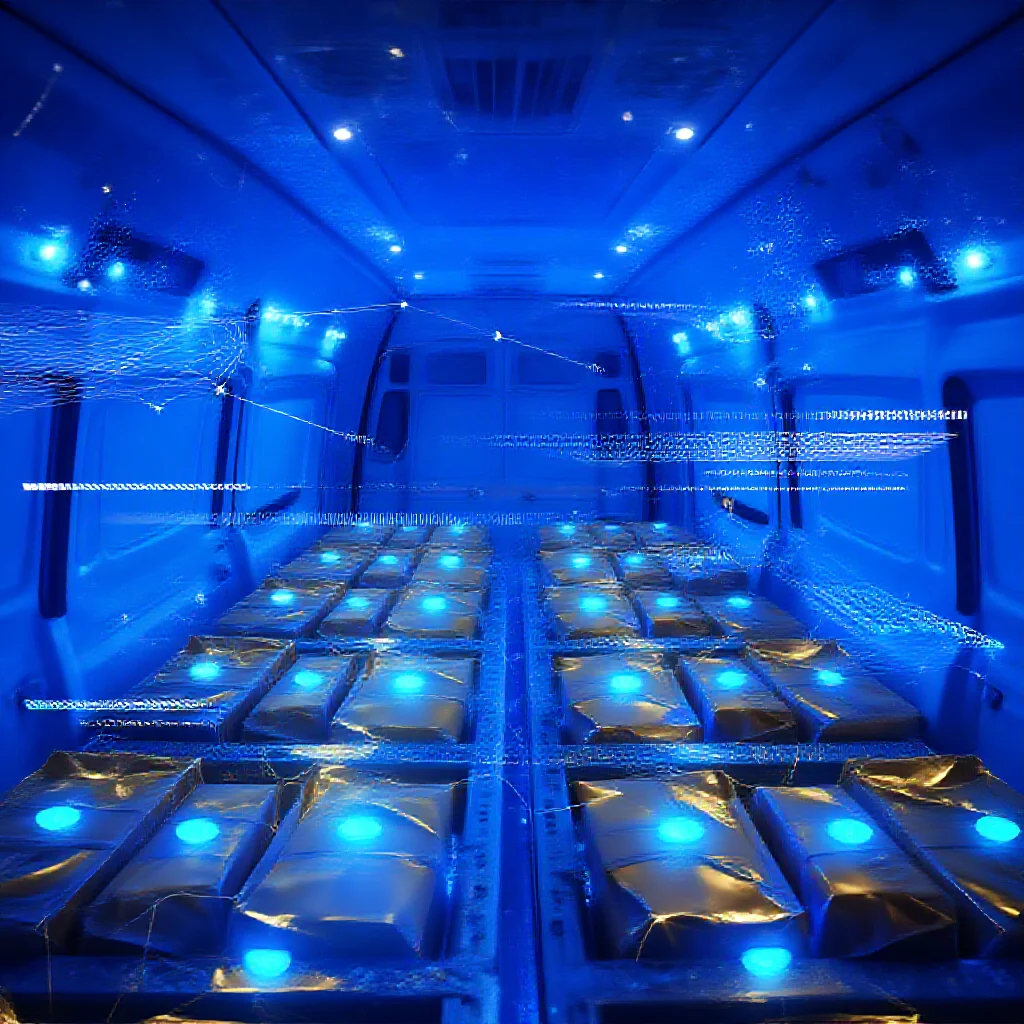
"UPS’s expansion of automated package sensors signals a strategic shift from"
Beyond Tracking: How UPS’s Automated Package Sensors Are Reshaping Supply Chain Intelligence
Introduction: The Quiet Revolution in Parcel Visibility
UPS is systematically expanding its deployment of automated package sensors, representing a capital allocation shift within the company’s $1 billion-plus annual technology investment budget. The strategic pivot moves the organization’s value proposition from answering “where is my package?” to answering “what is my package experiencing?”—a distinction with material economic consequences.
The core operational thesis is straightforward: granular sensor data unlocks latent economic value by reducing exception handling costs, improving route density calculations, and enabling demand forecasting at the individual package level. UPS processes approximately 25 million packages daily (Source 1: UPS Annual Report 2023). Each exception event—missed delivery attempt, damage claim, reroute request—generates direct costs averaging between $12 and $45 per incident across the industry (Source 2: Logistics Management Cost Analysis Database). A 10% reduction in exception frequency through proactive sensor-driven interventions would yield hundreds of millions in annual savings.
This article argues that the hidden return on investment from these sensors resides not in the tracking functionality itself, but in their capacity to feed machine learning models that predict delays, detect physical damage in transit, and trigger automated rerouting decisions in real time. The sensors transform package movement from a recorded historical dataset into a live, actionable intelligence stream.
From Barcode to Beacon: The Technology Stack Behind the Sensors
The automated package sensors being deployed are not simple RFID tags. They constitute multi-sensor nodes capturing location coordinates, ambient temperature, shock and vibration metrics, and humidity levels. This technical architecture enables condition-sensitive logistics for verticals requiring strict environmental compliance—healthcare pharmaceuticals requiring cold chain verification, perishable food shipments, and high-value electronics vulnerable to impact damage.
UPS is deploying these sensors at scale to create a dense mesh network. Each package becomes a data node reporting to both operational dashboards within UPS sorting hubs and customer-facing tracking application programming interfaces. The network topology functions as a distributed sensor array, where aggregate data from thousands of packages traveling similar routes enables pattern recognition that individual tracking cannot achieve.
According to FreightWaves, UPS’s official announcement confirmed the expansion scope involves integrating these sensors into existing automated sorting infrastructure, not as standalone devices attached after processing (Source 3: FreightWaves, UPS Sensor Deployment Announcement). This integration reduces marginal deployment costs while ensuring every package passing through major hubs generates baseline sensor data regardless of service tier selected by the shipper.
The technology stack comprises three layers: the physical sensor hardware with power management for transit durations up to 72 hours, the edge computing nodes at sorting facilities that process raw telemetry, and the cloud-based analytics platform that correlates sensor data with routing algorithms and customer notification systems.
The Economic Logic: Reducing Friction Costs in the Last Mile
Every missed delivery, unplanned reroute, or damage claim generates friction costs that compound across UPS’s network. Sensor data changes the cost structure by enabling proactive intervention before exceptions reach the customer endpoint.
Consider the economics of damage prevention. A package experiencing shock above 50G during sortation generates a real-time alert. The system can automatically divert that package to a quality-check station while still in the hub, before it enters linehaul or last-mile delivery. The cost of inspection is approximately $3 per package (Source 4: Parcel Industry Operational Benchmarking Study). The cost of processing a damage claim, including reverse logistics, inspection, and customer compensation, averages $28 to $65 per claim (Source 5: CSCMP Supply Chain Quarterly Claims Analysis). The sensor investment pays for itself when preventing approximately 1 damage claim per 10,000 packages, a threshold easily exceeded given baseline industry damage rates of 0.5% to 1.5% for standard parcels.
The long-term revenue implication is more significant. UPS can use aggregated sensor data to segment its pricing by actual transit conditions rather than estimated risk categories. High-value, time-sensitive shipments—pharmaceuticals, electronics, legal documents—can command premium pricing backed by verifiable sensor data proving condition compliance. This creates a new revenue stream independent of volume growth, shifting the revenue mix toward higher-margin services.
Furthermore, sensor data enables dynamic routing optimization at the individual package level. If sensors detect temperature anomalies in a truck trailer, the system can predict which packages are at risk and prioritize their delivery or divert them to climate-controlled storage. This reduces spoilage costs for shippers while allowing UPS to charge for ad-hoc intervention services.
Building a Data Moat: Competitive Implications for the Parcel Industry
Unlike competitors that rely on third-party integration layers to provide tracking visibility—stitching together carrier data from multiple sources—UPS’s proprietary sensor data creates a unique, non-replicable data asset. This asset directly improves the accuracy of UPS’s predictive AI models while simultaneously creating switching costs for shippers.
The data moat operates on three reinforcing dimensions. First, sensor data trains machine learning models that predict delivery windows with narrower confidence intervals than competitors using only scan-event data. Second, the historical dataset accumulated over millions of sensor-equipped packages creates a proprietary training corpus that cannot be licensed or purchased from third-party data brokers. Third, shippers integrating their inventory management systems with UPS’s sensor API face integration costs that make multi-carrier switching less attractive.
The competitive dynamics mirror Amazon’s logistics intelligence playbook. Amazon built its delivery network not merely to reduce shipping costs but to capture the data exhaust from every package movement, using that data to optimize inventory placement and demand forecasting. UPS is executing a parallel strategy, recognizing that control over parcel data translates into control over the logistics network’s economic efficiency.
This data moat raises the barrier to entry for smaller carriers and new entrants attempting to compete on predictive capabilities. A startup can lease trucks and hire drivers, but it cannot overnight accumulate the sensor-derived transit condition database spanning years of diverse package types, routes, and weather conditions that UPS is building.
Hidden Risks and Future Pathways
The sensor expansion strategy carries three material risks that require examination.
First, the data generated by millions of sensor-equipped packages creates privacy and security exposure. Package sensors collect location and environmental data that, when aggregated, could reveal sensitive business intelligence about shipper supply chain patterns—seasonal inventory movements, manufacturing facility throughput, customer distribution density. UPS must invest in data governance architecture that prevents sensor data leakage while maintaining its utility for network optimization.
Second, sensor deployment at scale increases the attack surface for cybersecurity threats. Each sensor node represents a potential entry point into UPS’s operational network. Compromised sensor data could feed false signals into routing algorithms, causing systematic delivery failures. UPS’s internal security expenditure allocation must increase proportionally with sensor deployment volume.
Third, the economic calculus assumes consistent sensor performance across diverse environmental conditions—temperature extremes, vibration, moisture. Sensor failure rates above 1% would erode the network density required for meaningful predictive modeling. Field testing data on sensor reliability under real operational conditions remains proprietary.
Looking forward, the trajectory suggests UPS will extend sensor capabilities beyond tracking toward predictive maintenance of its own sortation and delivery infrastructure. Sensor data correlating package impact events with specific conveyor segments or delivery truck suspension systems could predict equipment failure before it occurs, reducing downtime costs. The logical endpoint is a fully instrumented logistics network where every asset—package, vehicle, facility, employee handheld device—contributes real-time data to a unified operational intelligence platform.
For shippers and competitors, the implication is unambiguous: parcel logistics is transitioning from a transportation commodity to an information service. UPS’s sensor expansion represents the infrastructure investment required to capture that transition’s economic value. The companies that recognize this shift and adapt their supply chain strategies accordingly will face lower total logistics costs and higher delivery reliability. Those that ignore it will find themselves priced out of premium service tiers they cannot replicate.
Trade Metrics
Related Datasets
Q4 Cross-Border Logistics Report
PDF • 4.2 MB
Automotive Parts Supply Chain Index
CSV • 1.1 MB