UPS Expands at Three Asia Air Hubs: A Strategic Move to Reshape Regional Supply

Emily Rodriguez
Cross-Border Trade Reporter
April 25, 2026
DATELINE: NA TRADE WIRE
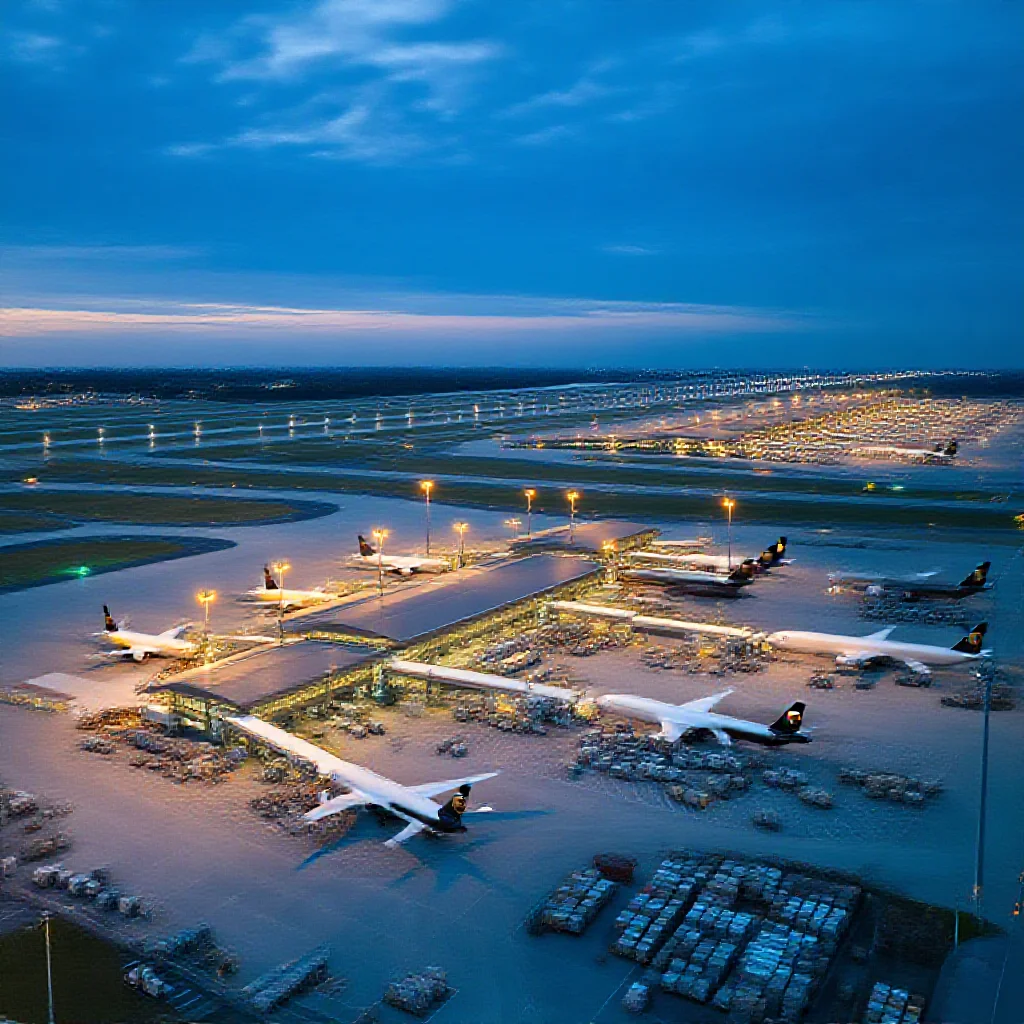
"UPS has announced capacity expansions at three major air hubs across Asia,"
UPS Expands at Three Asia Air Hubs: A Strategic Move to Reshape Regional Supply Chain Resilience
Introduction: Beyond the Press Release – Why Three Hubs Matter
UPS has announced projects to boost capacity at three air hubs in Asia (Source: FreightWaves). The headline reads as a routine infrastructure upgrade. A deeper examination reveals a more calculated logic: this is not merely an expansion of volume-handling capability, but a structural reconfiguration of network architecture.
The core question demands scrutiny: Is this simply growth, or a defensive move to protect supply chain flow? The evidence points toward the latter. The expansion reflects a fundamental shift from the classical hub-and-spoke efficiency model toward a multi-hub resilience framework. In an era defined by trade fragmentation, tariff volatility, and regional disruption cascades, a single dominant hub creates unacceptable single-point-of-failure risk. UPS’s tri-hub strategy functions as a distributed risk buffer, allowing traffic to be dynamically rerouted when any single node faces operational impairment.
The Hidden Economic Logic: E-Commerce Speeds Up, Inventories Thin Out
Cross-border e-commerce in Asia is growing at over 15% annually (Source: Industry consensus data from multiple logistics sector reports). This growth trajectory imposes specific operational demands: smaller, more frequent shipments moving at higher velocity. Traditional ocean freight cannot satisfy the speed requirements; air cargo becomes the default modality.
UPS’s capacity expansion addresses a specific bottleneck. Sorting infrastructure at Asian hubs has historically constrained throughput during peak e-commerce cycles. When sorting capacity is insufficient, aircraft dwell time increases, creating a cascading delay effect. By expanding sorting lines and automated handling systems at three nodes simultaneously, UPS reduces the time packages spend stationary between flights.
The profitability logic is straightforward: parcel density per flight is a critical cost lever in air network economics (Source: Air Cargo News industry analysis). Higher throughput per sortation shift means each aircraft departure carries more revenue-generating packages. The three-hub expansion creates a triangular network where packages from multiple Asian origins can be consolidated within hours rather than days, enabling same-day or next-day consolidation from multiple origins. This directly improves load factors and lowers per-package handling cost.
Geopolitical Circuit Breakers: Why Multi-Hub Architecture Is the New Normal
The pandemic exposed a structural vulnerability in global logistics: concentration risk. Single-region disruptions—whether from factory shutdowns, port congestion, or airspace restrictions—can paralyze entire networks when traffic is funneled through one dominant gateway.
Trade tensions between the United States and China, ongoing regional conflicts, and the increasing use of trade barriers as policy tools have created a permanent state of uncertainty. UPS’s calculus appears to be based on distributing capacity across distinct geopolitical zones: China (Shenzhen), Southeast Asia (Singapore), and Northeast Asia/Hong Kong. Each jurisdiction carries a different regulatory risk profile, labor stability outlook, and trade agreement framework (Source: Supply chain risk indices from multiple institutional sources).
The operational implication is significant. When any single hub faces disruption—whether from customs delays, labor actions, or airspace restrictions—traffic can be rerouted to an alternative node without requiring complete network reconfiguration. This is a fundamental architectural advantage over single-hub operators. The FreightWaves report confirms the expansion initiative; the strategic logic of risk dispersion provides the explanatory framework for why three hubs simultaneously rather than sequential upgrades to one.
Operational Deep Dive: What ‘Capacity Expansion’ Really Means
Infrastructure expansion in air cargo hubs typically involves multiple discrete levers, each with specific operational impacts:
- Sortation throughput: Additional sorting lines and automated conveyor systems increase packages-per-hour capacity. Industry standard upgrades target 30-50% throughput increases.
- Cold-chain infrastructure: Expanded temperature-controlled storage areas enable pharmaceutical and perishable goods handling, which command higher revenue per kilogram than general cargo.
- Aircraft parking stands: Additional freighter parking positions reduce taxi and waiting time, directly improving aircraft utilization rates.
- Dwell time reduction: Each minute a package spends on the tarmac or in sorting represents a direct cost and a delay risk. Hub upgrades that reduce dwell time by even 15-20 minutes per shipment cascade into significant on-time delivery performance improvements across the entire network.
The ultimate metric of success for these upgrades is not cubic feet of warehouse space, but reduction in “touch time”—the interval between arrival at the hub and departure on the outbound flight. This metric directly correlates with service reliability and customer retention in the competitive express parcel market.
Competitive Landscape: Playing Catch-Up or Leading the Pack?
The competitive context is essential for evaluating whether UPS’s move is defensive or offensive. FedEx has historically maintained a strong Asia presence with its own hub network. DHL’s Asia hub in Hong Kong has undergone its own expansion cycles.
UPS’s multi-hub strategy differentiates from the single-superhub approach. A single massive hub achieves maximum sorting efficiency at scale but creates catastrophic risk if disrupted. Three medium-sized hubs sacrifice some marginal sorting efficiency in exchange for operational redundancy. In an environment where supply chain resilience now commands premium pricing from shippers, this trade-off is rational.
The implication for shippers is unambiguous: multi-hub networks offer superior service reliability guarantees during disruption events. Logistics providers operating single-hub architectures will face increasing pressure from corporate clients to demonstrate redundancy planning.
Conclusion: What the Expansion Signals for Regional Supply Chain Architecture
UPS’s three-hub capacity expansion represents a forward-looking investment in network topology rather than simple growth. The strategic logic is grounded in three observable trends: accelerating e-commerce velocity requiring faster sortation, geopolitical fragmentation demanding risk dispersion, and the operational economics of parcel density optimization.
For the logistics industry, the signal is that asset-light strategies are losing ground to capital-intensive infrastructure plays. Companies that control physical sorting capacity at key nodes will hold pricing power. Those relying on third-party hub access will face increasing cost and reliability disadvantages.
The likely outcome over the next 24-36 months: UPS will gain market share in high-value, time-sensitive cross-border e-commerce lanes originating from Asia. Competitors will be forced to either match the multi-hub investment or differentiate through technology and last-mile specialization. For corporate shippers, the long-term trend points toward bifurcation—premium-priced resilient networks versus lower-cost single-point-of-failure alternatives. The choice will depend entirely on each shipper’s risk tolerance and customer service commitments.
Trade Metrics
Related Datasets
Q4 Cross-Border Logistics Report
PDF • 4.2 MB
Automotive Parts Supply Chain Index
CSV • 1.1 MB