Half the Freight, One Merger: The Stakes of a UP-NS Rail Consolidation

Emily Rodriguez
Cross-Border Trade Reporter
April 22, 2026
DATELINE: NA TRADE WIRE
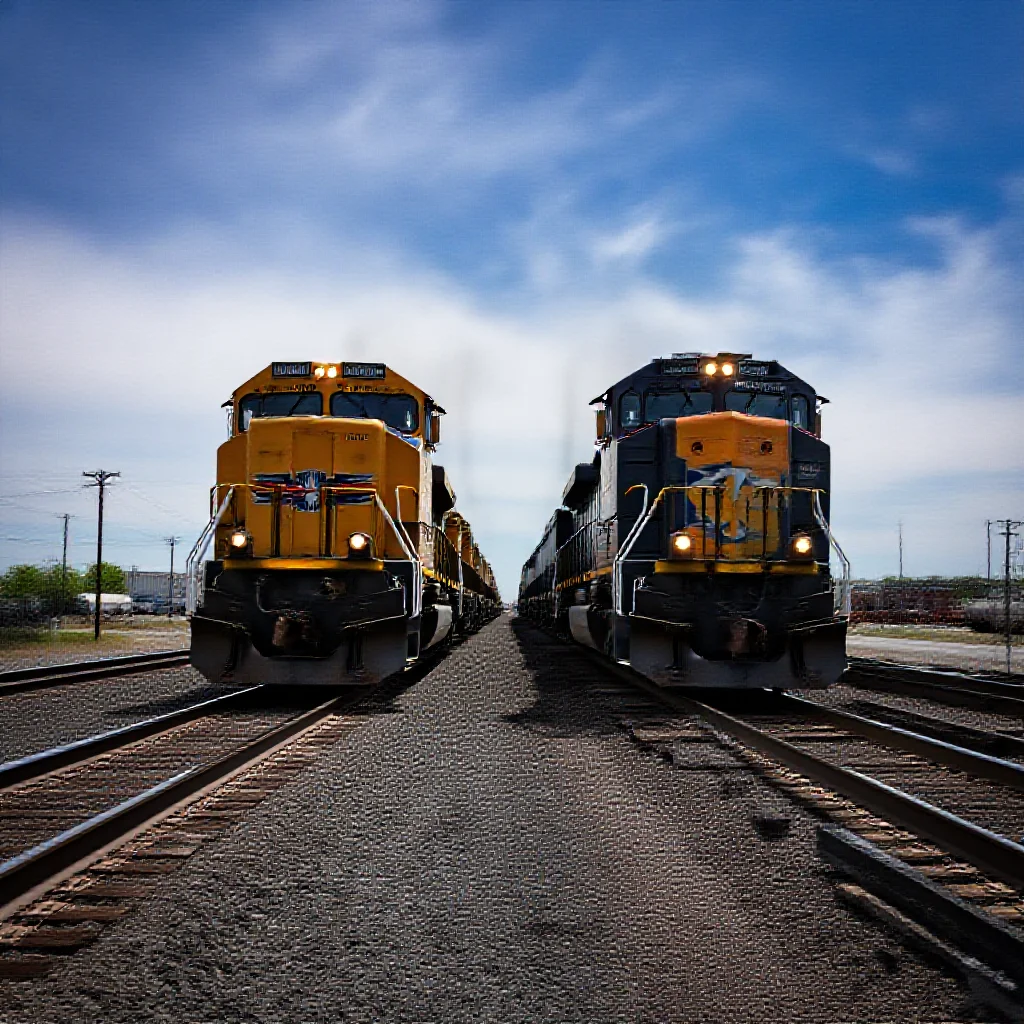
"BNSF Railway CEO Katie Farmer's stark warning that a Union Pacific and Norfolk"
Half the Freight, One Merger: The Stakes of a UP-NS Rail Consolidation
Opening Summary
A statement by BNSF Railway CEO Katie Farmer has crystallized a central concern in the North American rail industry. Farmer asserted that a merger between Union Pacific (UP) and Norfolk Southern (NS) would result in a single entity controlling half of all U.S. rail freight (Source 1: [Primary Data]). This declaration, made within discussions on industry consolidation, frames a potential corporate combination not merely as a business transaction but as an event with systemic market implications. Any such proposal would undergo a mandatory, multi-year review by the federal regulator, the Surface Transportation Board (STB). The analysis moves beyond the headline market share figure to examine the structural logic of such a merger, the rigorous regulatory evaluation it would face, and the long-term implications for supply chain architecture and competitive dynamics.The 50% Threshold: More Than a Soundbite
The claim of controlling half of all rail freight is a powerful rhetorical device that requires deconstruction. The figure represents an aggregate, obscuring the merger’s differential impact across freight segments. A combined UP-NS would likely exert dominant influence in specific, high-value corridors, particularly in intermodal traffic linking West Coast ports via UP’s network to NS’s eastern and southeastern distribution hubs. Its command over bulk commodities like coal and agricultural products would be more geographically concentrated but significant in key regions such as the Powder River Basin and the Midwest.
The strategic logic for a UP-NS combination lies less in overlapping competition and more in creating a contiguous, coast-to-coast network with single-line service across the southern tier of the United States. This contrasts with the existing duopoly structure, where UP competes with BNSF in the West and NS competes with CSX in the East. Historically, the industry has undergone successive waves of consolidation, from the creation of Conrail to its subsequent split between CSX and NS, and the merger of Burlington Northern and Santa Fe to form BNSF. A UP-NS merger would represent a further step, potentially reconfiguring the map from two primary western and eastern rivalries into a system where one railroad possesses a uniquely transcontinental southern route.
The Regulatory Gauntlet: Why the STB is the Ultimate Gatekeeper
The Surface Transportation Board (STB) possesses statutory authority to approve or reject major rail mergers. Its review process would be the definitive obstacle. Following a period of significant consolidation in the 1990s, the STB imposed stricter oversight rules known as the "Major Rail Consolidation Procedures" in 2001. These rules mandate that the burden of proof lies with the merging parties to demonstrate that a transaction is in the "public interest," a standard that extends beyond shareholder value to encompass impacts on competition, shippers, and the rail network itself.
The STB’s analysis would be a slow, evidence-intensive audit. It would require the applicants to provide exhaustive data modeling service changes, traffic rerouting, and competitive effects. The Board would scrutinize potential harm to "captive shippers"—those with access to only one railroad—and evaluate claims of efficiency gains and improved service with skepticism, demanding verifiable, quantifiable evidence. Past rulings, such as the conditions imposed on the CN-Kansas City Southern merger, establish a precedent for requiring extensive concessions, including trackage rights for competitors and oversight of service metrics. The regulatory review would likely span multiple years, during which market uncertainty would prevail.
The Hidden Ripple: Supply Chain Concentration Risk
The debate extends beyond immediate shipping rates to systemic risk within national logistics infrastructure. Reducing the number of major Class I railroads from six to five diminishes network redundancy. In the event of a service failure, cyberattack, or natural disaster affecting a merged UP-NS, alternative routing options for vast swaths of freight would be fewer, potentially amplifying regional or national supply chain disruptions. This concentration risk contradicts contemporary policy emphasis on building resilient, multi-pathway supply chains.
The long-term impact on physical infrastructure is ambiguous. Proponents argue a larger, more profitable entity would have greater capital for network investment. Critics posit that rationalization could lead to the strategic neglect of parallel or less-profitable lines, effectively removing capacity and creating new, persistent bottlenecks. From a competitor’s perspective, BNSF’s statement is a strategic maneuver. A UP-NS merger would pressure BNSF and CSX to respond, potentially seeking their own partnerships, accelerating a consolidation trend toward an oligopoly with fewer, larger players.
Beyond the Duopoly: The Future of Rail Competition
A potential UP-NS merger cannot be evaluated in a vacuum. It must be analyzed within the broader competitive landscape, where railroads face intense intermodal competition from the trucking industry. One rationale for merger is the creation of a more seamless, efficient single-line service to better compete with trucks over long distances. However, regulatory approval could come with conditions that fundamentally reshape the proposal. The STB could mandate the divestiture of key line segments to maintain competitive alternatives or require open access provisions unprecedented in U.S. rail history.
The central question is whether this potential merger signals an inevitable march toward mega-consolidation or if it will encounter a regulatory breaking point. The STB’s decision would set a precedent, either enabling a new era of combination or reaffirming a strict limit on market concentration. For shippers, the outcome dictates future negotiating leverage and service options. For the national economy, it influences the fundamental architecture of a critical freight network. The analysis concludes that while the business logic for a UP-NS combination is clear, the regulatory and systemic risks present a formidable counterforce, making any such proposal one of the most complex and consequential industrial examinations of the decade.
Trade Metrics
Related Datasets
Q4 Cross-Border Logistics Report
PDF • 4.2 MB
Automotive Parts Supply Chain Index
CSV • 1.1 MB