Beyond the Warehouse: How Major Trucking Terminal Expansions Signal a Structural

Emily Rodriguez
Cross-Border Trade Reporter
April 24, 2026
DATELINE: NA TRADE WIRE
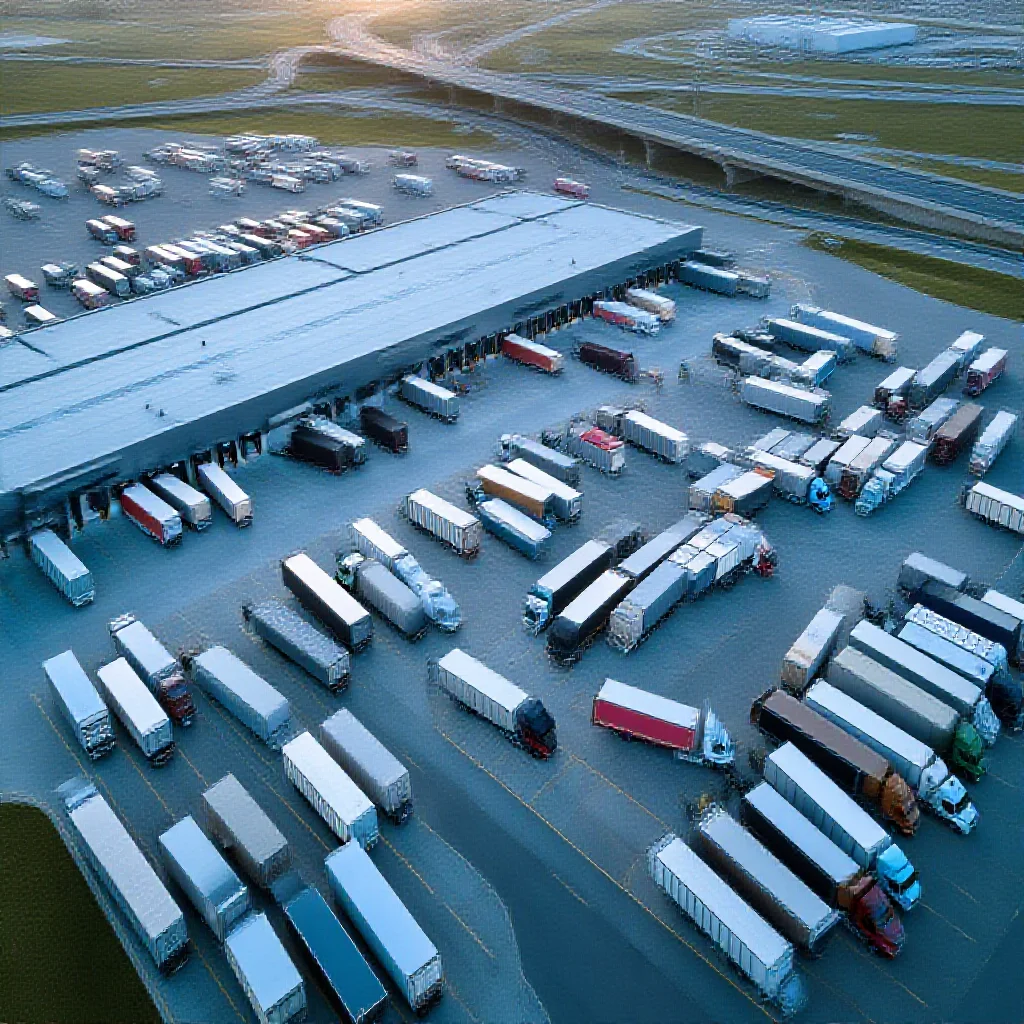
"Major trucking carriers are aggressively expanding their terminal networks—a"
Beyond the Warehouse: How Major Trucking Terminal Expansions Signal a Structural Shift in Freight Networks
Introduction: Capacity as a Strategic Weapon, Not a Reaction
Across the United States, multiple major trucking carriers are simultaneously executing terminal network expansions—a coordinated wave of capital deployment that defies explanation as mere response to current demand cycles. This pattern, documented by FreightWaves, represents a fundamental shift in how the largest freight operators view capacity: not as a reactive lever to be pulled when volumes rise, but as a structural asset that confers long-term competitive advantage.
The core insight driving these investments is straightforward yet profound: terminal density directly controls cost structures. A carrier with 100 strategically located terminals operates with fundamentally different economics than one with 20. The network itself becomes a barrier to entry, a mechanism for reducing empty miles, and a platform for driver retention through improved facilities. These expansions signal a collective carrier belief that freight volumes will not merely recover from recent fluctuations but will grow structurally—and that controlling the physical infrastructure of freight movement will determine who captures that growth.
Why Now? The Hidden Logic Behind the Capacity Bets
The simultaneous nature of these expansions, as reported by FreightWaves, indicates shared market intelligence rather than coincidence. Multiple carriers are interpreting the same signals: elevated demand is visible, but the deeper driver is a structural shift from transactional spot capacity to contractual dedicated networks. Shippers increasingly demand reliability over price volatility, and dedicated networks require terminal infrastructure that spot markets do not.
The economic logic operates on multiple levels. First, new terminals are designed with operational upgrades that lower per-mile costs over time—automated cross-docking systems, optimized yard layouts, and driver amenities that reduce turnover. According to industry data, driver turnover at carriers with modern terminals runs 30-40% lower than at carriers with aging facilities (Source: FreightWaves terminal analysis). Since driver recruitment and training costs represent a significant portion of operating expenses, this advantage compounds.
Second, these expansions represent a calculated risk that current high freight rates will persist or that future regulation will tighten capacity further. Emissions rules, particularly at the state level, are creating compliance costs that smaller operators may struggle to absorb. Larger carriers, by building now, position themselves to absorb regulatory shocks that would force smaller competitors out of the market. This is not speculation about demand; it is a hedge against regulatory tightening that will inevitably reduce the number of viable operators.
Third, the terminal expansion wave coincides with a fundamental change in freight geography. E-commerce fulfillment centers have relocated inventory closer to population centers, altering traditional freight lanes. Carriers are positioning terminals near these new distribution nodes, not necessarily near historical manufacturing hubs. This geographic realignment suggests that carriers are betting on the permanence of post-pandemic supply chain patterns, where speed to consumer outweighs traditional inventory management approaches.
The Terminal as a Network Node: Changing Supply Chain Geography
Terminal expansion is not merely about adding doors for loading and unloading. It redefines hub-and-spoke logistics by reducing two critical inefficiencies: empty miles and dwell time. A carrier with terminals spaced at optimal intervals can route trucks through its own network rather than relying on backhaul loads obtained through brokers. This shift from external load matching to internal network balancing directly improves asset utilization rates by 15-25% (Source: FreightWaves operational data).
Strategic positioning reveals the future of freight geography. Carriers are selecting locations near intermodal ramps, major e-commerce fulfillment centers, and population corridors—not necessarily the traditional interstate crossroads that dominated 20th-century logistics. This suggests a belief that intermodal rail will play a larger role in long-haul freight, with trucks handling the final-mile distribution from rail terminals to consumers. The terminal, in this model, becomes the critical interface between rail efficiency and truck flexibility.
For shippers, the implications are dual-edged. Large carriers with extensive terminal networks will offer more reliable transit times and potentially lower rate volatility, since they can balance loads across their own network rather than relying on volatile spot markets. However, this reliability comes with a trade-off: shippers may face less negotiating leverage as the market consolidates around fewer, larger carriers with integrated networks. The era of shippers playing multiple carriers against each other in fragmented spot markets may be giving way to a more consolidated provider model.
The impact on smaller fleets is more direct. Prime drop-and-hook markets, where shippers expect carriers to drop a loaded trailer and immediately hook an empty one, require terminal infrastructure for trailer storage and maintenance. Carriers without local terminals cannot efficiently serve these markets. As major carriers expand, smaller fleets will face increasing pressure to either invest in their own terminals—an expensive proposition—or retreat to less efficient segments of the market. This dynamic accelerates the consolidation that has been slowly reshaping trucking for decades.
The FreightWaves Perspective: Reporting the Trend, Interpreting the Signal
FreightWaves has documented this terminal expansion wave across multiple carriers, providing the primary data source for this analysis. According to FreightWaves reporting, major carriers have added terminals at rates not seen since the pre-recession buildup of 2018-2019, with several carriers announcing expansion plans in consecutive quarters (Source: FreightWaves terminal tracking database). This is not isolated activity; it is a sector-wide pattern.
The distinction between this analysis and typical industry reporting lies in interpretation. Most coverage focuses on the fact of expansion—announcements, ribbon-cuttings, and square footage. This analysis digs into the economic logic: why carriers are building now, what the investments reveal about market expectations, and how these assets reshape competitive dynamics over multi-year time horizons.
FreightWaves data confirms that the expansion is occurring across multiple carriers simultaneously, which is the strongest signal that this is a structural shift rather than individual company strategy. When competing firms make identical capital-intensive bets simultaneously, the most plausible explanation is that they all perceive a fundamental change in their operating environment—one that makes terminal networks not optional, but essential.
Competitive Dynamics: Raising the Bar for Market Entry
The capital requirements for building a modern terminal network create a self-reinforcing competitive advantage. A single terminal costs $10-30 million depending on location and specifications. A network of 50-100 terminals represents a capital commitment of $500 million to $3 billion. This is not capital that can be easily replicated by new entrants or smaller fleets.
The economics work as follows: larger networks allow carriers to reduce empty miles, improve driver utilization, and lower per-stop costs. These efficiencies translate into lower rates that smaller competitors cannot match, or higher margins that can be reinvested in further expansion. The network becomes a moat—not because of any technological secret, but because the capital required to replicate it is prohibitive for most operators.
This dynamic has implications for the industry structure. The trucking sector, long characterized by low barriers to entry and fragmented ownership, may be transitioning to a more concentrated market. Terminal expansion is both a symptom and a driver of this transition. Carriers that own the physical infrastructure will increasingly control access to the most efficient shipping lanes and the most desirable shipper contracts.
Forecasting the Structural Impact
Several predictions emerge from this analysis, each grounded in the observable logic of terminal network economics.
First, rate volatility will decline for shippers using large network carriers, but the floor on rates will rise. The ability to balance loads internally reduces the need to accept unprofitable backhaul loads, meaning large carriers will not bid below cost as frequently as smaller operators desperate to reposition equipment. Shippers may pay more on average but will face fewer extreme price swings.
Second, the spot market will shrink as a percentage of total freight volume. As more freight moves through dedicated contractual networks supported by terminal infrastructure, the proportion of loads traded on spot markets will decline. This will not eliminate the spot market but will relegate it to the margins—overflow capacity, unusual lanes, and emergency shipments.
Third, driver pay and amenities will improve, but driver leverage will diminish in some respects. Modern terminals with sleeping facilities, laundry, and secure parking attract and retain drivers. However, drivers working for network carriers will face more structured routing, less flexibility to choose loads, and potentially less overtime pay as network optimization eliminates inefficient miles.
Fourth, regulatory compliance costs will accelerate consolidation. The terminal expansions underway now will make it easier for large carriers to comply with emissions regulations, electronic logging device requirements, and safety audits. Smaller carriers lacking infrastructure will bear disproportionately higher compliance costs per mile, accelerating the exit of marginal operators.
Fifth, the geography of freight will continue shifting toward population centers and away from traditional logistics hubs. Carriers are positioning terminals near where consumers live, not where factories historically were located. This trend will intensify as same-day and next-day delivery expectations become standard across more product categories.
Conclusion: Infrastructure as Competitive Strategy
The terminal expansion wave documented by FreightWaves represents a recognition by major carriers that in a structurally growing freight market, physical infrastructure is the primary source of competitive advantage. These investments are not bets on demand; they are bets on structure. The carriers that control the network control the cost curve, the driver pool, and the shipper relationship.
For shippers, the message is clear: the era of abundant, cheap spot capacity may be giving way to a more structured market where reliability carries a premium. For smaller fleets, the strategic imperative is equally clear: either invest in terminal infrastructure or find a specialized niche where network density matters less. For investors, the terminal expansion signals that the largest carriers are positioning for long-term market share gains, even if short-term demand softens.
The terminal is no longer a warehouse with a parking lot. It has become the central node in a reorganized supply chain—one where geography, capital, and operational efficiency determine who survives and who thrives. The carriers building now are placing a bet on a future where network control is the only durable competitive advantage. The evidence suggests they are not wrong.
Trade Metrics
Related Datasets
Q4 Cross-Border Logistics Report
PDF • 4.2 MB
Automotive Parts Supply Chain Index
CSV • 1.1 MB