Beyond Brokerage: How Transfix''s Pivot to TMS Software Reveals the Future

Emily Rodriguez
Cross-Border Trade Reporter
March 24, 2026
DATELINE: NA TRADE WIRE
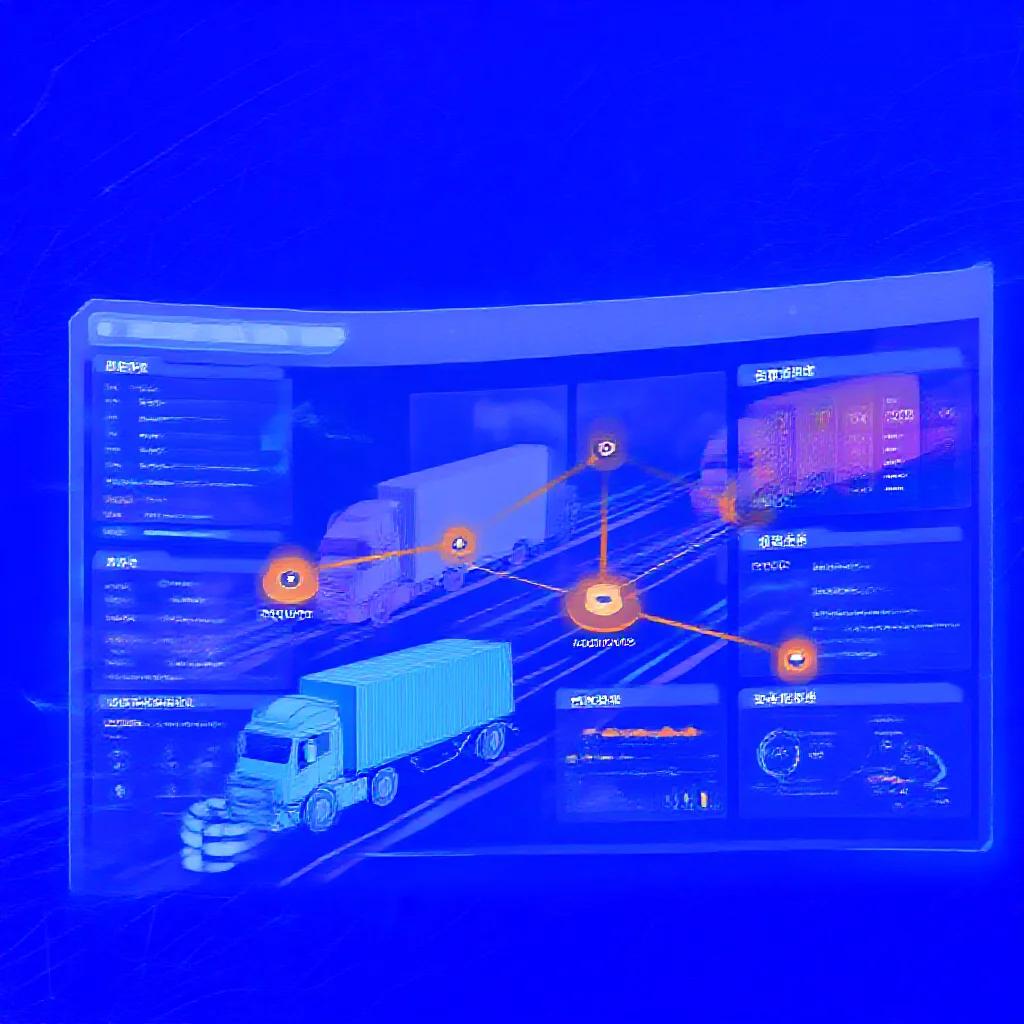
"Transfix's decisive 2023 exit from its core freight brokerage business to"
Beyond Brokerage: How Transfix's Pivot to TMS Software Reveals the Future of Freight Tech
Introduction: The End of an Era for 'Uber for Trucking'
Founded in 2013, Transfix emerged as a prominent player in the wave of digital freight brokerages that promised to disrupt a fragmented, analog industry through technology-driven load matching. A decade later, the company executed a decisive strategic reversal. In the fourth quarter of 2023, Transfit exited its core freight brokerage business entirely, concurrently reducing its workforce by approximately 20% (Source 1: [Primary Data]). This move followed the launch of its proprietary Transportation Management System (TMS), "Transfix TMS," earlier that year. The central analytical question is why a venture-backed company, having raised over $128.5 million from investors including New Enterprise Associates, G Squared, and Canvas Ventures (Source 1: [Primary Data]), would abandon its foundational revenue-generating model. The pivot signals a fundamental evolution in logistics technology, where value is migrating from transactional intermediation to intelligent, data-driven orchestration.
Deconstructing the Pivot: From Broker to Software Architect
The strategic shift represents a transition between two distinct business architectures. The freight brokerage model operates on transactional margins, buying and selling transportation capacity. In contrast, a Software-as-a-Service (SaaS) TMS provider generates recurring revenue through software licenses or subscriptions, offering tools for supply chain visibility, procurement, execution, and analytics.
The launch of "Transfix TMS" is the tangible manifestation of this shift. The platform is designed to move beyond simple load matching, providing shippers with a system to manage their entire transportation lifecycle. The accompanying 20% workforce reduction in Q4 2023 is analytically significant not merely as cost-cutting but as a structural realignment of human capital. This restructuring necessarily transitions talent emphasis from sales and brokerage operations to disciplines such as software engineering, product development, and customer success.
The Hidden Logic: Market Pressures and Venture Capital Realities
The decision to abandon brokerage is a calculated response to systemic market pressures. The digital brokerage space became intensely competitive and capital-intensive, characterized by low margins and high customer acquisition costs. This model proved particularly vulnerable to the cyclical volatility of freight rates, making predictable growth and profitability challenging.
From a venture capital perspective, the pivot aligns with a preference for scalable, high-margin software models. SaaS businesses command higher valuation multiples due to their predictable recurring revenue, deeper customer integration, and clearer paths to profitability. Investors likely catalyzed the shift toward an "asset-light" platform model that embeds itself into client operations, thereby increasing stickiness and reducing churn compared to a transactional brokerage relationship. This move can be interpreted as a rational optimization of the company's structure to meet return-on-investment thresholds in a tightened capital environment.
Deep Impact: Ripples Across the Supply Chain Ecosystem
Transfix's strategic exit from brokerage accelerates a bifurcation within the logistics technology sector. The market is segmenting into pure-play digital brokers competing on transactional efficiency and technology-enabled platform providers competing on operational integration and intelligence.
For shippers, the long-term implication is access to sophisticated TMS tools developed by a team with deep, hands-on brokerage experience. This could translate into more practical, market-informed software capabilities. For the competitive landscape, Transfix now enters the crowded TMS market not as a neutral vendor but as one with inherent carrier network insights, potentially differentiating its optimization algorithms. However, it also faces the challenge of convincing shippers to adopt its platform independently of its former brokerage services.
Conclusion: A Bellwether for Logistics Tech Maturation
The Transfix pivot is a bellwether for the maturation of the "Uber for Trucking" model. It demonstrates that technology's primary value in logistics may not be in disintermediating the transaction itself, but in providing the architectural control layer that makes the entire network more efficient and resilient.
This transition suggests a future where the most successful logistics tech firms are those that enable rather than directly execute transactions. It preempts a broader industry consolidation where capital will increasingly flow to platforms with scalable software economics. The move redefines competition in the TMS space, elevating the importance of real-world logistics data and algorithmic intelligence over generic workflow automation. The strategic success of this pivot will be measured by the company's ability to achieve sustainable growth, profitability, and market penetration under its new pure-play software identity.
Trade Metrics
Related Datasets
Q4 Cross-Border Logistics Report
PDF • 4.2 MB
Automotive Parts Supply Chain Index
CSV • 1.1 MB