Beyond the Driver''s Seat: How the Texas Autonomous Truck Trial Signals a

Emily Rodriguez
Cross-Border Trade Reporter
April 15, 2026
DATELINE: NA TRADE WIRE
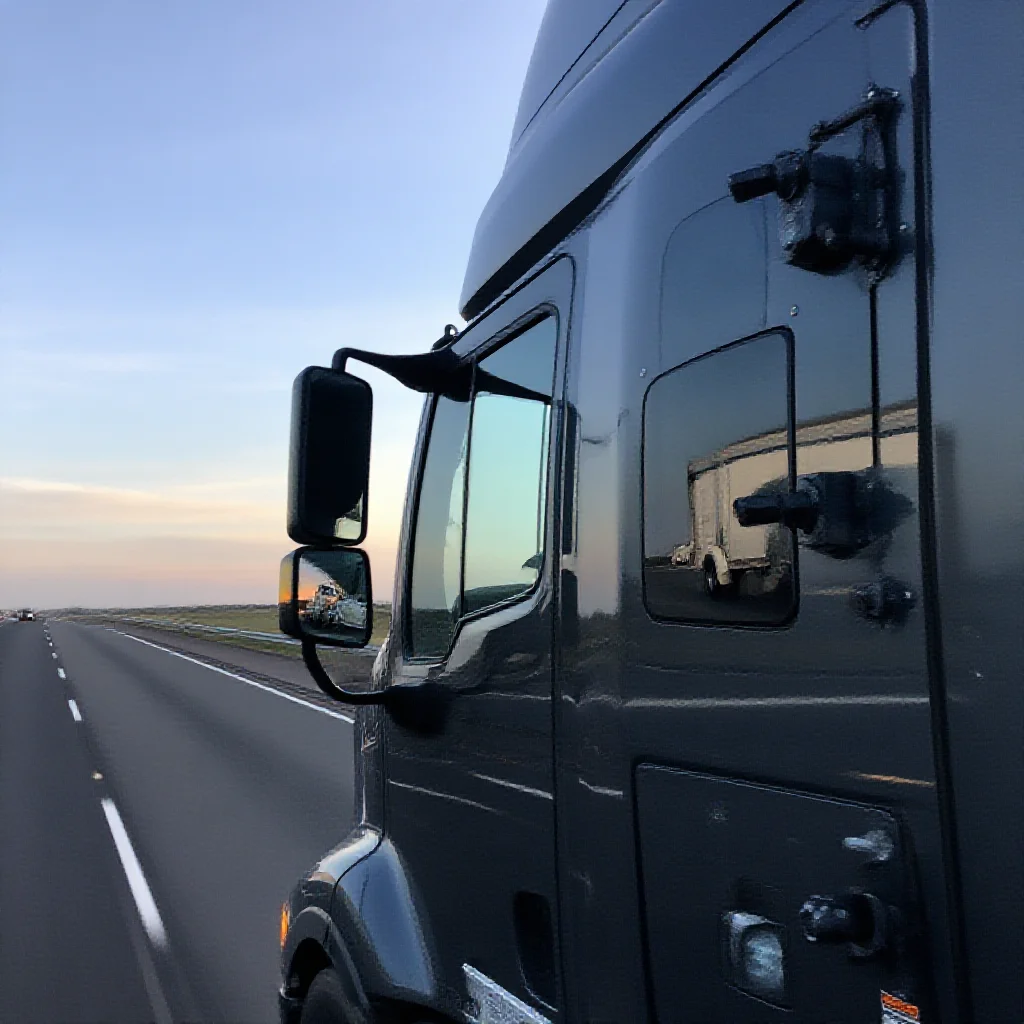
"The commercial trial of an autonomous International LT Series truck between"
Beyond the Driver's Seat: How the Texas Autonomous Truck Trial Signals a Supply Chain Reboot
A commercial trial of an autonomous International LT Series truck is now operational on Texas State Highway 130, running between a Ryder facility in Temple and a customer facility in Laredo (Source 1: [Primary Data]). This initiative, led by International Trucks, technology company PlusAI, and fleet manager Ryder System, Inc., is framed as a commercial freight run, distinct from a controlled test track demonstration (Source 2: [Primary Data]). While the presence of a safety driver and an engineer in the cab confirms the trial’s developmental stage, the structure of the partnership and the strategic selection of the route indicate a calculated move beyond technology validation toward supply chain integration.
The Temple-Laredo Run: A Strategic Corridor, Not a Random Route
The chosen route is a microcosm of high-value North American freight flows. Temple functions as a central Texas logistics hub, while Laredo is the busiest U.S.-Mexico land port of entry. This creates a repetitive, high-volume lane characterized by long, relatively straight highway segments—conditions deemed optimal for initial autonomous system deployment. The deliberate use of actual Ryder and customer facilities embeds the technology within an operational, revenue-sensitive context (Source 3: [Primary Data]). This contrasts sharply with closed-course testing, as it subjects the autonomous system to real-world variables: live traffic, shipping deadlines, and variable weather. The route selection is a statement of intent, targeting a corridor where automation’s value proposition—consistent uptime and optimized fuel efficiency—can be directly measured against the economics of human-driven freight.
The Partnership Matrix: De-risking Autonomy Through Vertical Alignment
The consortium’s composition reveals a blueprint for de-risking a capital-intensive technological transition. The partnership leverages vertical alignment: International Trucks (a brand of Navistar, itself part of TRATON GROUP) provides the OEM platform and manufacturing integration; PlusAI supplies the autonomous driving software stack; and Ryder provides the fleet management expertise, maintenance infrastructure, and direct access to freight customers (Source 4: [Primary Data], Source 5: [Primary Data]). This structure distributes development costs and technical risk. For the OEM, it is a path to product evolution and future sales. For the technology startup, it offers a validated path to market through an established industry player. For the fleet manager, it provides early operational insight and a potential claim on future efficiency gains. The trial is a component of a previously announced partnership aimed at developing technology for the North American market, indicating a staged, strategic approach beyond a singular experiment (Source 6: [Primary Data]).
The Human-Machine Handoff: Safety Drivers as Data Collectors, Not Just Supervisors
The mandated presence of a safety driver and an engineer is a temporary but critical phase in the validation lifecycle (Source 7: [Primary Data]). Their primary function evolves from active operation to intensive system monitoring. They are data acquisition agents, tasked with logging edge cases, supervising system performance under complex scenarios, and providing the real-world feedback necessary for iterative AI training. This phase operates as a necessary cost center, building the statistical confidence and regulatory compliance documentation required for eventual driver-out operations. The economic model of autonomy relies on the eventual elimination of this cost layer, but its current necessity underscores the incremental nature of the technology’s path to full commercialization.
Neutral Market and Industry Predictions
The long-term implications of this development trajectory extend beyond the cab. Successful validation on corridors like Temple-Laredo will incentivize the redesign of freight networks. Warehouse and distribution center location logic may shift, prioritizing endpoints optimized for autonomous transfer hubs rather than proximity to dense labor pools for drivers. Labor markets will experience a gradual polarization, with reduced demand for long-haul linehaul drivers but increased demand for local delivery drivers, logistics technicians, and remote monitoring operators. The partnership model demonstrated in Texas is likely to become standard, as the capital requirements and integration challenges of autonomy favor alliances between OEMs, tech firms, and large logistics providers. The trial represents less a sudden disruption and more the beginning of a systemic, multi-decade recalibration of North American supply chain infrastructure.
Trade Metrics
Related Datasets
Q4 Cross-Border Logistics Report
PDF • 4.2 MB
Automotive Parts Supply Chain Index
CSV • 1.1 MB