Beyond the Tracks: How a Single Industrial Customer Revives a Dormant South

Emily Rodriguez
Cross-Border Trade Reporter
April 20, 2026
DATELINE: NA TRADE WIRE
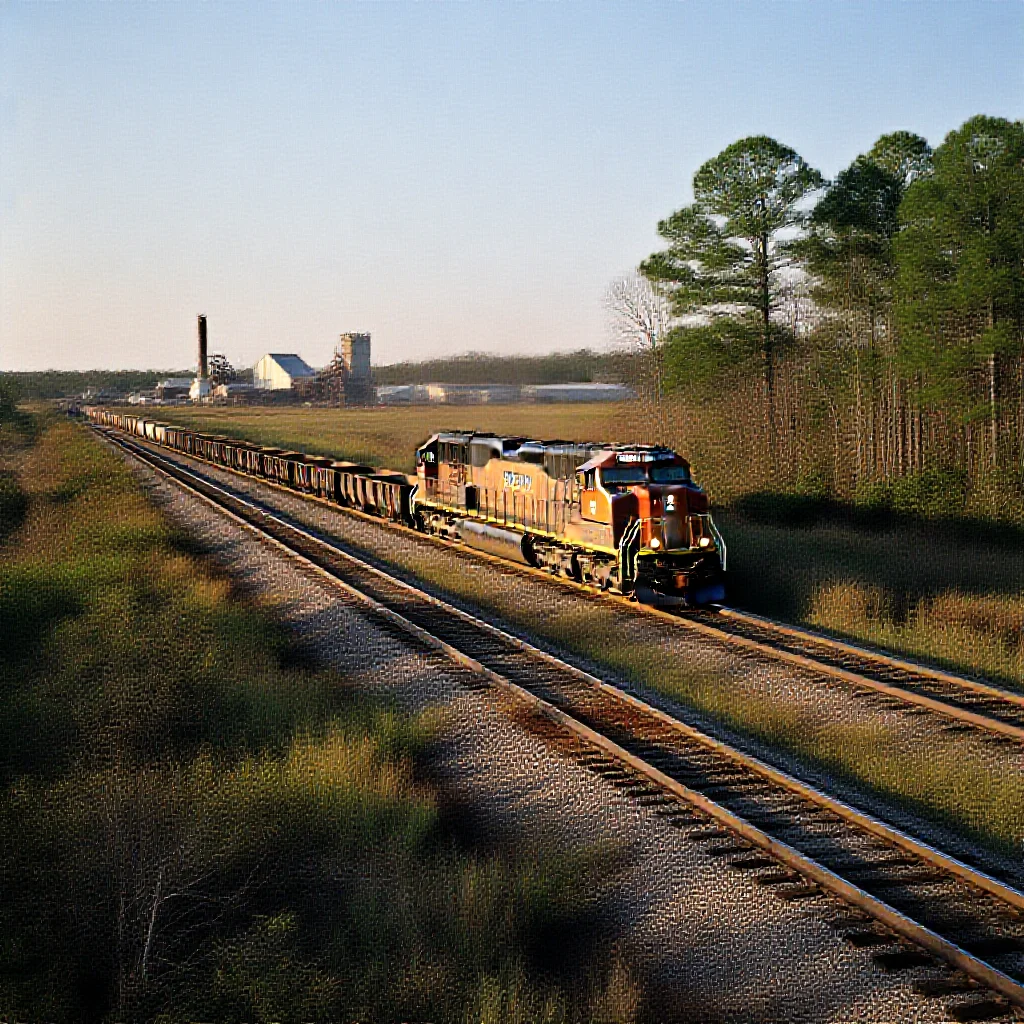
"After a 12-year hiatus, a South Carolina rail route is set to resume operations,"
Beyond the Tracks: How a Single Industrial Customer Revives a Dormant South Carolina Rail Line
Summary: A rail route in South Carolina is scheduled to resume operations in 2024, ending a 12-year hiatus. The revival is not driven by public transit needs or diversified freight, but by the specific logistics requirements of a single, new industrial client. This event provides a focused case study on the evolving economic model of regional rail infrastructure.
The Silent Decade: Why a Rail Line Went Dormant in 2012
Train service on this specific South Carolina route ceased in 2012 (Source 1: [Primary Data]). This shutdown occurred within a broader period of rail network rationalization, where operators consolidated assets and discontinued service on low-density branch lines. The economic logic at the time was clear: the aggregate volume of freight from multiple, smaller customers along the route fell below the threshold required to cover operational and maintenance costs. The decline of certain localized manufacturing or agricultural sectors likely contributed to the diminishing traffic. The line entered a state of dormancy, a condition distinct from formal abandonment. Dormant or "rail-banked" corridors are kept intact, preserving the right-of-way for potential future reactivation, precisely the scenario now unfolding.
The Catalyst: Unpacking the 'New Industrial Customer' Economy
The resumption of service is directly attributed to securing a new industrial customer (Source 1: [Primary Data]). The specific industry sector is not disclosed, but the economic rationale can be deduced. Industries that justify the capital expenditure of reviving dormant infrastructure typically involve high-volume, bulk commodities (e.g., plastics, chemicals, building materials) or heavy manufacturing components where transportation cost is a significant input factor. For such a client, rail offers a substantial cost advantage over trucking for long-haul movement of large quantities. The business case for the railroad operator hinges on a long-term shipping commitment from this anchor tenant, guaranteeing a baseline revenue stream that justifies the investment in track rehabilitation and locomotive deployment.
A New Model for Rail Viability: The Anchor Shipper Strategy
This reactivation underscores a strategic shift in short-line and regional rail economics. The traditional model relied on aggregating traffic from numerous small and medium-sized shippers along a corridor. The contemporary model, evidenced here, increasingly depends on securing one or two anchor shippers whose volume alone can sustain the line's operation. This alters the fundamental risk calculus for railroad operators. Investment becomes a function of a specific contract with a known client, rather than a speculative bet on general economic growth in a region. This pattern is observable in other regions where a single distribution center, ethanol plant, or port facility has precipitated the revival of a dormant branch line.
Broader Implications: Supply Chain Resilience and Regional Development
The restart has implications beyond the immediate customer-railroad relationship. It reintroduces a high-capacity, fuel-efficient transportation node into the regional supply chain. This can reduce heavy truck traffic on local roads, affecting long-term infrastructure wear and congestion. From an economic development perspective, the presence of active rail service is a powerful tool for attracting further industrial investment. The site selection process for capital-intensive industry consistently ranks rail access as a critical factor. The initial investment to rehabilitate the track, bridges, and signaling after a 12-year hiatus, while not detailed, represents a tangible private-sector investment in foundational infrastructure, potentially catalyzing a logistics-centric development cluster around the line's terminus.
Looking Down the Line: Sustainability and Future Prospects
The single-customer model presents both clarity and fragility. The line's near-term viability is transparently linked to the fortunes of one business. This concentration risk necessitates contingency planning, such as efforts to attract additional secondary customers to the corridor to diversify the revenue base. The long-term prospect for the route depends on its ability to evolve from a dedicated, point-to-point service into a multi-user segment of a broader network. Its sustainability will be measured by whether the initial anchor investment lowers the barrier to entry for other shippers, effectively returning the line to a more robust, multi-tenant economic model. The success of this project will be closely monitored by other short-line operators and regional economic planners as a template for infrastructure reactivation in an era of targeted industrial growth.
Trade Metrics
Related Datasets
Q4 Cross-Border Logistics Report
PDF • 4.2 MB
Automotive Parts Supply Chain Index
CSV • 1.1 MB