Port of Montreal Leadership Shakeup: Strategic Pivot or Sign of Deeper Supply

Emily Rodriguez
Cross-Border Trade Reporter
April 8, 2026
DATELINE: NA TRADE WIRE
"The sudden resignation of Julie Gascon as President and CEO of the Montreal"
Port of Montreal Leadership Shakeup: Strategic Pivot or Sign of Deeper Supply Chain Stress?
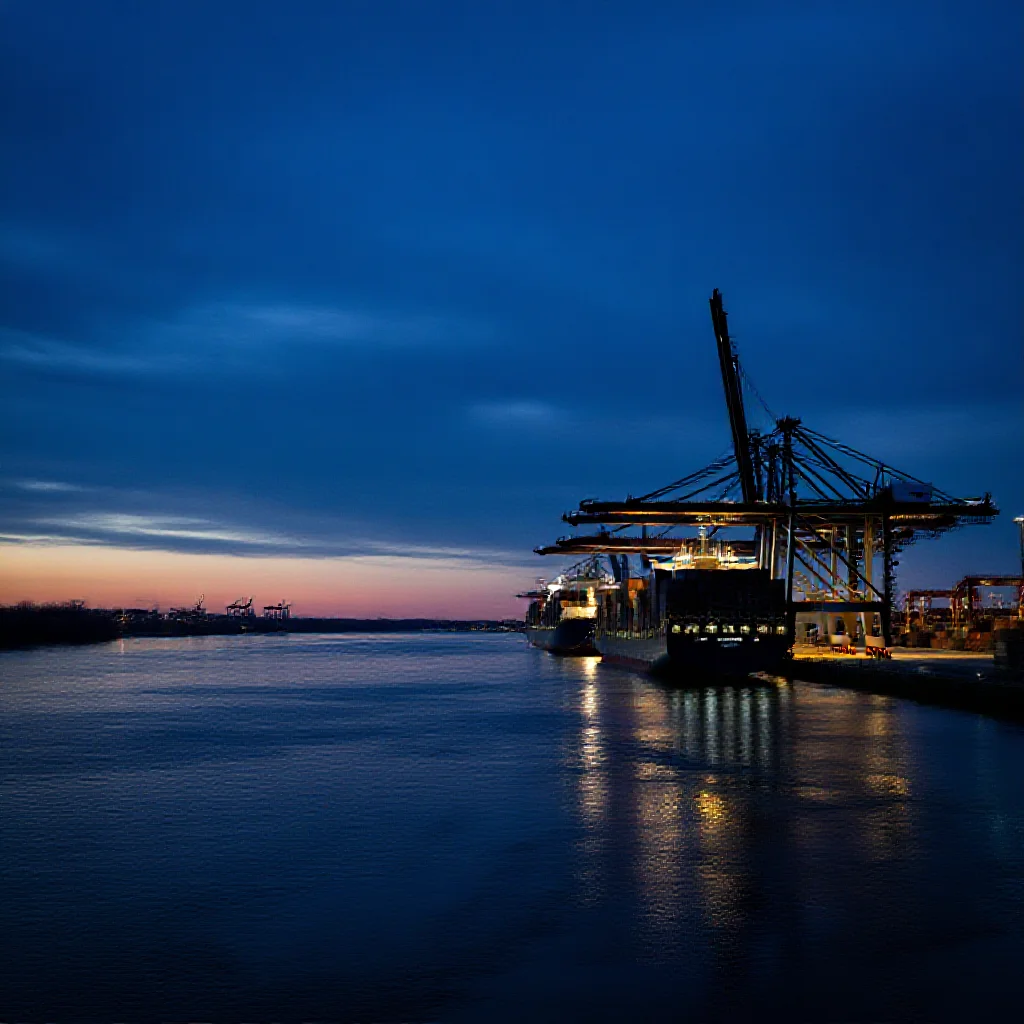
A dramatic, moody photograph of the Port of Montreal at dusk, with towering container cranes silhouetted against a deep blue and orange sky, their lights beginning to glow. The St. Lawrence River reflects the sky, with a large container ship moored at a terminal. The composition conveys scale, industry, and a sense of transition.
The Montreal Port Authority announced the immediate resignation of President and CEO Julie Gascon, marking an abrupt leadership transition at Canada’s second-largest port. The board of directors accepted the resignation, which is effective immediately, and appointed its current Chairman, Michel M. Lessard, as interim President and CEO. A search for a permanent successor will be launched. (Source 1: [Primary Data])
Gascon’s tenure lasted approximately two years. The announcement, devoid of explanatory detail beyond being a board decision, places the port under interim stewardship at a moment of significant pressure for global trade gateways.
The Sudden Departure: Parsing the Official Narrative
A formal headshot of Julie Gascon juxtaposed with a corporate portrait of Michel M. Lessard.
The structure of the announcement contains operational signals. An "effective immediately" departure following a two-year term diverges from a planned succession narrative. In maritime infrastructure, where projects and stakeholder relationships span decades, a two-year tenure is often insufficient to fully implement a strategic vision.
The appointment of Board Chairman Michel M. Lessard as interim CEO is a stabilizing maneuver. It indicates the board’s priority is continuity and the application of deep institutional knowledge during the transition. Lessard’s familiarity with the port’s long-term strategy, government interfaces, and board dynamics reduces immediate operational uncertainty but may also reflect a need for experienced oversight of ongoing complex initiatives.
Comparative analysis with executive transitions at other major North American ports suggests such immediate changes are atypical outside of performance crises, retirement schedules, or major strategic disagreements. The absence of a cited reason shifts analytical focus to the port’s operational and competitive context.
Beyond the Boardroom: The Port's Pivotal Role in a Stressed Supply Chain
An infographic map showing the Port of Montreal's trade routes into the North American heartland, highlighting competing ports.
The Port of Montreal occupies a critical but vulnerable node in North American supply chains. Its geographical position makes it a key gateway for containerized and bulk cargo destined for the U.S. Midwest and Eastern Canada. This advantage is tempered by seasonal ice constraints and intense competition.
Strategic pressures are mounting. U.S. East Coast ports, such as New York/New Jersey and Savannah, have aggressively invested in channel-deepening and terminal automation, directly competing for discretionary cargo. The port’s efficiency—measured in vessel turnaround times, rail and truck fluidity, and labor stability—directly impacts its competitiveness. Leadership stability is a core component of managing these multifaceted challenges, which include decade-long infrastructure projects like the Contrecoeur terminal expansion.
A two-year leadership window likely proved insufficient to navigate the post-pandemic normalization of supply chains, which exposed bottlenecks and shifted trade patterns. The executive change occurs as the port must demonstrate resilience and strategic clarity to shipping lines and beneficial cargo owners evaluating reliability.
The Deep Audit: Hidden Economic Logic Behind Executive Turnover
A detailed photograph of port operations—containers being unloaded, with a focus on the complex coordination between ship, crane, and truck.
Executive transitions at major infrastructure entities often precede or signal shifts in strategic capital allocation. The board’s next appointment will reveal its diagnosed priority: an operations-focused leader to drive efficiency and resolve bottlenecks, a global trade strategist to secure new alliances and cargo flows, or a government relations expert to navigate funding and regulatory hurdles for large-scale projects.
Unspoken challenges inherent to port management form the subtext of any leadership change. These include managing relationships with longshore labor unions, optimizing intermodal connections with national rail carriers CPKC and CN, and executing on environmental sustainability mandates while maintaining profitability. A change in leadership can indicate a board’s desire for a different approach to one or several of these persistent operational tensions.
The economic logic suggests the board is seeking a different profile to address what it perceives as the port’s primary challenge in the coming five-year horizon. The immediate resignation minimizes transition lag, allowing a new strategic direction to be formulated and implemented by a permanent successor.
The Interim Phase: Risks and Opportunities Under Stewardship
An aerial view of the Port of Montreal showing terminals, rail yards, and connecting infrastructure.
The interim leadership of Michel M. Lessard presents a calculated balance of risk and opportunity. The primary advantage is stability and the prevention of strategic drift. As board chairman, Lessard can ensure continuity in ongoing negotiations, stakeholder communications, and capital project oversight without a learning curve.
The corresponding risk is strategic inertia. An interim leader from within the board may be less inclined to make bold operational or directional decisions, potentially postponing necessary adjustments until a permanent CEO is installed. This could place the port at a disadvantage if competitive pressures intensify during the search period.
Critical projects now under steward management include the landmark Contrecoeur container terminal expansion, a multi-billion-dollar project critical for future capacity. Maintaining momentum on such initiatives, which require precise coordination with governments, investors, and environmental regulators, will be a key test of the interim arrangement. The board’s timeline for selecting a permanent successor will be closely monitored as an indicator of its urgency.
Conclusion: A Barometer for Broader Logistics Resilience
The immediate resignation of the Port of Montreal’s CEO is a significant operational event with implications beyond corporate governance. It serves as a barometer for the stresses facing mid-tier, strategically located ports in a reshuffling global logistics landscape.
Market and industry predictions hinge on the board’s subsequent actions. A prolonged search may signal internal strategic discord or a challenging candidate market, while a swift appointment would indicate a clear, pre-existing vision. The profile of the eventual successor—whether from within the maritime industry, adjacent logistics sectors, or public policy—will provide the clearest signal of the port’s intended strategic pivot.
The port’s performance metrics over the next 12-18 months—including throughput volume, vessel wait times, and announced partnerships—will be the ultimate validation of whether this leadership change was a routine transition or a necessary corrective action in response to deeper supply chain and competitive stresses.
Trade Metrics
Related Datasets
Q4 Cross-Border Logistics Report
PDF • 4.2 MB
Automotive Parts Supply Chain Index
CSV • 1.1 MB