Beyond the $34.6M Grant: How the Port of LA''s Infrastructure Upgrade Reshapes

Emily Rodriguez
Cross-Border Trade Reporter
April 20, 2026
DATELINE: NA TRADE WIRE
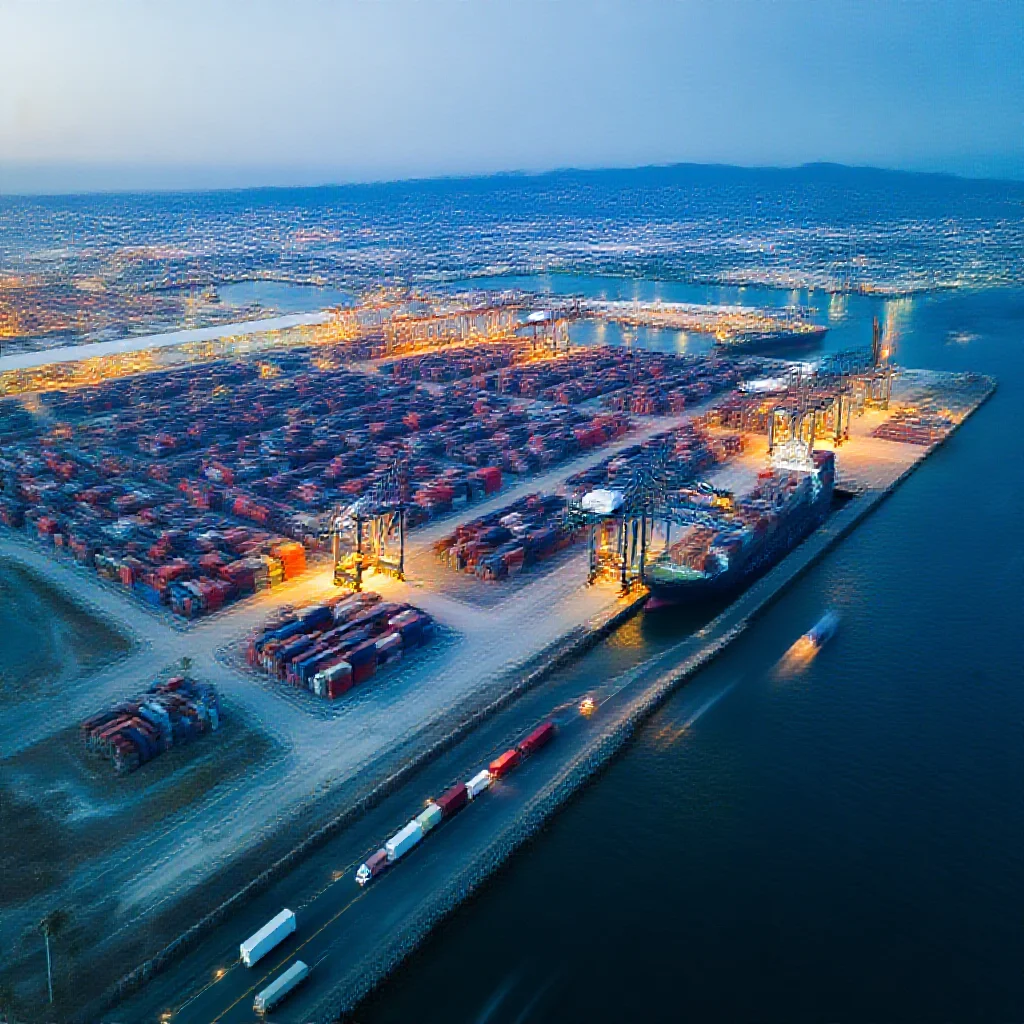
"A $34.6 million federal grant to modernize the Port of Los Angeles is more"
Beyond the $34.6M Grant: How the Port of LA's Infrastructure Upgrade Reshapes U.S. Supply Chain Resilience
The Port of Los Angeles, the busiest container port in the United States, has been awarded a $34.6 million federal grant for terminal modernization (Source 1: [Primary Data]). The funding, allocated through the U.S. Department of Transportation’s Port Infrastructure Development Program (PIDP), targets specific infrastructure at the Everport Container Terminal. The project scope includes constructing a new 125,000-square-foot warehouse, a new truck gate, and reconfiguring 1.5 miles of internal roadways (Source 1: [Primary Data]). The stated objectives are to increase cargo throughput, reduce truck turn times, and create an estimated 1,400 construction jobs (Source 1: [Primary Data]). This investment represents a targeted intervention into a critical national trade node, with implications extending far beyond the terminal’s boundaries.
The Strategic Calculus: Why a Single Terminal Grant is a National Supply Chain Bet
The allocation of a $34.6 million PIDP grant to a single terminal is a deliberate strategic bet. The Port of Los Angeles functions as the primary gateway for transpacific trade, handling a volume of containers that makes its operational efficiency a direct determinant of national economic fluidity. Modernizing the Everport Terminal is not a routine upgrade but a focused attempt to surgically improve one link in a chain historically prone to systemic failure, as evidenced by recent global disruptions.
Prioritizing this specific terminal over scattered, smaller improvements indicates a policy shift towards concentrated impact. The logic is economic: marginal gains in efficiency at the nation's most critical port node yield disproportionate benefits across the entire inland supply network. The job creation narrative, while a tangible political and economic output, is a secondary benefit. The primary return on investment is measured in systemic risk reduction and aggregate efficiency gains for the thousands of businesses reliant on this cargo flow.
Beyond Truck Turn Times: The Hidden Logic of Warehouse and Roadway Reconfiguration
The project’s components are designed to address specific, documented chokepoints. The new 125,000-square-foot warehouse is not merely added storage; it functions as a critical buffer. Its primary role is to decouple the processes of ship unloading and inland transportation, allowing for faster vessel turnaround and providing flexibility in managing cargo surges without immediate gridlock.
Similarly, the reconstruction of 1.5 miles of internal roadways is a micro-surgery approach to a macro-level problem. Drayage inefficiencies—the movement of containers from ship to truck to nearby rail or distribution centers—are a primary source of port congestion. Streamlining this internal circulation reduces the time trucks spend idling within the terminal complex. The ripple effect is quantifiable: minutes saved per truck turn compound into hours of driver and asset availability, which translates into days of reliability regained in cross-country logistics schedules.
The PIDP as a Policy Tool: Signaling a Shift from Reactive to Proactive Port Investment
This grant exemplifies the evolution of the Port Infrastructure Development Program from a source of general infrastructure funding to a vehicle for strategic, project-specific investment. The size and specificity of the award signal a move by the Maritime Administration (MARAD) beyond a regulatory body toward an active architect of supply chain resilience.
Analyzing recent PIDP allocations reveals a pattern of targeting demonstrable bottlenecks with large, transformative grants rather than dispersing smaller sums. This indicates a policy learning curve informed by post-pandemic supply chain analysis. The federal government is deploying capital not just to maintain infrastructure, but to actively reshape its operational logic, prioritizing throughput velocity and redundancy at key national hubs.
The Long-Term Impact: Reshoring, Nearshoring, and the Port's New Role
The long-term impact of this investment intersects with broader economic trends like reshoring and nearshoring. While these trends may alter the composition and origin of cargo, they do not diminish the Port of LA's strategic role. Increased throughput capacity and efficiency make the port a more viable and cost-effective gateway for both finished goods and intermediate components feeding domestic manufacturing.
The project can be viewed as infrastructure "future-proofing." It prepares the terminal for sustained high volumes and potentially larger vessels, ensuring the port remains competitive regardless of sourcing shifts. However, an analytical risk remains: while optimizing a mega-port addresses current fragility, it may also inadvertently deepen the nation's dependency on this single point of failure. The strategic calculus assumes that hardening this critical node is the most immediately effective mitigation, though a parallel strategy of geographic diversification in port capacity may be necessary for long-term resilience.
The $34.6 million grant to the Everport Terminal is a data point in a larger equation of national economic security. Its success will be measured not by the completion of a warehouse or roads, but by the marginal improvement in national supply chain predictability it yields. It establishes a precedent for targeted, performance-oriented federal investment in logistics infrastructure, with the Port of Los Angeles serving as the primary test case for this proactive approach.
Trade Metrics
Related Datasets
Q4 Cross-Border Logistics Report
PDF • 4.2 MB
Automotive Parts Supply Chain Index
CSV • 1.1 MB