ONE''s $3 Billion Fleet Bet: Decoding the Strategic Shift Behind 12 Methanol-Ready

Emily Rodriguez
Cross-Border Trade Reporter
April 20, 2026
DATELINE: NA TRADE WIRE
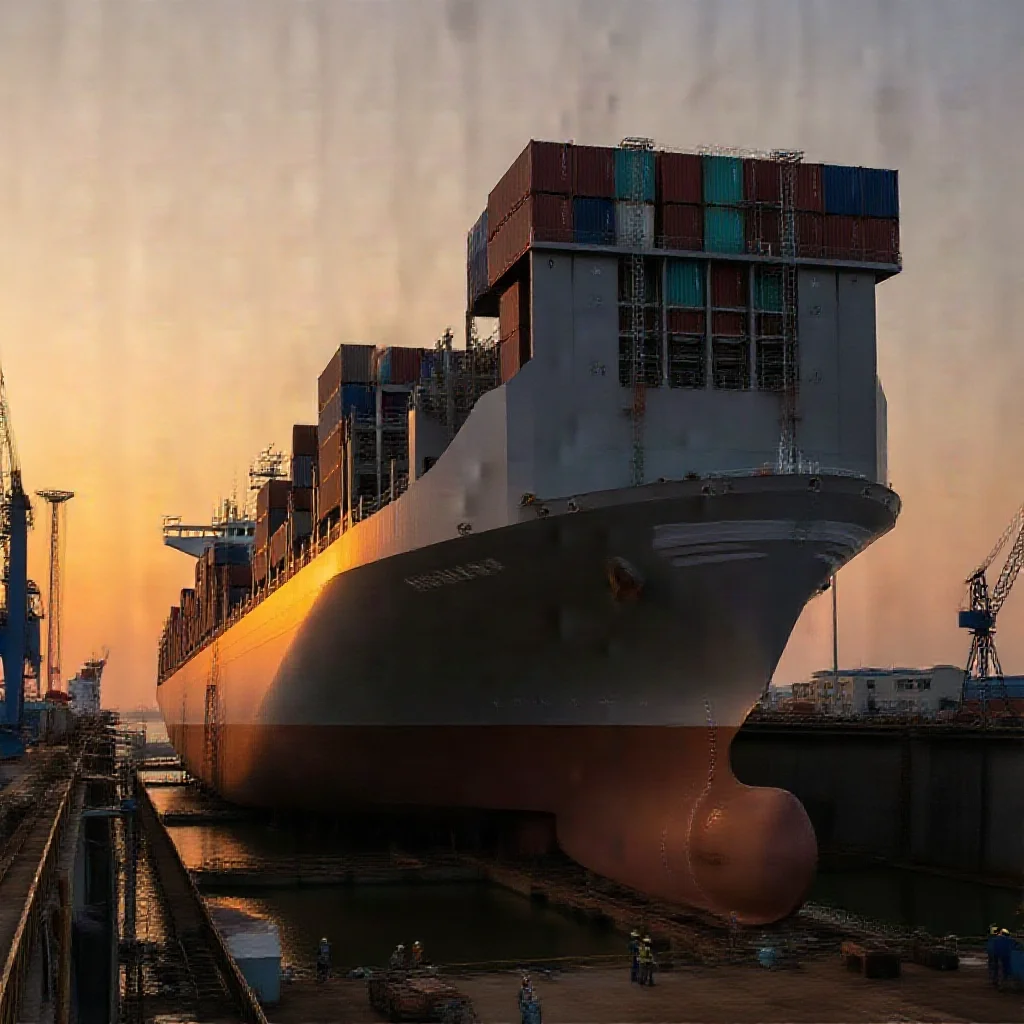
"Ocean Network Express (ONE) has placed a monumental $3 billion order for"
ONE's $3 Billion Fleet Bet: Decoding the Strategic Shift Behind 12 Methanol-Ready Megaships
Ocean Network Express (ONE) has confirmed an order for twelve 13,000-TEU containerships, representing a capital commitment of approximately $3 billion (Source 1: [Primary Data]). The vessels, to be constructed at China’s Jiangnan Shipyard and Yangzijiang Shipbuilding Group, are designated as methanol and ammonia-ready. Deliveries are phased from 2027 through 2029, adding 250,000 TEUs of capacity to the carrier’s operational fleet (Source 1: [Primary Data]).
Beyond the Headline: ONE's $3B Order as a Strategic Inflection Point
This order marks a departure from ONE’s post-merger strategy, which focused on integrating the fleets of its Japanese shareholders—K Line, MOL, and NYK. The investment signals a shift from consolidation to controlled growth. The dual strategic objectives are explicit: a net capacity increase of over 250,000 TEU and a foundational hedge against future marine fuel regulations. Industry analysts note this order size positions ONE to renew its fleet ahead of increasingly stringent environmental benchmarks without ceding market share. Verification of the order’s scale and specifications aligns with contemporaneous reports from maritime intelligence services, confirming its magnitude within the current newbuilding cycle.
The Fuel-Agnostic Hedge: Why 'Ready' is More Critical Than 'Dual-Fuel'
The "methanol and ammonia-ready" designation is a calculated specification. It requires the ships to be constructed with strengthened fuel tank spaces, compatible piping, and safety systems to facilitate a future conversion, without installing the actual dual-fuel engines at launch. This design philosophy prioritizes capital optionality. The economic logic is a risk calculus: paying a marginal premium during construction—estimated at 5-10% over conventional designs—is weighed against the prohibitive cost and operational downtime of retrofitting a standard vessel later, or the financial penalty of operating a non-compliant asset in a carbon-constrained market. Classification society guidelines, such as those from DNV and ABS, define "ready" as a set of preparatory design features, allowing owners to defer the final fuel choice until supply chains and regulatory costs become clearer. This approach mitigates the risk of a stranded asset should one alternative fuel gain dominance over another.
The 2027-2029 Delivery Window: A Calculated Rollout Amid Market Uncertainty
The phased delivery schedule from 2027 to 2029 is a critical component of the strategy. It avoids a sudden, market-disrupting capacity injection and aligns with anticipated waves of older tonnage scrappage. The timeline also corresponds with the expected maturation of green methanol and ammonia bunkering infrastructure in key ports. From a market cycle perspective, this schedule mitigates the risk of deploying a large, new fleet into a potential post-peak demand environment. The lead time itself is a function of the current shipyard backlog, particularly at major Chinese yards, which are filled with orders for similarly sized, future-fuel-capable vessels. The rollout allows ONE to manage capital expenditure flows and integrate the vessels in alignment with its long-term service network planning.
The Chinese Shipbuilding Nexus: Cost, Scale, and Geopolitical Implications
Awarding the entire contract to Jiangnan Shipyard and Yangzijiang Shipbuilding Group underscores the consolidated dominance of Chinese shipbuilders in the mid-sized megaship segment. This dominance is built on a combination of state-supported industrial policy, economies of scale, and advanced construction efficiency. The reported $3 billion price point for twelve advanced, future-fuel-ready vessels would likely be unattainable in other major shipbuilding regions, reflecting China's cost-competitive advantage. This reliance on Chinese yards for core fleet renewal has become a structural reality for global container shipping, with implications for supply chain resilience, technology transfer, and the geopolitical landscape of maritime infrastructure development. The order further solidifies the yard's orderbooks and expertise in constructing complex, next-generation vessels.
Conclusion: Positioning for a Multi-Scenario Future
Ocean Network Express’s investment is a multi-variable strategic move. It addresses capacity needs, fleet renewal cycles, and regulatory uncertainty through a single, capital-intensive program. The choice of a "fuel-ready" design over a committed dual-fuel system is a financially conservative stance, preserving optionality in a volatile technological landscape. The phased delivery and reliance on Chinese shipbuilding reflect pragmatic responses to market timing and capital efficiency. The ultimate impact will be determined by the state of global trade demand in the latter half of this decade and the effective carbon price imposed by mechanisms like the EU Emissions Trading System. This order positions ONE not for a single predicted future, but for flexibility across several possible ones.
Trade Metrics
Related Datasets
Q4 Cross-Border Logistics Report
PDF • 4.2 MB
Automotive Parts Supply Chain Index
CSV • 1.1 MB