Beyond the Storm: How Ocean Shipping Giants Are Reinventing Themselves Amid

Emily Rodriguez
Cross-Border Trade Reporter
March 23, 2026
DATELINE: NA TRADE WIRE
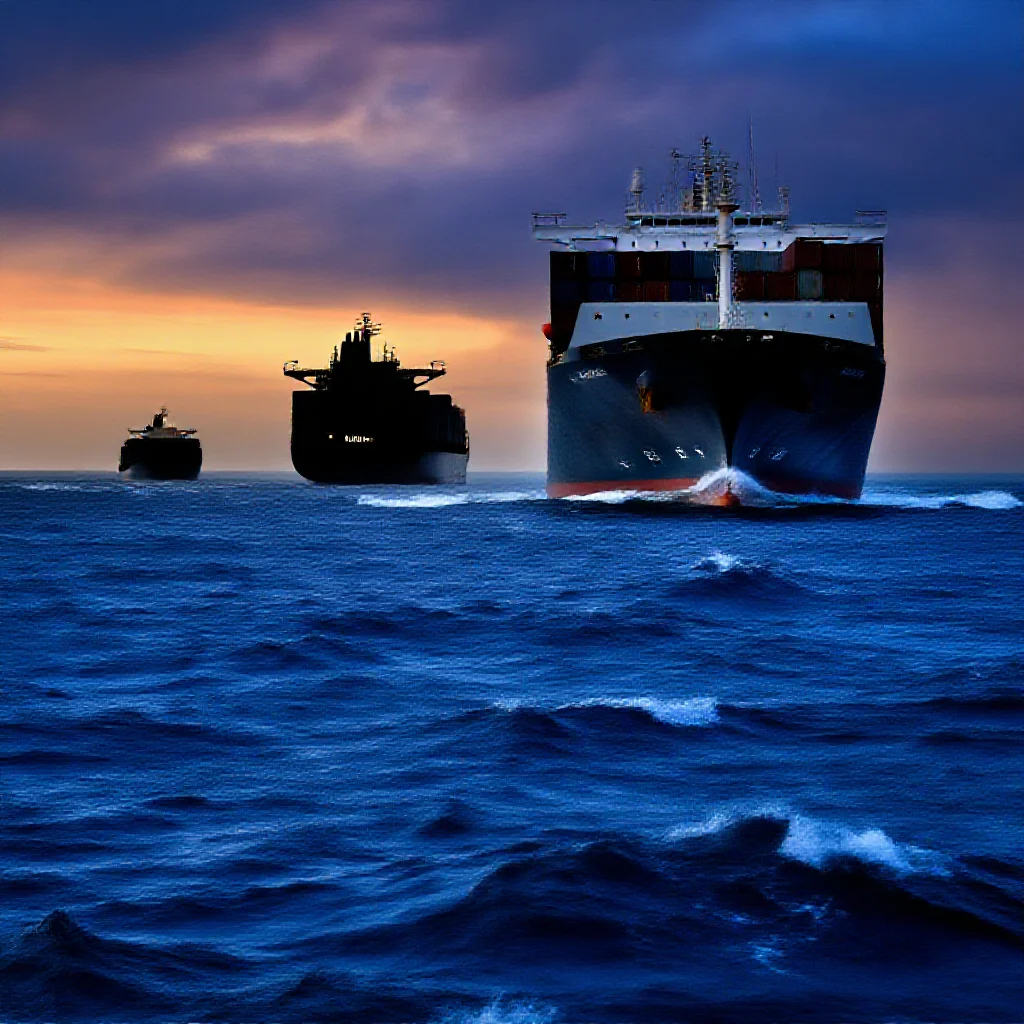
"The global ocean shipping industry is undergoing a profound structural transformation,"
Beyond the Storm: How Ocean Shipping Giants Are Reinventing Themselves Amid Market Chaos
Introduction: The Profitable Detour and the Looming Squall
The global ocean shipping industry presented a stark financial dichotomy in the mid-2020s. In 2024, carriers reported windfall profits in the tens of billions of dollars, a direct result of geopolitical disruptions forcing longer voyages around the Cape of Good Hope (Source 1: [Primary Data]). This rerouting, affecting approximately 2% to 3% of global container volume, created an artificial capacity crunch and elevated freight rates. By 2025, the economic equation inverted. A combination of global economic uncertainty and a historic influx of new ship tonnage returned major carriers to a state of losses. This rapid reversal frames a critical analytical question: Are these companies merely enduring another volatile cycle, or are they executing a deliberate, long-term strategic pivot? Evidence points to the latter—a profound structural reinvention where crisis-driven capital is funding a permanent shift from pure container shipping to integrated global logistics and strategic asset ownership.
![Infographic map showing the traditional Suez Canal route versus the longer Cape of Good Hope route, with data callouts for the 2-3% of global container volume affected and the profit/loss timeline from 2024 to 2025.]
The Consolidation Game: Reshaping the Competitive Landscape
Consolidation is accelerating, but its nature is evolving beyond simple horizontal mergers for scale. The agreement by Hapag-Lloyd to acquire Zim for $4.2 billion in February 2026 exemplifies a targeted strategic play (Source 1: [Primary Data]). The transaction is projected to increase Hapag-Lloyd's trans-Pacific market share from 7% to 12%, a move designed not for generic growth but for concentrated dominance in a key, high-volume trade lane. This reflects a strategy of securing defensible positions in specific corridors rather than blanket global expansion.
Simultaneously, a different form of consolidation is unfolding. In March 2026, Mediterranean Shipping Co. (MSC) acquired a 50% stake in Sinikor of South Korea, gaining access to a fleet of 78 Very Large Crude Carriers (VLCCs) (Source 1: [Primary Data]). This is not horizontal integration with another container line, but vertical integration into energy asset ownership. It signals a diversification intent that fundamentally alters the company's exposure and capabilities, moving it squarely into the volatile but capital-intensive energy shipping market.
![A comparative bar chart showing the market share of top carriers in the trans-Pacific lane before and after the hypothetical Hapag-Lloyd/Zim merger.]
Business Model Diversification: From Carrier to Integrator and Owner
The strategic moves extend beyond fleet and market share arithmetic into fundamental business model evolution. Maersk's launch of Maersk Parcel represents a direct incursion into the domain of integrated logistics providers. This single-platform delivery logistics service aims to capture higher-margin, end-to-end control of smaller shipments, competing with giants like DHL and FedEx. It is a calculated effort to reduce reliance on the commoditized container spot market by embedding the carrier deeper into the customer's supply chain.
Concurrently, MSC's foray into VLCC ownership through the Sinikor deal is a parallel diversification play, albeit in a different sector. Operating a fleet of 78 VLCCs positions MSC not just as a service provider but as a major owner of energy transportation assets. This leverages the company's operational and capital management scale in a new, cyclical asset class, providing a hedge against container market volatility and establishing a new revenue pillar. These initiatives are not ancillary projects; they are core strategic bets to build more resilient, multi-faceted corporate structures.
The Hidden Economic Logic: Capitalizing on Crisis to Fund Transformation
The deep insight into the current industry phase lies in the application of windfall profits. The capital generated from the 2024 disruption is being strategically deployed not primarily for next-generation container ships, but to finance long-term structural change. This marks a departure from previous cycles, where supra-normal profits were often returned to shareholders or recycled into ordering more container capacity, thereby exacerbating future over-supply.
The present cycle is characterized by the use of crisis-driven capital for mergers, acquisitions, and business model investment. The windfall acted as a strategic war chest, accelerating transformation plans that were likely in development but constrained by capital allocation priorities. The economic logic is clear: use transient cyclical profits to fund permanent structural advantages, thereby decoupling future performance from the extreme peaks and troughs of the container shipping market.
![A simple flowchart: Geopolitical Disruption (Red Sea) -> Windfall Profits (2024) -> Strategic Capital -> Funded for: 1. Acquisitions (Zim, Sinikor), 2. New Business Lines (Maersk Parcel)]
Conclusion: Navigating Toward a New Horizon
The trajectory of major ocean carriers indicates a permanent structural shift. The industry is bifurcating: one path leads toward becoming integrated logistics architects controlling door-to-door supply chains, while another leads toward becoming diversified asset owners operating across multiple maritime sectors. The traditional model of operating scheduled container services on key East-West trade lanes remains a core activity, but it is no longer the sole strategic frontier.
Future market predictions must account for this transformed landscape. Competitive analysis will increasingly require evaluating carriers on their logistics integration capabilities and their portfolio of owned assets beyond containers. Market volatility will persist due to inherent cyclicality and geopolitical factors, but the leading players are constructing business models designed to generate value across cycles, not just at their peak. The storm of 2024-2025 has not merely been weathered; it has been harnessed to power a deliberate voyage toward a more complex, integrated, and strategically diversified future.
Trade Metrics
Related Datasets
Q4 Cross-Border Logistics Report
PDF • 4.2 MB
Automotive Parts Supply Chain Index
CSV • 1.1 MB