Norfolk Southern''s Port Victory: How a Disputed Rail Line Reshapes Eastern

Emily Rodriguez
Cross-Border Trade Reporter
April 17, 2026
DATELINE: NA TRADE WIRE
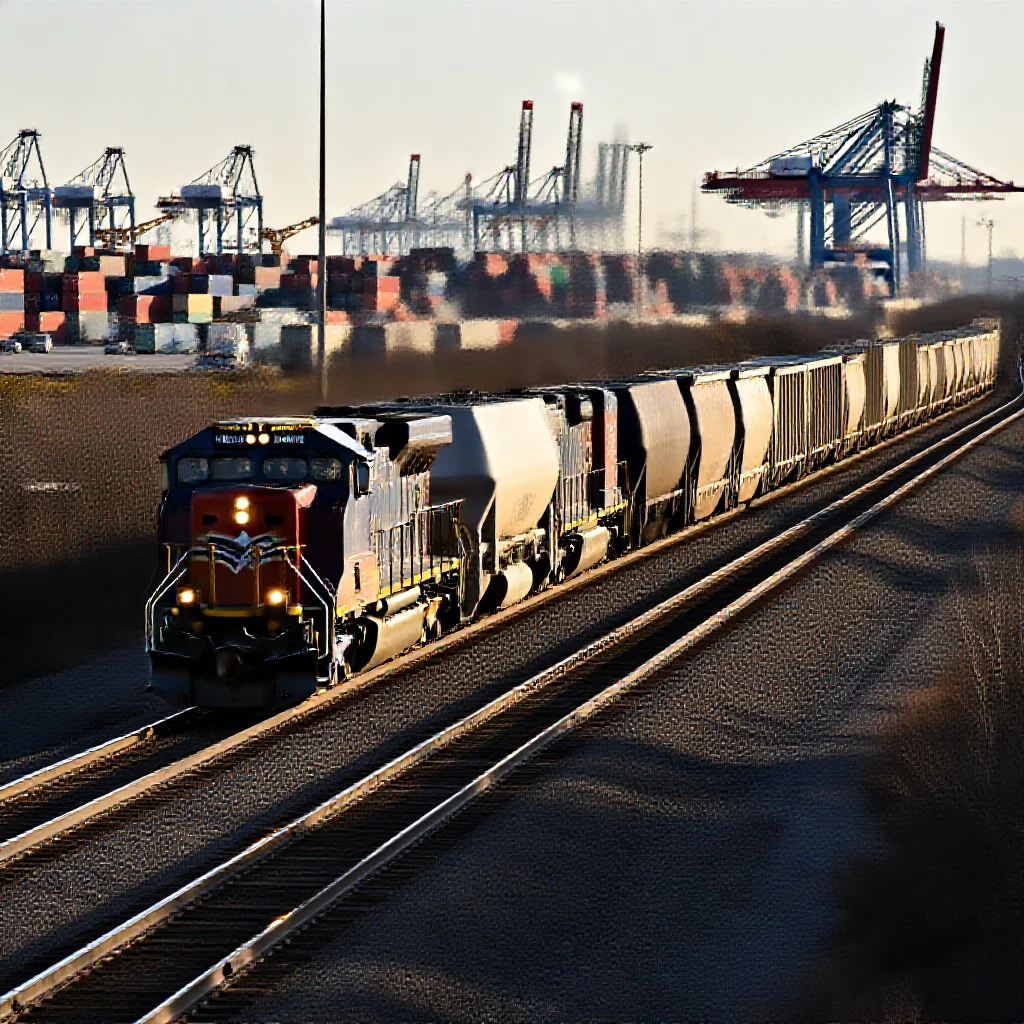
"The Surface Transportation Board's award of a disputed rail line to Norfolk"
Norfolk Southern's Port Victory: How a Disputed Rail Line Reshapes Eastern U.S. Supply Chains
Opening Summary: The Surface Transportation Board (STB) has awarded Norfolk Southern Corporation control of a previously disputed rail line providing critical access to a major eastern U.S. port. This administrative ruling resolves a specific access conflict but initiates a broader strategic shift in eastern freight logistics. The decision transfers operational authority over a key port-connecting corridor, a move with implications extending far beyond the immediate corporate parties involved.
Beyond the Headline: The Strategic Calculus of a Single Rail Line
The STB's decision represents a definitive market signal, not merely a legal conclusion. The ruling assigns control of the physical infrastructure based on regulatory precedent and operational arguments presented during the dispute proceedings. (Source 1: [Primary Data - STB Docket]).
The asset in question carries a 'port access premium' that transcends its physical valuation. Control of the final miles of track into a major container port confers disproportionate leverage within intermodal networks. The entity managing this segment influences routing decisions, scheduling priorities, and gateway access for a significant volume of international and domestic freight.
This award alters the strategic balance in eastern rail operations. Norfolk Southern secures a fortified position at a pivotal maritime gateway, enhancing its ability to capture and retain port-originated traffic on its mainline network. The decision effectively removes uncertainty over this corridor's management, allowing for targeted capital investment and service integration, while simultaneously limiting the strategic options for competing carriers seeking efficient port access.
The Ripple Effect: Long-Term Impacts on Supply Chain Architecture
Port competitiveness is partially defined by the efficiency, cost, and reliability of its inland connections. With assured control of this rail line, Norfolk Southern can market integrated, single-line service from the port deep into its network. This may incentivize shippers and ocean carriers to favor this port for cargo destined for Norfolk Southern-served inland markets, potentially altering volume shares among eastern seaboard terminals.
The intermodal domino effect will manifest in connected logistics segments. Enhanced rail efficiency and capacity from the port could divert long-haul truck traffic to rail, affecting drayage markets and highway congestion patterns. Concurrently, the predictability of this rail link may influence the location decisions for distribution centers and transload facilities, favoring sites along Norfolk Southern's corridors over those reliant on more circuitous or interchanged routes.
The concentration of control introduces a dual analysis of resilience and reliance. A single, well-maintained artery under unified operational command can theoretically improve fluidity and coordination. However, it also creates a single point of potential failure. Supply chain resilience for port-dependent shippers becomes more intrinsically linked to Norfolk Southern's network performance and investment priorities, reducing optionality during service disruptions or capacity constraints.
The Unseen Battle: Market Patterns and Economic Logic Revealed
This award aligns with broader industry trends toward strategic asset consolidation. Class I railroads increasingly prioritize owning and controlling key terminal and interchange points to improve network velocity and capture revenue. This decision reinforces that pattern, demonstrating the high value placed on eliminating access dependencies at major freight gateways.
The economic logic of 'last-mile' rail access defies simple linear cost models. The value is derived from network effects: the ability to secure long-haul volume that utilizes thousands of miles of mainline track. The profitability of the short port connector is amplified by the contribution margin of the freight it feeds into the core system. This makes such assets the subject of intense, long-term strategic disputes.
The opportunity cost for competing carriers, notably CSX, is substantial. Losing competitive access to this port via an independent line necessitates reliance on alternative, potentially less efficient routes or cooperative agreements with the incumbent. This may constrain their ability to offer compelling service packages for port-originated traffic in certain geographic lanes, potentially ceding market share in specific commodity flows.
Verification and Context: Sourcing the Story
The factual authority of this analysis originates in the official administrative record. The STB's ruling, including its findings of fact and rationale, provides the foundational framework (Source 1: [Primary Data - STB Final Decision]). This document outlines the statutory and operational basis for the award, absent of market speculation.
A multi-faceted perspective requires input from affected stakeholders. Logistics analysts note that such decisions often lead to initial rate stability followed by strategic pricing aligned with the new market structure. Shipper associations historically express concern over diminished routing options, while emphasizing the need for reliable service. Competitors typically highlight commitments to serving customers through their existing network alternatives.
Historical precedent informs the forecast. Past disputes over terminal railroads and vital spur lines, such as those near Chicago or the Pacific Northwest, demonstrate that control awards tend to solidify market positions for decades. The long-term effect is often a gradual reshaping of freight flow patterns as shippers and logistics managers adjust their long-term contracts and routing guides to align with the new infrastructure reality.
The Future Freight Landscape: Predictions and Pivots
Shipper adaptation will follow a calculative path. Major beneficial cargo owners will likely diversify their port calls and contract with multiple railroads to maintain leverage. Others may negotiate volume-based commitments with Norfolk Southern in exchange for service guarantees, embedding themselves deeper into a single network. Routing software and logistics contracts will be updated to reflect the new access paradigm.
This decision may spur countervailing investment. Competing railroads and port authorities may accelerate development of alternative port facilities or intermodal hubs not reliant on this specific corridor. Investment in near-port transload facilities served by truck may increase for traffic bound to non-NS destinations. The ruling underscores the strategic value of port-adjacent real estate for logistics.
The STB has established a modern template for infrastructure access disputes. The rationale employed—weighing operational efficiency, historical precedent, and public interest in network fluidity—will be cited in future conflicts over terminal access, reciprocal switching, and line sales. The decision reinforces the regulatory body's role as the arbiter of competitive balance within the framework of a privately-owned, essential national network. The long-term impact will be measured in incremental shifts in market share, infrastructure investment patterns, and the evolving architecture of continental supply chains.
Trade Metrics
Related Datasets
Q4 Cross-Border Logistics Report
PDF • 4.2 MB
Automotive Parts Supply Chain Index
CSV • 1.1 MB