Beyond the Rails: How Norfolk Southern''s Atlanta BeltLine Deal Reveals a

Emily Rodriguez
Cross-Border Trade Reporter
April 13, 2026
DATELINE: NA TRADE WIRE
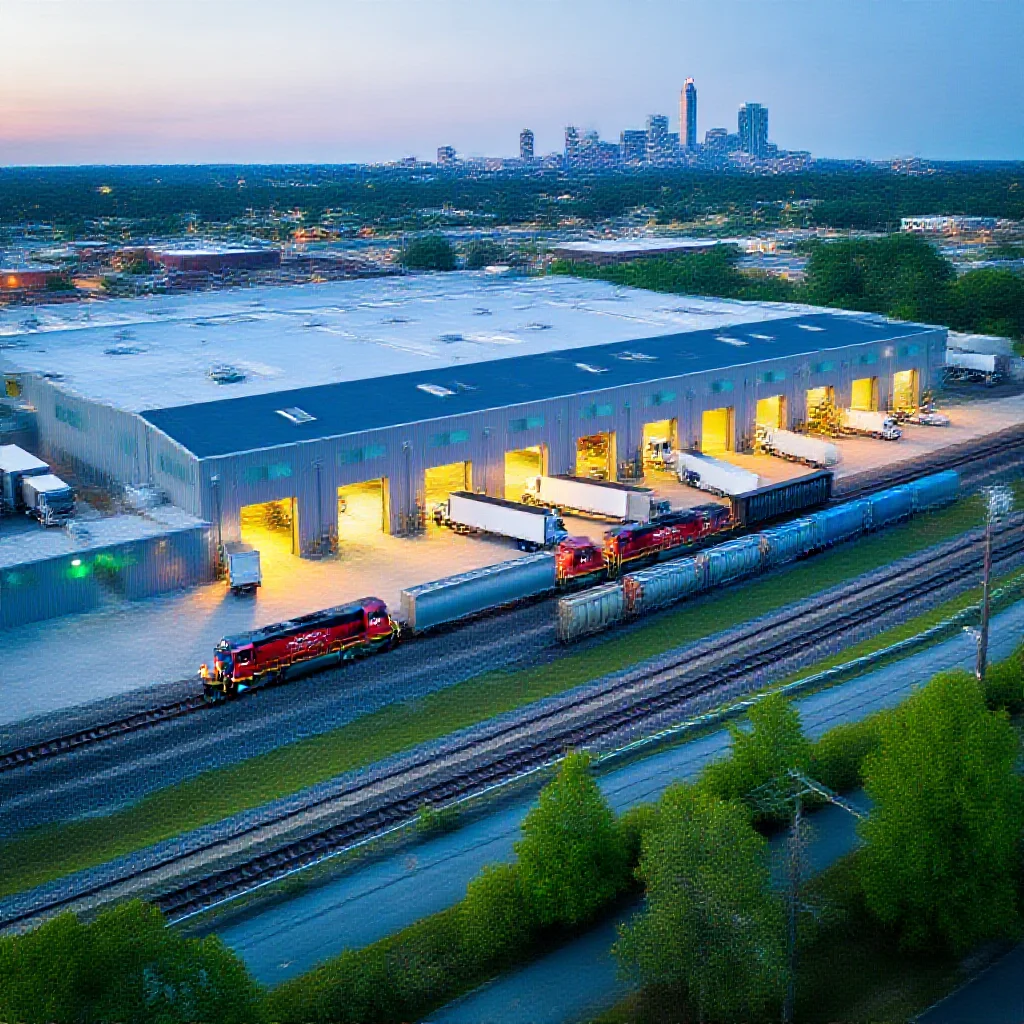
"Norfolk Southern's new transload partnership with Atlanta BeltLine Inc. (ABI)"
Beyond the Rails: How Norfolk Southern's Atlanta BeltLine Deal Reveals a New Urban Logistics Strategy
Introduction: A Facility with Strategic Depth
Norfolk Southern has signed a transload agreement with Atlanta-based short line operator Atlanta BeltLine Inc. (ABI) for a facility located on the Atlanta BeltLine corridor, which is now operational (Source 1: [Primary Data]). The partnership, which handles building products, plastics, and consumer goods, is framed as part of Norfolk Southern's Thoroughbred Freight Transfer (TFT) network (Source 1: [Primary Data]). This arrangement is more than a simple terminal addition. It functions as a case study in modern rail strategy, where network growth is deliberately fused with urban integration. The analysis that follows examines the strategic rationale behind the location and partnership structure, projecting its long-term implications for supply chain design in dense metropolitan areas.
Deconstructing the Deal: More Than a New Terminal
The TFT Network as a Strategic Tool
The agreement is explicitly part of Norfolk Southern's Thoroughbred Freight Transfer program (Source 1: [Primary Data]). This network represents an asset-light growth strategy, focusing on partnerships rather than sole ownership of large-scale intermodal terminals. It is designed for flexibility, allowing the Class I railroad to access new customer bases and commodity flows without the capital expenditure and land-use challenges of building major greenfield hubs. The Atlanta facility is a node in this expanding, adaptable system.
The Short-Line Advantage
Partnering with ABI, rather than developing the site independently, is a calculated move. Short-line operators like ABI possess inherent agility, often with deeper community integration and more flexibility in operating within complex urban zoning and regulatory environments. ABI, which interchanges with Norfolk Southern, acts as the local interface, managing the final-mile rail movement and terminal operations. This structure buffers the Class I railroad from direct operational complexities of an urban infill site while securing a reliable interchange partner.
Commodity Mix as a Market Signal
The facility's handling of building products, plastics, and consumer goods (Source 1: [Primary Data]) is indicative of its dual market role. Building products and plastics serve local and regional construction and manufacturing, while consumer goods target Atlanta's distribution economy. This mix suggests the facility is engineered to capture freight supporting both the city's physical growth and its function as a consumption hub, converting long-haul rail shipments into localized inventory.
The Urban Logistics Calculus: Why the BeltLine?
From Rails-to-Trails Back to Rails-and-Trails
The location on the Atlanta BeltLine corridor is strategically profound. The BeltLine, a celebrated urban redevelopment project transforming former rail corridors into multi-use trails, represents a commitment to dense, livable city design. Siting an active logistics facility on this corridor is a bet on multi-use infrastructure. It leverages the corridor's inherent rail connectivity for freight while coexisting with its recreational and transit-oriented development mission. This challenges the conventional dichotomy where industrial uses are segregated from new urbanist landscapes.
Solving the Last-Mile Puzzle
Urban planners consistently identify last-mile delivery as a primary contributor to metropolitan congestion and emissions. A transload facility embedded within an urban corridor like the BeltLine provides a direct mechanism to address this. Long-haul freight arrives efficiently by rail. The transload process then converts these bulk shipments into smaller lots for final delivery by truck, drastically reducing the distance these trucks must travel within the city from outlying distribution centers. Norfolk Southern's Vice President of Industrial Development, Colin Cooper, stated the facility aims to provide "more flexible, efficient freight solutions" (Source 1: [Primary Data]), a direct response to this last-mile challenge.
Evidence Arrangement
This model aligns with urban freight studies advocating for "urban consolidation centers" to reduce vehicle miles traveled. The BeltLine partnership operationalizes this theory, using rail as the primary consolidation mechanism. The facility's position allows it to serve the dense urban core with shorter, fewer truck trips, presenting a tangible solution to a persistent urban planning problem.
Strategic Implications and Market Trajectory
A Template for Urban Rail Access
The Norfolk Southern-ABI partnership establishes a potential template for other Class I railroads. The model—leveraging a short-line partner to operate a multi-commodity transload facility on an infill, redevelopment corridor—offers a blueprint for accessing constrained urban markets. It demonstrates how railroads can grow volume without constructing massive terminals, instead inserting smaller, nimbler facilities into the supply chain gaps between long-haul rail and last-mile delivery.
Future Trends in Rail-City Partnerships
This deal signals a shift toward deeper collaboration between freight railroads and municipal planning bodies. Cities seeking to reduce truck traffic and its associated impacts may increasingly view such integrated rail logistics facilities as critical infrastructure. Future agreements may include more formalized partnerships with city governments, offering railroads access to strategic parcels in exchange for commitments on traffic mitigation, aesthetic integration, and community benefits. The success of the BeltLine facility will be measured not only in volume and revenue but also in its acceptance as a compatible element of the urban fabric.
Neutral Market Prediction
The operational and financial performance of this facility will be closely monitored by the industry. If successful, it will likely catalyze similar projects in other cities with underutilized or repurposed rail corridors. The trend points toward a more fragmented but highly integrated network of urban rail-served logistics points, with short-line railroads playing an expanded role as essential intermediaries. This evolution will be driven by the continuous pressure to make dense urban supply chains more efficient, sustainable, and resilient.
---
Cover Image Prompt: A dynamic, aerial view of a modern transload facility at dusk, located on a green-lined urban corridor. Train cars from a Norfolk Southern locomotive are being serviced next to warehouse docks where trucks are being loaded. The scene is set against the backdrop of the Atlanta skyline, with the BeltLine trail visible in the foreground. The atmosphere is one of efficient, integrated urban industry.
Trade Metrics
Related Datasets
Q4 Cross-Border Logistics Report
PDF • 4.2 MB
Automotive Parts Supply Chain Index
CSV • 1.1 MB