Beyond the Barricades: How Mexico''s Trucker Strike Reveals a Broken Infrastructure

Emily Rodriguez
Cross-Border Trade Reporter
April 20, 2026
DATELINE: NA TRADE WIRE
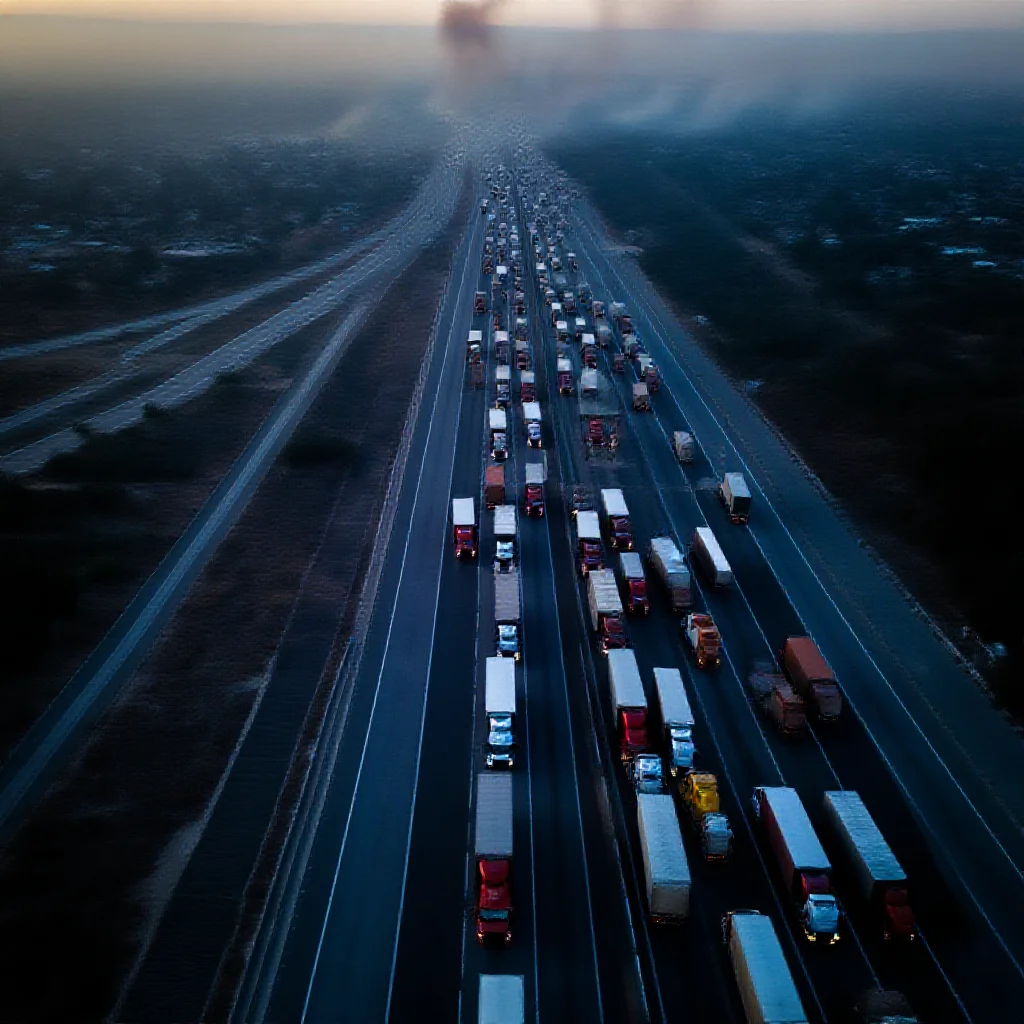
"A brief but violent truckers' strike on Mexico's Arco Norte highway, ending"
Beyond the Barricades: How Mexico's Trucker Strike Reveals a Broken Infrastructure Funding Model
The Flashpoint: A 48-Hour Standoff on a Critical Artery
A brief but disruptive strike by Mexican truck drivers on the Arco Norte highway concluded on Tuesday following clashes with state security forces. The protest, which began on Monday, involved the blockade of this vital bypass encircling Mexico City, a key conduit for freight moving between the country's industrial heartlands and major ports. The immediate catalysts cited by organizers were escalating toll rates juxtaposed with perceived inadequacies in road maintenance and conditions.The state's response involved the deployment of the National Guard. Official reports confirm the use of tear gas to disperse protesters, and at least one truck was set on fire during the confrontations. Mexico's Ministry of Infrastructure, Communications and Transportation (SICT) framed the intervention as a necessary measure to restore public order and the unimpeded flow of commerce, declaring the strike concluded by Tuesday evening.
The Hidden Economic Logic: Unpacking the PPP Concession Crisis
The conflict transcends a simple dispute over fees. The Arco Norte operates under a public-private partnership (PPP) model, a common framework for modern Mexican infrastructure. In this model, a private concessionaire finances, builds, and operates the road under a long-term contract, recouping its investment and generating profit through toll revenue. The truckers' protest represents a direct collision with this financial logic.For concessionaires, toll adjustments are often contractually mandated mechanisms to ensure project viability and return on capital, accounting for inflation and maintenance costs. For transport operators, however, these tolls constitute a direct and rising variable cost. This increase occurs within a broader context of squeezed margins due to elevated fuel, insurance, and labor expenses. The strike action indicates a point where this toll cost is perceived as no longer sustainable for operational profitability, creating a fundamental tension within the PPP structure.
A Systemic Fault Line, Not an Isolated Protest
This event is not an isolated incident but a symptom of systemic stress in infrastructure funding. Similar protests targeting PPP toll roads have occurred across Latin America, indicating a regional pattern. The state is placed in a dual, often conflicting role: as a regulator obligated to guarantee contractual stability and returns for private investment, and as a sovereign entity responsible for maintaining social stability and economic functionality.The long-term implication for supply chains is quantifiable. Recurring instability on critical logistics corridors forces manufacturers, exporters, and importers to incorporate risk premiums and contingency costs into their operations. This friction elevates the cost of goods and can erode the competitive advantage offered by Mexico's strategic trade position, particularly within the integrated North American market.
The Enforcement Paradigm: Security Forces in Economic Disputes
The deployment of the National Guard in this context merits analytical observation. Its role appears to have expanded from traditional public security mandates into that of an enforcer of economic flow. The use of tear gas and the reported clashes to clear a protest rooted in an economic grievance establishes a precedent for the state's methodology in resolving disputes that threaten commercial logistics.This paradigm carries inherent risks. While effective in the immediate term for reopening a roadway, it does not address the underlying economic conflict. Reliance on security-led resolutions for economically motivated blockades may harden positions in future disputes and could potentially escalate tensions, posing a longer-term challenge to operational stability on the nation's freight network.
Conclusion: The Unsustainable Equation
The 48-hour strike on the Arco Norte highway has illuminated an unsustainable equation within a prevalent infrastructure funding model. The financial imperatives of private concessionaires, the cost structures of transport operators, and the regulatory-enforcement posture of the state have reached a visible point of friction.Market and industry analysis suggests that without structural recalibration, such incidents are likely to recur. Potential trajectories include increased pressure for state subsidies or toll caps—which could undermine future PPP investment—or a gradual erosion of reliability on key commercial routes. The resolution of this tension will require a reassessment of risk allocation and revenue mechanisms within infrastructure concessions, moving beyond cyclical enforcement to address the foundational economic disconnect.
Trade Metrics
Related Datasets
Q4 Cross-Border Logistics Report
PDF • 4.2 MB
Automotive Parts Supply Chain Index
CSV • 1.1 MB