Beyond the Headlines: How Mercedes-Benz''s $4B EV Bet Relies on Norfolk Southern''s

Emily Rodriguez
Cross-Border Trade Reporter
April 13, 2026
DATELINE: NA TRADE WIRE
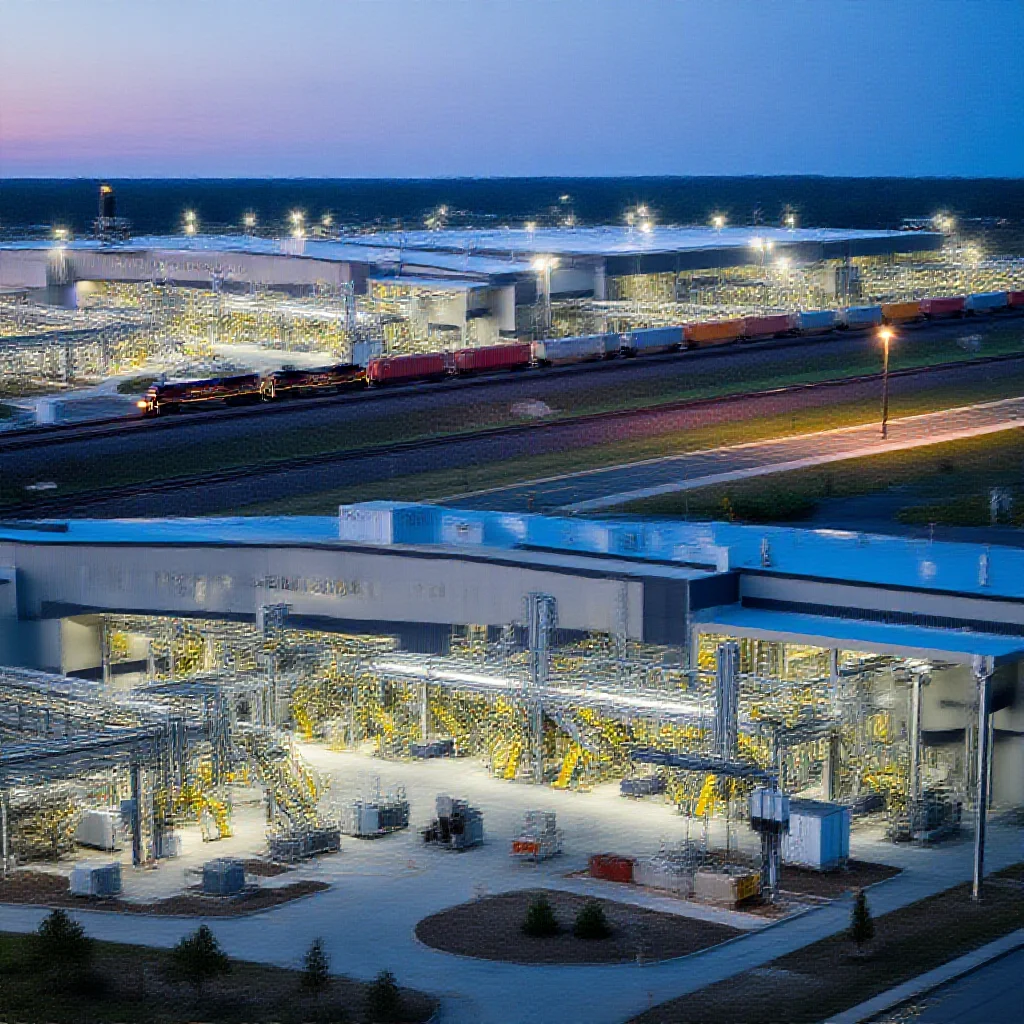
"Mercedes-Benz''s massive $4+ billion investment to electrify its Alabama"
Beyond the Headlines: How Mercedes-Benz's $4B EV Bet Relies on Norfolk Southern's Rails
Summary: Mercedes-Benz's announced investment exceeding $4 billion to upgrade its Alabama manufacturing plant for electric vehicle (EV) production represents a surface-level corporate capital expenditure. A deeper analysis reveals the investment's critical, unstated dependency on the logistics infrastructure provided by Norfolk Southern Railway. This move underscores a fundamental shift in automotive manufacturing strategy, where securing a resilient, high-volume logistics backbone for battery and component supply chains is becoming a primary competitive moat, redefining industrial real estate value in the process.
---
The Surface Story: A $4 Billion Pivot to Electric
Mercedes-Benz Group AG announced a capital investment exceeding $4 billion to prepare its Tuscaloosa County, Alabama, manufacturing facility for the production of electric vehicles. (Source 1: [Primary Data]) This expenditure is a localized component of the corporation's global strategy to transition its portfolio to electric drivetrains, with a specific focus on securing production capacity within the United States market. The transformation of an existing internal combustion engine (ICE) plant involves more than the installation of new assembly robotics; it necessitates a comprehensive retooling of the facility's body shop, paint shop, and assembly center to accommodate fundamentally different vehicle architectures and battery pack integration.
The Alabama plant's role extends beyond mere production volume. It functions as a strategic node within Mercedes-Benz's North American operational footprint, designed for the manufacture of large luxury SUVs. Its conversion signals an intent to produce electric counterparts in this high-margin segment domestically, potentially mitigating geopolitical and tariff-related supply chain risks.
The Hidden Axis: Logistics as the New Competitive Moat
The most critical operational fact embedded within the announcement is not the dollar figure, but the statement that the plant is "served by Norfolk Southern railway." (Source 1: [Primary Data]) This denotes a strategic dependency. The electric vehicle supply chain is characterized by high-volume, high-mass, and often fragile components. Battery packs, which constitute the single heaviest and most logistically complex sub-assembly in an EV, are ideally suited for rail transport due to their weight and the safety protocols surrounding their shipment. Similarly, electric motors and the raw materials for battery cells (cathode/anode materials, electrolytes) move in bulk quantities that favor rail economics over long distances.
This presents a logistical profile distinct from traditional ICE supply chains. While ICE parts are numerous and often sourced via just-in-time trucking from a dense supplier network, EV manufacturing creates a new, parallel logistics stream dominated by bulk, rail-served commodities. The reliability, capacity, and cost structure of rail access therefore transition from a supporting utility to a primary determinant of production feasibility and cost competitiveness.
Norfolk Southern's Silent Strategic Win
Norfolk Southern Corporation's rail network provides an entrenched economic moat for automotive manufacturing in the Southeastern United States. Its lines connect the Port of Mobile, a key gateway for imported components, and extend into the industrial Midwest and supplier-rich regions of the South. The Mercedes-Benz investment effectively validates and leverages this existing infrastructure, translating into long-term, contracted revenue for the railway from a flagship customer.
The implications extend beyond a single plant. Future siting decisions for battery gigafactories and dedicated EV component supplier parks will be disproportionately influenced by proximity to high-capacity rail infrastructure. Norfolk Southern's capital expenditure programs, such as investments in its "Southern Corridor" and intermodal facilities as detailed in its annual 10-K filings, are not merely operational upgrades but strategic investments in capturing this emerging industrial logistics flow. (Source 2: [Norfolk Southern Annual Report/10-K])
Deep Audit: Long-Term Implications for the Southern Automotive Corridor
The Mercedes-Benz capital allocation decision signals a shift in the site selection calculus for advanced manufacturing. Traditional factors like low labor costs are being recalibrated against the imperative of resilient, multi-modal logistics access. Industrial real estate value is becoming intrinsically linked to robust freight rail connections, potentially catalyzing the development of new industrial clusters centered on rail-served logistics parks.
This dependency introduces a distinct risk profile. A manufacturing facility reliant on a single-line rail service, while efficient, creates a potential vulnerability point. Disruptions on Norfolk Southern's network—whether from operational incidents, labor negotiations, or climate-related events—could directly impair production at the Alabama plant. This concentrates supply chain risk and necessitates sophisticated contingency planning from Mercedes-Benz, contrasting with the dispersed risk profile of a multi-vendor trucking network.
Conclusion: Redefining Industrial Investment in the EV Age
The Mercedes-Benz investment is a dual deployment of capital: one tranche allocated to physical manufacturing assets, and another, implicit tranche allocated to securing logistics certainty through its partnership with Norfolk Southern. This model is likely to be replicated across the industry as other automakers electrify their US production bases.
The transition to electric vehicle manufacturing is, therefore, not solely a technological pivot but a logistical re-engineering. It elevates freight railroads from background infrastructure to strategic partners in industrial policy. The competitive landscape for automotive production will increasingly be mapped not just by the location of assembly plants, but by the capacity and resilience of the rail corridors that serve them. Future corporate investment announcements in the sector will require analysts to audit the accompanying logistics infrastructure with the same rigor applied to the manufacturing technology itself.
Trade Metrics
Related Datasets
Q4 Cross-Border Logistics Report
PDF • 4.2 MB
Automotive Parts Supply Chain Index
CSV • 1.1 MB