Leadership Transition at the Port of Memphis: A Pivot Point for Inland River

Emily Rodriguez
Cross-Border Trade Reporter
March 29, 2026
DATELINE: NA TRADE WIRE
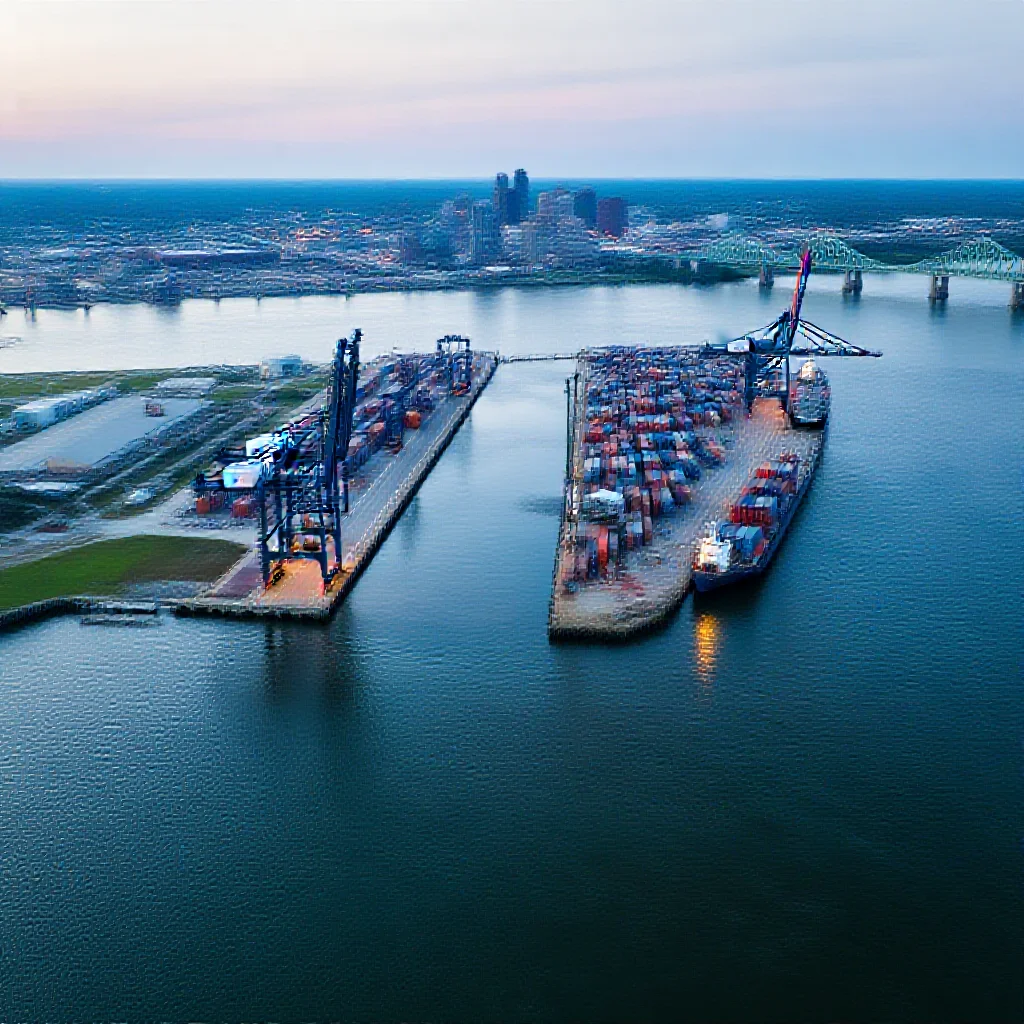
"The retirement of Randy Richardson, the longtime executive director of the"
Leadership Transition at the Port of Memphis: A Pivot Point for Inland River Logistics
The retirement of Randy Richardson as executive director of the Port of Memphis on May 31, 2024, marks a definitive close to a 35-year chapter for a critical infrastructure node. Richardson, who led the port for 15 years after his appointment in 2009, departs as the Memphis and Shelby County Port Commission initiates a national search for his successor (Source 1: [Primary Data]). This leadership transition occurs during a period of intensified scrutiny on supply chain resilience and strategic infrastructure investment, elevating the event from a routine personnel change to a potential inflection point for Mid-South logistics.
The End of an Era: Randy Richardson's 35-Year Legacy on the River
Randy Richardson’s tenure as executive director from 2009 to 2024 encompassed a period of profound transformation in global freight logistics. His leadership spanned the post-2008 financial recovery, the decade-long expansion of e-commerce-driven distribution networks, and the unprecedented supply chain disruptions of the COVID-19 pandemic. The Port of Memphis, a multimodal inland port on the Mississippi River, operated as a consistent component within these volatile cycles (Source 1: [Primary Data]).
The strategic developments under this tenure were necessarily shaped by external forces. The institutional knowledge represented by a 35-year veteran—encompassing river hydrology, federal navigation policy, and long-standing relationships with barge operators, rail partners, and industrial tenants—constitutes a significant departure. This depth of experience is particularly relevant for an asset like an inland port, where operations are intricately linked to long-term, relationship-dependent contracts and nuanced understanding of the river’s commercial ecology. The transition risks a temporary depletion of this non-codified operational intelligence during a critical period for federal Infrastructure Investment and Jobs Act (IIJA) grant applications.
More Than a Job Posting: Decoding the National Successor Search
The Commission’s decision to conduct a national search, rather than an internal promotion, is a strategic signal. It indicates an assessment that the port’s future challenges may require a skillset developed outside the existing organizational framework. This move aligns with observable trends at other major inland ports, such as St. Louis and the Tri-Cities, where recent executive recruitments have emphasized broader logistical innovation and capital project management.
The modern port director’s required skill set has expanded beyond traditional operations and stewardship. The successor will likely be evaluated on competencies in digital transformation, including the implementation of IoT for asset tracking and data analytics for throughput optimization. Additional priorities will include expertise in securing large-scale federal and state infrastructure grants, advancing sustainability initiatives to meet corporate supply chain mandates, and managing complex public-private partnerships for facility modernization. The national search scope suggests the Commission is prioritizing these forward-looking capabilities alongside fundamental riverport operational knowledge.
The Strategic Fulcrum: Memphis's Role in a Reshoring and Resilient Supply Chain
The Port of Memphis operates as a strategic fulcrum within the national freight network. Its inherent value lies in its multimodal capacity—the direct interconnection of the Mississippi River with five Class I railroads and major interstate highways. This positions the port as a potential shock absorber within global supply chains, offering flexibility when coastal gateways face congestion or disruption.
The long-term impact of leadership effectiveness extends to underlying regional economic sectors. Mid-South agricultural exporters and manufacturing importers rely on the port’s efficiency for cost-competitive access to global markets. Any protracted period of leadership uncertainty or strategic misalignment could affect capital investment decisions by these stakeholders, particularly during the current window of available IIJA funding. Furthermore, the port’s performance directly influences the region’s attractiveness for large-scale distribution and advanced manufacturing facilities, which prioritize locations with robust, well-managed multimodal options. The port is not merely a cargo handler but a fundamental catalyst for regional economic development.
The Road Ahead: Challenges and Opportunities for the Next Director
The successor will inherit a portfolio of specific challenges and opportunities that define the contemporary operating environment for inland ports.
* Infrastructure Modernization: Securing and deploying capital for the modernization of aging docks, warehousing, and cargo-handling equipment is a primary task. This requires competing effectively for limited public funds and attracting private investment.
* Digital Integration: Implementing technologies that provide real-time visibility and predictive analytics for cargo moving through the port’s multimodal network is no longer optional but a necessity for remaining competitive.
* Labor and Community Relations: Navigating workforce development for technically skilled positions and maintaining the port’s social license to operate within the community are ongoing imperatives.
* Environmental, Social, and Governance (ESG) Compliance: Developing and executing a credible sustainability strategy addressing emissions, river health, and community impact is critical for accessing capital and retaining tenants.
Market analysis indicates that the demand for resilient, nearshored supply chain solutions will continue to grow. The Port of Memphis, under new leadership, is structurally positioned to capture a share of this demand if it can demonstrate operational excellence and strategic agility. The effectiveness of the successor in navigating these challenges will be the determining factor in whether the port merely maintains its current traffic or expands its role as an indispensable node in a reconfiguring North American logistics landscape. The Commission’s selection will thus serve as a leading indicator of the port’s strategic trajectory for the next decade.
Trade Metrics
Related Datasets
Q4 Cross-Border Logistics Report
PDF • 4.2 MB
Automotive Parts Supply Chain Index
CSV • 1.1 MB