Beyond Safety: The Economic and Strategic Implications of Maryland''s Two-Person

Emily Rodriguez
Cross-Border Trade Reporter
April 8, 2026
DATELINE: NA TRADE WIRE
"The Maryland Senate's move to mandate two-person crews on freight and passenger"
Beyond Safety: The Economic and Strategic Implications of Maryland's Two-Person Train Crew Bill
The Maryland State Capitol building in Annapolis, where the bill received preliminary approval. (Image: Getty)
Introduction: A Simple Bill with Complex Ripples
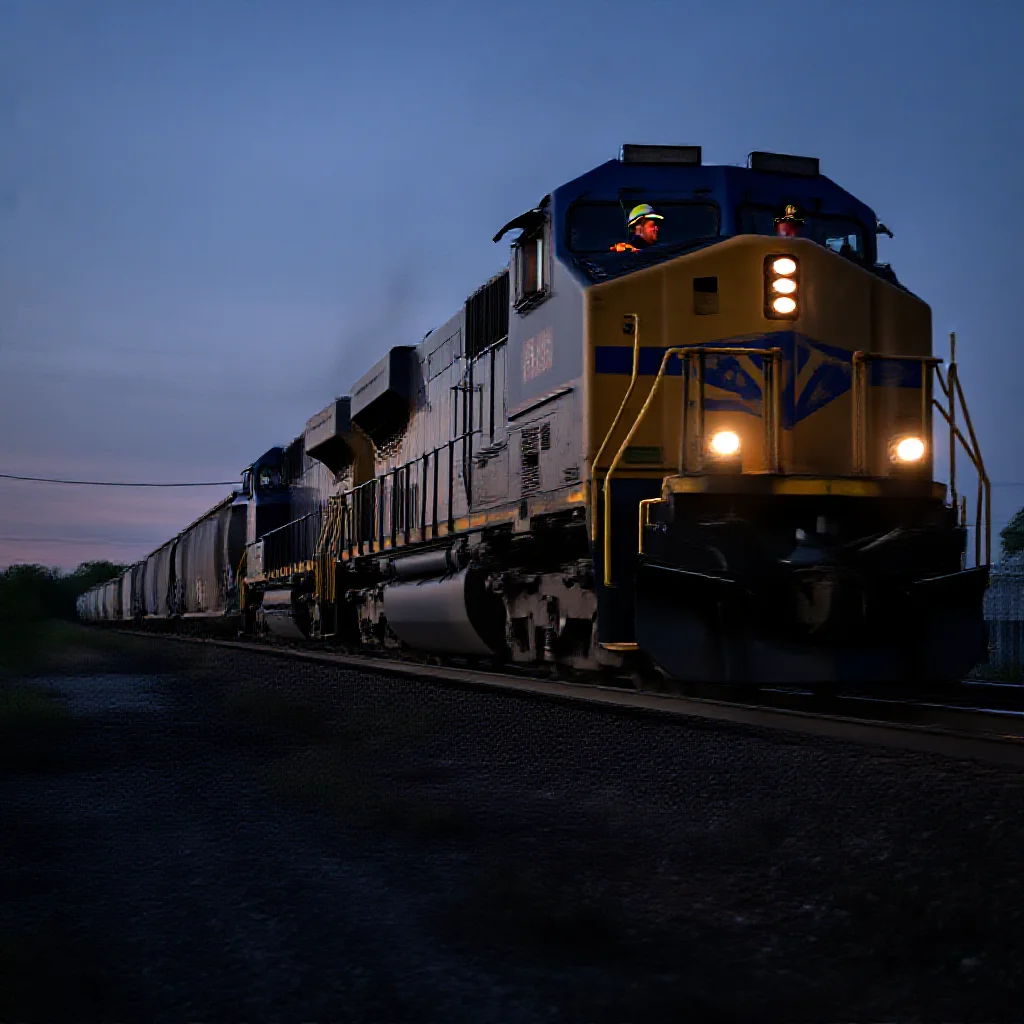
The Maryland Senate has granted preliminary approval to legislation mandating two-person crews on freight and passenger trains operating within the state (Source 1: [Primary Data]). This legislative action inserts Maryland into a protracted national debate regarding crew size, a debate historically framed around operational safety. However, the structure and scope of the Maryland bill suggest its implications extend beyond the immediate workplace. The legislation represents a strategic intervention with potential consequences for labor economics, technological adoption, supply chain logistics, and state-level regulatory authority over interstate commerce.
Deconstructing the Bill: The Core Provisions and Their Hidden Logic
The bill’s technical architecture reveals a deliberate regulatory approach. Its application to Class I railroads, short line railroads, and passenger operators indicates an intent to establish a universal standard across all rail sectors in Maryland (Source 2: [Primary Data]). This comprehensiveness prevents regulatory arbitrage between different classes of carrier.
A critical amendment requires the Maryland Department of Transportation (MDOT) to conduct a feasibility study prior to implementation (Source 3: [Primary Data]). This transforms the legislation from a simple operational mandate into a data-gathering mechanism. The study will generate a state-owned analysis of costs, safety impacts, and operational challenges, arming regulators with independent data often contested between industry and labor groups.
The stipulated civil penalty of up to $10,000 per violation presents a calculable risk (Source 4: [Primary Data]). For multi-billion dollar Class I railroads, this figure may function more as a symbolic cost of non-compliance than a severe financial deterrent. For smaller short-line operators, the same penalty could carry greater economic weight, raising questions about competitive equity.
The Economic Axis: Cost, Competition, and Supply Chain Resilience
The economic calculus of the mandate is multidimensional. For railroads, the direct effect is an increase in variable labor costs per train-mile, countering a decades-long industry trend toward crew-size reduction for efficiency. This cost must be weighed against potential savings from accident mitigation, as proponents argue a second crew member enhances safety monitoring and emergency response. The business case hinges on the frequency and severity of incidents a second person could prevent.
The impact is not uniform across the industry. Short-line railroads, which often operate on thinner margins and serve as first- and last-mile connectors, may face disproportionate strain from the mandate. This could alter the competitive landscape for regional freight movement or necessitate changes in operating agreements with larger Class I partners.
For supply chains, the rule introduces a variable affecting operational flexibility. In scenarios of crew shortages or during high-demand periods, the inability to operate with a single person could constrain capacity or scheduling agility. This has particular relevance for critical infrastructure like the Port of Baltimore, where consistent rail drayage is essential for fluid intermodal operations. The long-term effect on reliability and cost for shippers using Maryland’s rail network remains an open question.
The Technology and Labor Frontier: Stalling Automation or Ensuring Safety?
The legislation functions as a legislative counterweight to technological trends. The rail industry has invested significantly in positive train control (PTC) and other automation technologies that reduce human error and, theoretically, crew workload. A state-level crew-size mandate creates a de facto barrier to the operational model of fully automated or single-person crew trains, preserving a defined role for human labor in the cab irrespective of technological advancement.
The bill’s exception for “hostler service or utility employees” is a pragmatic carve-out for controlled yard environments where moving locomotives short distances is a distinct task from road operations (Source 5: [Primary Data]). This acknowledges different risk profiles and operational norms within railroading.
Maryland’s action occurs within a stalled federal context. National legislation requiring two-person crews has been proposed repeatedly but not enacted. By proceeding at the state level, Maryland creates a patch of regulatory certainty for labor and a point of operational contention for railroads that operate across state lines, potentially influencing the national negotiation landscape.
The Regulatory Blueprint: Could Maryland Set a National Precedent?
The bill’s progression—Senate approval followed by House of Delegates consideration—follows a standard legislative path (Source 6: [Primary Data]). Its ultimate influence may lie in its utility as a regulatory blueprint. Other states observing contentious federal inaction may adopt similar frameworks, using the feasibility study model to justify their interventions. A growing patchwork of state crew-size laws would present a significant compliance challenge for interstate carriers, potentially increasing pressure for a uniform federal standard.
The strategic use of a state-level mandate allows Maryland to assert control over infrastructure safety within its borders, testing the limits of state authority versus the federally regulated nature of railroading. The economic and operational data generated by the MDOT study will become a valuable asset, potentially cited in other jurisdictions or in broader policy debates.
Conclusion: A Catalyst for Broader Recalibration
The Maryland two-person crew bill is a catalyst for industry recalibration. Its immediate effect is to codify a labor standard. Its secondary effect is to initiate a state-sponsored study that will produce an independent analysis of rail operations. Its tertiary effect is to challenge the economic logic of automation-driven crew reduction within a specific geographic jurisdiction.
Market and industry predictions suggest several potential outcomes. If enacted, railroads operating in Maryland will internalize the cost, which may be passed through to customers in the form of rate adjustments or operational re-routing where feasible. The rule may strengthen the bargaining position of rail labor unions in other states. Technologically, it may slow the business-case development for single-person operations in the near term, focusing automation investments on systems that augment a two-person crew rather than replace it. The most significant precedent may be methodological: demonstrating that states can leverage feasibility studies and comprehensive scoping to enact substantive regulations on national industries, setting the stage for further localized interventions in infrastructure governance.
Trade Metrics
Related Datasets
Q4 Cross-Border Logistics Report
PDF • 4.2 MB
Automotive Parts Supply Chain Index
CSV • 1.1 MB