Beyond Freight: How Lufthansa Cargo''s Sector-Specific Strategy Redefines

Emily Rodriguez
Cross-Border Trade Reporter
March 25, 2026
DATELINE: NA TRADE WIRE
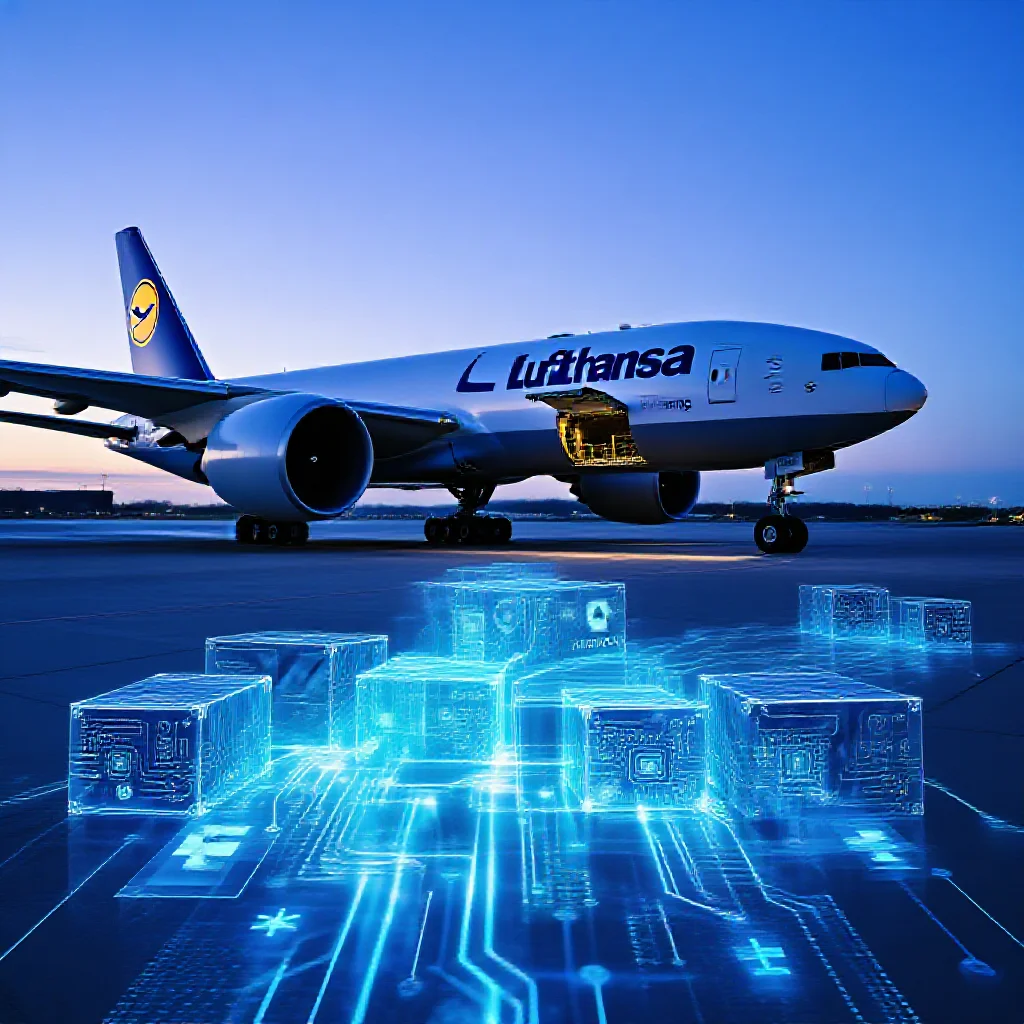
"Lufthansa Cargo's strategic pivot towards technology, automotive, and pharmaceutical"
Beyond Freight: How Lufthansa Cargo's Sector-Specific Strategy Redefines High-Value Air Logistics
Introduction: The End of the Generalist Cargo Carrier
The traditional air cargo model, built on carrying a diverse mix of general commodities, faces structural pressure. E-commerce giants and integrated express carriers have captured vast volumes of standardized shipments, compressing margins for general freight. In response, Lufthansa Cargo has publicly declared a strategic pivot, focusing its commercial and operational resources on three named sectors: technology, automotive, and pharmaceuticals. This is not a minor tactical adjustment but a fundamental declaration of specialization. The move represents a proactive adaptation to a macroeconomic shift in global trade: the rising dominance of goods characterized by an exceptionally high value-to-weight ratio and extreme sensitivity to supply chain velocity and condition. The era of the generalist cargo carrier is receding, replaced by the imperative for precision, high-margin logistics.
![Infographic showing the growth in value of global air trade for pharmaceuticals, semiconductors, and automotive parts versus traditional commodities over the last decade.]()
Decoding the Sector Triad: Why Tech, Auto, and Pharma?
The selection of technology, automotive, and pharmaceuticals is not arbitrary. The unifying thread is a dependency on "critical velocity," where time-to-market, product shelf-life, or production continuity defines commercial success and mitigates financial risk. The premium cost of air freight is justified by its role as a risk-mitigation and value-preservation tool within these sectors.
* Pharmaceuticals: This sector demands stringent, unbroken temperature control across specialized cold chains and comprehensive regulatory traceability. The high margins of biologic medicines, vaccines, and clinical trial materials justify premium logistics. Product integrity is non-negotiable, and delays can have clinical consequences.
* Technology: Driven by short product lifecycles and frequent component scarcity, the technology supply chain prioritizes speed. The capital cost of advanced semiconductors and electronics inventory sitting in transit is prohibitive. Air freight minimizes this capital tie-up and enables rapid response to demand shifts or production line shortages.
* Automotive: The philosophy has evolved from "just-in-time" to "just-in-case" following recent supply chain crises. High-value, time-sensitive shipments now include electric vehicle batteries, which are hazardous materials requiring specific handling, and critical electronic control units. The cost of an idle production line far exceeds the air freight premium for a key component.
Market logic validates this focus. Industry forecasts consistently project air cargo growth to be led by these high-value, time-sensitive verticals, outstripping the growth rate of traditional commodities (Source 1: [Boeing World Air Cargo Forecast]).
The Twin-Pillar Investment: Physical Hub and Digital Thread
The sector strategy is underpinned by a parallel investment in two pillars: specialized physical infrastructure and integrated digital capabilities. These are mutually reinforcing elements designed to create a defensible service moat.
The new airfreight center under development at Frankfurt Airport is not merely an expansion of square footage. It is infrastructure engineered for the triad’s needs, featuring dedicated pharmaceutical zones with validated cool rooms, secure areas for high-value technology, and facilities designed for handling oversized automotive components. This physical hub ensures operational control over the most critical handling phases.
Concurrently, the development of digital tools for shipment management is a strategic necessity, not a convenience feature. Sectors dealing with components worth millions per kilogram or life-saving medicines require real-time visibility, proactive exception management, and seamless documentation. By offering a "digital thread" that provides control and transparency, Lufthansa Cargo transitions from a point-to-point transporter to a "control tower" managing complex logistics flows. This integration increases customer dependency and lock-in, as the value lies in the combined physical and data ecosystem (Source 2: [Lufthansa Cargo Corporate Publications]).
The Unseen Impact: Reshaping the Underlying Supply Chain
The strategic shift by a major network carrier like Lufthansa Cargo exerts influence beyond its own balance sheet. It actively reshapes the architecture of global supply chains for critical industries. By providing guaranteed capacity, specialized handling, and data integration on key trade lanes, it enables manufacturers to pursue more centralized, efficient production models with greater confidence. A pharmaceutical company can consolidate production in a strategic location if it can rely on a certified, predictable air logistics partner for global distribution.
Furthermore, this strategy accelerates the bifurcation of the air cargo market. The industry is segmenting into a high-velocity, high-value segment served by specialized network carriers and a commoditized, price-driven volume segment. This bifurcation forces shippers to make explicit trade-offs between cost and supply chain resilience, with the triad sectors logically prioritizing the latter.
Conclusion: A Bellwether for Industry Evolution
Lufthansa Cargo's focused strategy is a bellwether for the evolution of air logistics. It signals that future success for network carriers hinges on deep vertical integration rather than horizontal scale. The competitive advantage will be built on a deep understanding of sector-specific pain points, supported by purpose-built infrastructure and digital integration that provides unparalleled control and reliability.
The broader industry trend is clear: leading cargo airlines must transform into integrated partners within complex, resilient supply chains. Their role is expanding from transportation to encompass risk management, condition assurance, and data analytics. As global trade continues to prioritize the movement of high-value, time-sensitive goods, the strategies pioneered by carriers focusing on sectors like technology, automotive, and pharmaceuticals will define the new paradigm of air logistics. The market will likely see further specialization, with carriers developing even deeper, defensible expertise in narrow verticals where logistics performance is a direct contributor to the customer's core commercial success.
Trade Metrics
Related Datasets
Q4 Cross-Border Logistics Report
PDF • 4.2 MB
Automotive Parts Supply Chain Index
CSV • 1.1 MB