Beyond the Headline: How Jaxport''s New China Direct Service Reshapes Southeast

Emily Rodriguez
Cross-Border Trade Reporter
April 20, 2026
DATELINE: NA TRADE WIRE
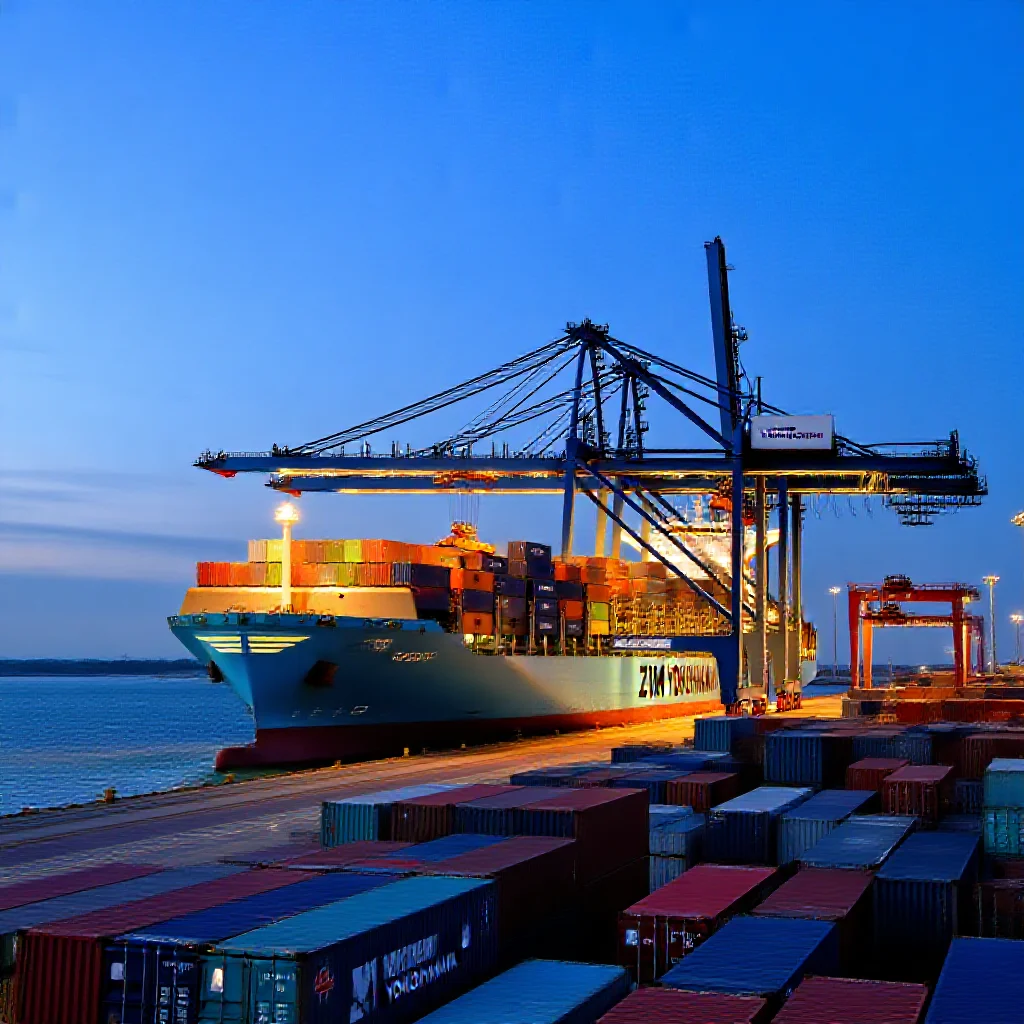
"Jaxport's launch of ZIM's eCommerce Xpress (ZEX) service from Yantian and"
Beyond the Headline: How Jaxport's New China Direct Service Reshapes Southeast US Supply Chains
The arrival of the ZIM Yokohama at the Blount Island Marine Terminal on May 20, 2024, marked the operational launch of a new transpacific shipping route. (Source 1: [Primary Data]) The service, ZIM’s eCommerce Xpress (ZEX), establishes a direct, fixed-schedule link from Yantian and Shanghai, China, to the Port of Jacksonville (Jaxport). (Source 1: [Primary Data]) This development extends beyond the addition of a single port call; it represents a strategic recalibration of logistics flows into the southeastern United States, introducing a new variable into the competitive dynamics of regional ports and inland distribution networks.
The ZEX Service Launch: A Strategic Pivot, Not Just a New Route
The operational parameters of the ZEX service reveal a targeted strategy. The fixed 12-day transit schedule from Yantian and bi-weekly calls at Jaxport are designed to provide predictability, a premium attribute in contemporary logistics. (Source 1: [Primary Data]) The service’s branding as “eCommerce Xpress” explicitly targets the high-growth, time-sensitive e-commerce sector, which demands reliability over the lowest possible ocean freight rates. This move by ZIM reflects a broader carrier trend toward developing dedicated, agile service loops outside the massive alliance networks that dominate mainline trades.
Jaxport’s ability to secure this direct call is not incidental. It is the result of sustained infrastructure investment at Blount Island, including channel deepening and crane enhancements, which have increased its capacity to handle post-Panamax vessels efficiently. The service’s routing via the Panama Canal to a first U.S. East Coast call in Jacksonville positions the port as a primary gateway, rather than a secondary discharge point reliant on feeder networks.
The Hidden Economic Logic: Bypassing the 'First Port of Call' Bottleneck
The primary economic implication of the ZEX service is its potential to reconfigure the total landed cost for importers in the southeastern U.S. Traditionally, cargo destined for markets in Georgia, Alabama, Tennessee, and the Florida interior often landed at congested northeastern ports like New York/New Jersey or at other southeastern ports like Savannah and Charleston, requiring subsequent inland truck or rail movement.
A direct call at Jaxport allows shippers to bypass the drayage and potential congestion surcharges associated with those traditional gateways. For cargo destined for Atlanta, for example, the total cost—ocean freight plus inland transportation—may be optimized through Jacksonville, despite a potential premium on the ocean leg. This calculus incentivizes logistics managers to re-evaluate their port of entry selections. In the long term, this reliable, direct service could accelerate the development of new distribution centers in the interior Southeast, as firms seek to capitalize on faster and more predictable transit times from Asian manufacturing hubs.
Timing and Context: A Calculated Move Amidst Global Volatility
The launch of the ZEX service in May 2024 occurs within a context of significant global supply chain volatility. Ongoing disruptions in the Red Sea have forced widespread rerouting, stressing vessel capacity and schedule reliability. Concurrently, the Panama Canal continues to operate under draft restrictions due to long-term water scarcity, imposing constraints on vessel size and transit frequency. (Source 1: [Primary Data])
In this environment, ZIM’s offering of a fixed-day, direct service is a calculated response to market demand for certainty. The service’s design acknowledges the strategic importance of the Panama Canal route while also exposing it to the canal’s operational and environmental vulnerabilities. The launch can be interpreted as a carrier betting on the value of a simplified, point-to-point service structure during a period of complex network disruptions, providing a predictable alternative to larger, less agile alliance loops.
The Ripple Effect: Competitive Reshuffling in the Southeast Port Landscape
The establishment of a direct China service at Jaxport introduces a new competitive force into the southeastern port landscape, historically dominated by the Port of Savannah and the Port of Charleston. Both Savannah and Charleston have recorded strong container volume growth, supported by extensive hinterland connectivity and significant infrastructure projects.
The ZEX service will compel these ports to reassess their value propositions. Competition may intensify not through a simple rate war but through enhanced service reliability, infrastructure investment, and partnerships with inland logistics providers. The focus will be on capturing discretionary cargo—shipments where the routing is not predetermined by carrier alliance networks. Furthermore, the service creates a potential avenue for boosting export volumes from the U.S. Southeast back to Asia on return voyages, offering a more balanced trade flow for the carrier and economic opportunity for regional exporters.
Neutral Market/Industry Predictions
Based on the service parameters and current market dynamics, several developments are probable. In the near term, the ZEX service will attract a specific segment of importers prioritizing schedule integrity for e-commerce and consumer goods, gradually building volume at Jaxport. This success may prompt other carriers to consider similar dedicated services to alternative southeastern ports, fragmenting cargo flows that were previously concentrated.
The long-term viability of the service is intrinsically linked to Panama Canal operations. Persistent water challenges at the canal could necessitate operational adjustments or premium transit bids, impacting cost structures. However, the demonstrated demand for such a route will likely ensure its continuation in some form, potentially spurring Jaxport and its competitors to further deepen their berths and enhance intermodal rail connections to solidify their roles as primary gateways in a diversifying and resilience-focused supply chain architecture.
Trade Metrics
Related Datasets
Q4 Cross-Border Logistics Report
PDF • 4.2 MB
Automotive Parts Supply Chain Index
CSV • 1.1 MB