Beyond the Rest Stop: FMCSA''s Truck Parking Study and the Hidden Supply Chain

Emily Rodriguez
Cross-Border Trade Reporter
April 8, 2026
DATELINE: NA TRADE WIRE
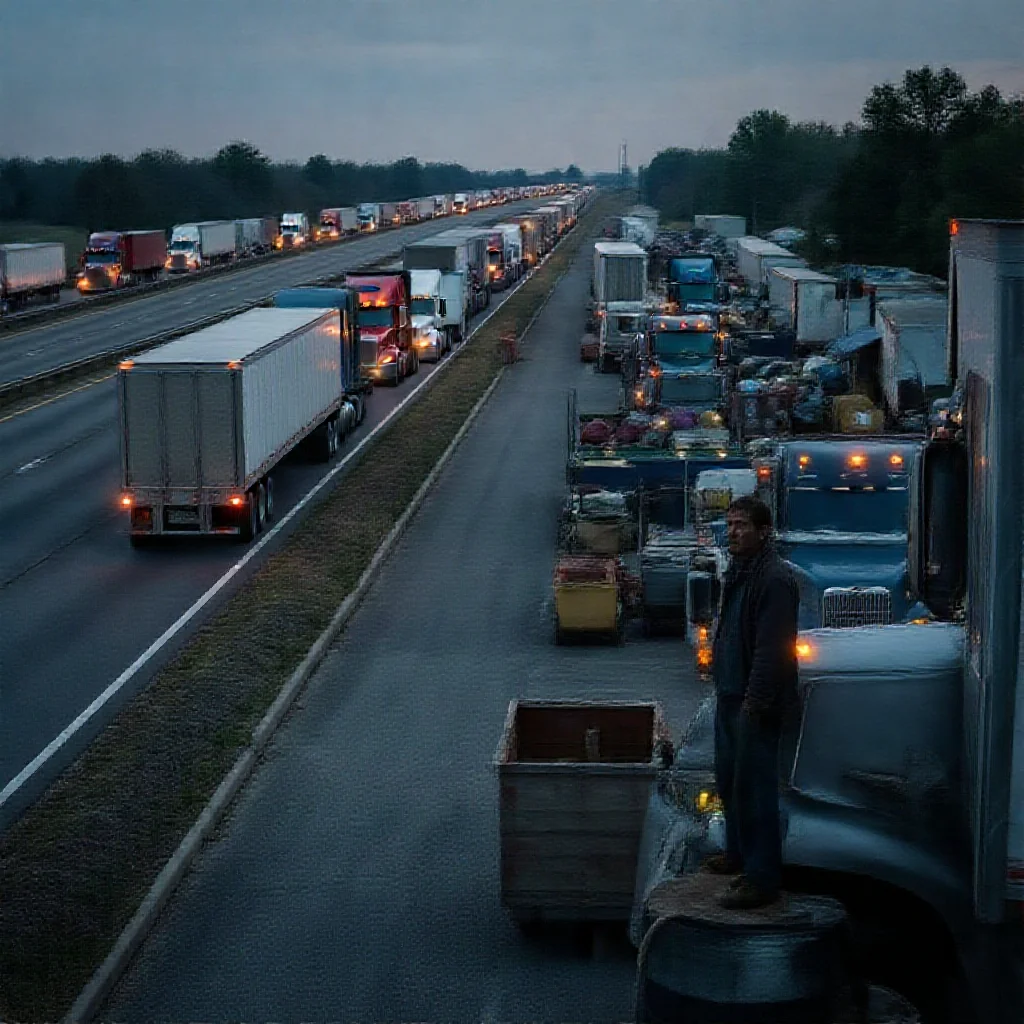
"The FMCSA's Congressionally-mandated study on truck parking shortages is"
Beyond the Rest Stop: FMCSA's Truck Parking Study and the Hidden Supply Chain Crisis
Introduction: A Congressional Mandate Meets a Daily Crisis
On February 16, 2024, the Federal Motor Carrier Safety Administration (FMCSA) initiated a Congressionally-mandated study on the shortage of commercial motor vehicle parking. This action, required by the Bipartisan Infrastructure Law, is a procedural response to a chronic and worsening operational crisis. The administrative timeline imposes urgency: public comments must be submitted by April 17, 2024, with a final report due to Congress by November 15, 2024 (Source 1: [Primary Data]). The study functions as a diagnostic tool for a symptom of a larger systemic condition—persistent under-investment in the core infrastructure supporting freight mobility. It moves beyond a simple logistics survey to probe a critical bottleneck with demonstrable impacts on national supply chain resilience.
The Hidden Economics of the Parking Shortage
The parking shortage imposes quantifiable costs that extend far beyond driver inconvenience. The search for secure parking consumes operational hours, leading to wasted fuel and, critically, the loss of viable driving time within federally mandated Hours-of-Service (HOS) rules. When a driver’s available driving clock expires before locating parking, it results in unscheduled stops, directly delaying freight delivery and disrupting warehouse scheduling and just-in-time inventory systems.
This scarcity is a documented factor in the industry’s persistent labor crisis. Surveys consistently identify the lack of safe, available parking as a primary reason for driver dissatisfaction and attrition. The economic ripple effect extends upstream: parking instability incentivizes drivers to arrive early at shipper and receiver facilities, contributing to increased detention time. This inefficiency, where drivers are unpaid while waiting to load or unload, creates cost pressures throughout the supply chain, affecting rates, capacity, and ultimately, consumer prices.
Deep Dive: The Study's Framework and Its Strategic Gaps
The FMCSA study is structured around three pillars: assessing current parking capacity and utilization, identifying barriers to expansion, and formulating strategic recommendations (Source 1: [Primary Data]). The mandate to "assess the capability of states and metropolitan planning organizations to reduce the shortage" indicates a focus on public-sector planning mechanisms.
A significant directive within the study is the requirement to "consider the unique challenges faced by women, minority, and veteran truckers" (Source 1: [Primary Data]). This inclusion aims to uncover safety and access disparities. For instance, a shortage of well-lit, secure parking facilities disproportionately impacts drivers who may face higher security risks, potentially limiting their operational flexibility and route choices. The study’s findings in this area could inform infrastructure design and security standards to promote equitable access.
A potential analytical gap in the study’s framework is its apparent focus on public entities. While assessing state and metropolitan planning organization capabilities is necessary, a comprehensive solution will likely require engagement with private capital and innovative public-private partnership models. The study’s scope may under-examine the economic models for viable private investment in truck parking, which is often perceived as less profitable than other commercial real estate developments.
The Public Comment Window: Shaping Policy from the Ground Up
The public comment period, closing on April 17, 2024, represents a critical leverage point for empirical data collection. Effective comments will likely move beyond anecdotal complaints to provide structured evidence. This includes geospatial data identifying specific parking shortage hot-spots, quantitative operational data on fuel waste and lost hours from carrier fleets, and personal narratives detailing safety compromises.
Organizations like the American Transportation Research Institute (ATRI) possess longitudinal data on parking issues, which can provide a macro-level validation of individual stakeholder submissions. The aggregation of this ground-level data during the comment phase will directly shape the study’s assessment of capacity and barriers, making the final report to Congress more reflective of on-the-ground realities.
Conclusion: From Diagnosis to Prescription
The FMCSA study will culminate in a report to Congress by November 15, 2024. Its conclusions are anticipated to serve as the foundational evidence for future policy and funding decisions. The logical progression from this study points toward potential legislative or regulatory actions, such as dedicated funding streams within infrastructure bills, revised zoning and permitting guidance to lower barriers for parking development, or incentives for technological solutions like dynamic parking information systems.
The ultimate market prediction is that without significant intervention informed by this study, the parking shortage will continue to function as a latent tax on freight efficiency. It will compound driver retention challenges, contribute to marginal but persistent supply chain volatility, and constrain the effective utilization of the national highway network for commerce. The study’s value lies in its potential to translate a daily operational frustration into a calibrated economic and safety argument for targeted infrastructure investment.
Trade Metrics
Related Datasets
Q4 Cross-Border Logistics Report
PDF • 4.2 MB
Automotive Parts Supply Chain Index
CSV • 1.1 MB