FMC''s Double Denial: Why Maersk''s Fuel Surcharge Waiver Rejections Signal

Emily Rodriguez
Cross-Border Trade Reporter
April 9, 2026
DATELINE: NA TRADE WIRE
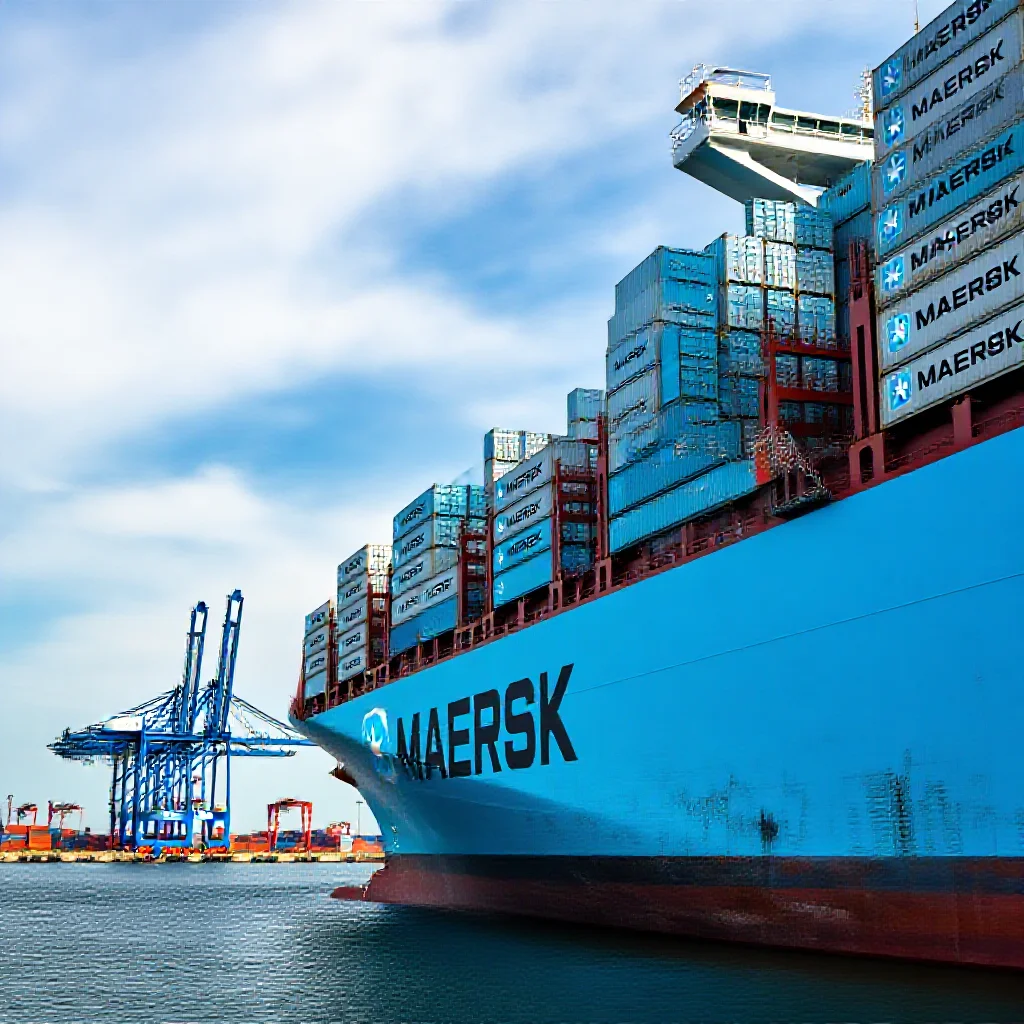
"The Federal Maritime Commission's (FMC) second consecutive denial of Maersk's"
FMC's Double Denial: Why Maersk's Fuel Surcharge Waiver Rejections Signal a New Era of Maritime Regulation
Opening Summary
The Federal Maritime Commission (FMC) has issued a second consecutive denial of an emergency fuel surcharge waiver request filed by A.P. Moller-Maersk. This decision follows a prior denial issued in the preceding month. (Source 1: [FMC Docket Denial]). The repeated regulatory action moves beyond a case-specific ruling and establishes a measurable pattern. Analysis indicates this pattern represents a strategic pivot in U.S. maritime oversight, transitioning from reactive pandemic-era interventions to a phase defined by strict contractual adherence and enforced market discipline under the enhanced authority of the Ocean Shipping Reform Act of 2022 (OSRA).The Denial in Detail: A Pattern, Not an Anomaly
Maersk’s filings sought emergency relief from established contractual surcharge mechanisms, specifically the bunker adjustment factor, citing volatile fuel market conditions. The FMC’s denials, documented in successive public dockets, rejected the premise that these market fluctuations constituted an emergency warranting regulatory intervention to alter binding service contracts. (Source 2: [FMC Public Filings]).The emergency waiver mechanism is a procedural tool intended for unforeseen, catastrophic disruptions. Its consecutive invocation for fuel price volatility, a known and perennial risk in maritime logistics, tested the boundaries of this provision. The FMC’s consistent rejections clarify the commission’s interpretation: normal commercial risk, even when acute, does not qualify for emergency contractual override. This establishes a clear administrative precedent, signaling that the threshold for such waivers is now significantly higher.
Decoding the Regulatory Shift: From Crisis Mode to Contract Enforcement
The dual denials constitute a definitive marker of the FMC’s evolving mandate. During the supply chain crisis of 2020-2022, regulatory actions were often characterized by crisis management and addressing acute port congestion and capacity shortages. The current posture, empowered by OSRA, is that of a market architect enforcing statutory prohibitions against unfair and unreasonable practices.The underlying economic logic prioritizes cost predictability for Beneficial Cargo Owners (BCOs), particularly small and medium-sized shippers. Unpredictable surcharge pass-throughs disrupt supply chain budgeting and can create competitive disadvantages. By denying waivers, the FMC reinforces that surcharge mechanisms, negotiated and agreed upon in contracts, represent a shared risk allocation. This compels all parties to incorporate more rigorous fuel price risk assessment during the contract negotiation phase, rather than seeking ex-post facto regulatory relief.
The signal to the market is unambiguous. Contractual terms will be held as binding. The era of ad-hoc accommodations is concluding, replaced by a framework where commercial discipline and the precise language of service contracts are paramount.
The Ripple Effect: Implications for Global Supply Chains
The long-term implications of this regulatory stance will manifest in several key areas of global logistics.Carrier Pricing Strategies: There will be increased pressure to move away from complex, variable surcharge matrices toward more transparent, all-inclusive freight rates. This shift would internalize fuel risk within the base rate, providing greater clarity for shippers and reducing administrative friction. Carriers may develop more sophisticated hedging strategies to manage this embedded risk.
Supply Chain Budgeting: For importers and exporters, particularly BCOs with less market leverage, the FMC’s stance enhances medium-term cost certainty. The reduced likelihood of emergency surcharge waivers makes contracted rates more reliable, allowing for more accurate financial planning and product pricing.
Contractual and Dispute Resolution: This precedent may lead to more meticulous drafting of force majeure and cost-adjustment clauses in service contracts. It also sets a benchmark for future disputes; parties are less likely to succeed in claims for relief based on market volatility alone, potentially reducing certain types of litigation while channeling disputes toward the specific interpretation of contract language.
Evidence and Verification: Anchoring the Analysis
The analysis is anchored in primary regulatory documents and legislative text. The two FMC denials are matters of public record, providing the factual basis for the observed pattern. (Source 3: [FMC Docket Timeline]).The regulatory shift is explicitly enabled by the Ocean Shipping Reform Act of 2022. OSRA expanded the FMC’s investigative authority, strengthened prohibitions on unjust and unreasonable conduct, and enhanced requirements for carrier rate transparency. (Source 4: [OSRA 2022 Statutory Text]). The commission’s actions are a direct operationalization of this congressional mandate.
Historical bunker fuel price data provides necessary context. While prices exhibit volatility, they operate within a known cyclical band. The FMC’s decisions implicitly recognize that such variability is an intrinsic, foreseeable component of operating in global shipping, not an extraordinary emergency justifying contractual nullification.
Neutral Market and Industry Predictions
The trajectory indicated by the FMC’s recent decisions points toward a more formalized and less discretionary regulatory environment. Carrier-shipper contract negotiations will increasingly focus on risk allocation modeling, with fuel clauses becoming a critical point of technical and financial scrutiny. The FMC’s role will continue to evolve from adjudicating emergency petitions to conducting proactive market monitoring and enforcement of new OSRA rules, such as those pertaining to detention and demurrage.Market adaptation is predicted. A bifurcation may emerge between standard service contracts with rigid surcharge terms and more flexible, premium contracts with built-in adjustment mechanisms priced accordingly. The overall effect will be a push toward greater commercial certainty, shifting the burden of managing volatile input costs from post-hoc regulatory appeals to upfront contractual design and corporate risk management departments. This evolution marks the definitive close of the pandemic-era regulatory playbook and the commencement of a new chapter in U.S. maritime governance.
Trade Metrics
Related Datasets
Q4 Cross-Border Logistics Report
PDF • 4.2 MB
Automotive Parts Supply Chain Index
CSV • 1.1 MB