Beyond the Certificate: How the FAA''s 777-200 Freighter Nod Reshapes Air

Emily Rodriguez
Cross-Border Trade Reporter
April 15, 2026
DATELINE: NA TRADE WIRE
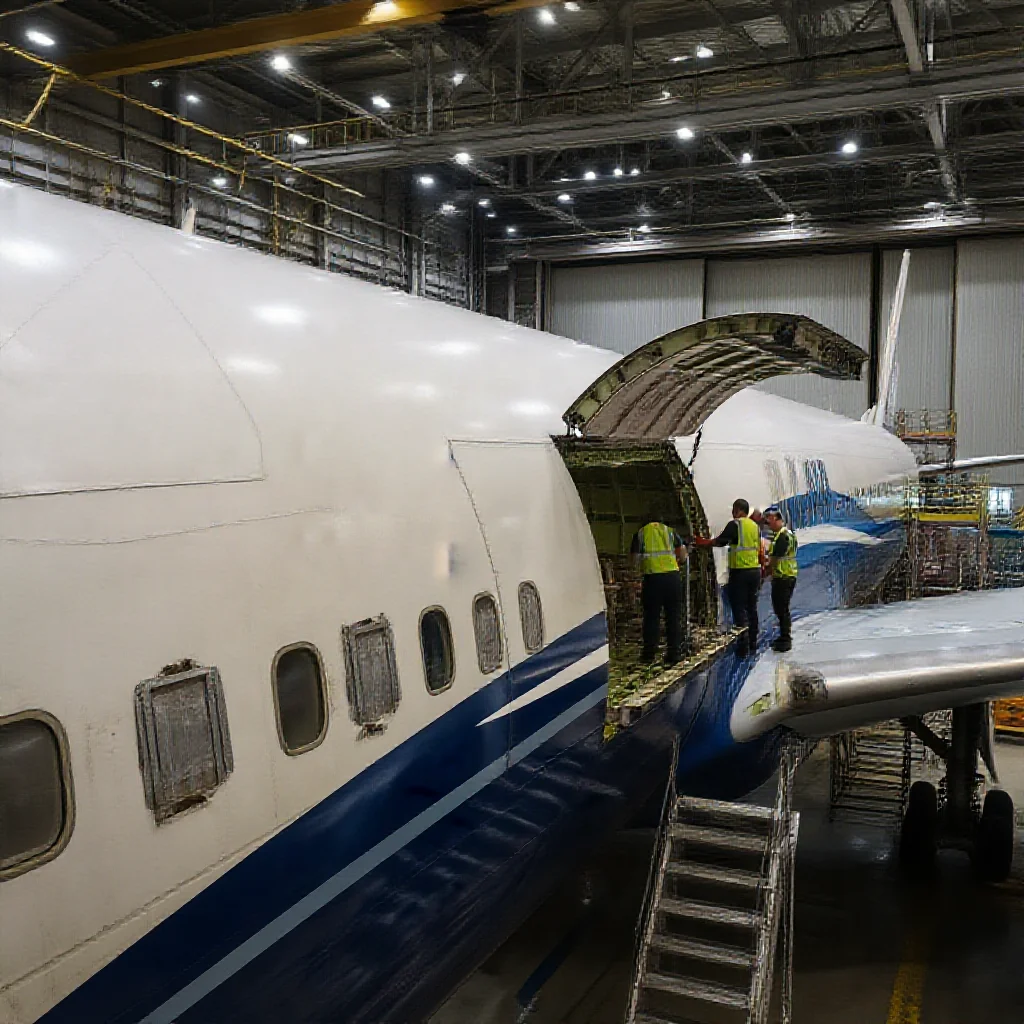
"The FAA''s supplemental type certificate for the Boeing 777-200 passenger-to-freighter"
Beyond the Certificate: How the FAA's 777-200 Freighter Nod Reshapes Air Cargo Economics

The Federal Aviation Administration (FAA) has issued a supplemental type certificate for the Boeing 777-200 passenger-to-freighter conversion. (Source: FAA STC Documentation)
The Regulatory Green Light: Decoding the FAA's Supplemental Type Certificate
The Federal Aviation Administration’s issuance of a supplemental type certificate (STC) for the Boeing 777-200 passenger-to-freighter (P2F) conversion is a procedural authorization with systemic industrial consequences. An STC is not a product launch but a regulatory blueprint; it certifies that a specific modification to an existing, type-certified aircraft meets stringent safety standards. This approval provides the legal and technical pathway for modification centers to alter the airframe’s fundamental purpose.
This authorization arrives at a strategic point in the Boeing 777-200's lifecycle. As a significant number of these aircraft exit prime passenger service, driven by airline fleet modernization towards newer, more fuel-efficient models, a substantial pool of mid-life airframes enters the market. The STC transforms these aircraft from depreciating passenger assets into potential cargo workhorses, creating a formalized exit strategy that was previously limited or more costly. The foundational fact of the FAA’s STC issuance establishes the credibility for all subsequent market movements.

The Hidden Economic Logic: A Supply Shock for the Cargo Fleet
The economic impact stems from the immediate alteration of asset valuations and competitive dynamics. The global pool of aging Boeing 777-200 passenger aircraft now possesses a defined and lucrative secondary market. This certainty boosts the residual values of these airframes, as investors and lessors can underwrite their future with a known conversion potential. The asset class shifts from one of managed decline to one of planned transition.
The conversion disrupts the established cost-benefit analysis of freighter operations. A converted Boeing 777-200F offers a distinct economic proposition between new-build Boeing 777 freighters and older converted models like the Boeing 747-400 or MD-11. While lacking the payload and range of a new 777F, the converted -200 model presents a significantly lower capital cost. More critically, it offers superior fuel efficiency and lower operating costs per ton-mile compared to the aging quad-engine and tri-engine fleets it is poised to replace. This creates a compelling middle ground for operators seeking modern widebody capability without the capital expenditure for a new aircraft.
For leasing companies and aircraft investors, this approval creates a new, calculable asset class. Portfolio strategies must now account for the extended economic life and altered depreciation curves of the 777-200. The ripple effect will influence trading prices, lease rates, and the overall financing landscape for widebody aircraft.

Strategic Winners and the Reshaping of Cargo Networks
The strategic beneficiaries extend beyond global integrators like FedEx and UPS. Combination carriers—airlines operating both passenger and cargo services—can leverage this platform to efficiently modernize their dedicated freighter fleets or add incremental capacity. Niche cargo operators and charter specialists gain access to a long-range, efficient maindeck freighter that was previously available only as a new, capital-intensive purchase or an older, less efficient conversion.
This accessibility is likely to catalyze an evolution in cargo route networks. The aircraft’s range and economics enable more direct, point-to-point cargo routes between secondary cities in Asia, North America, and Europe, potentially bypassing traditional major hub airports. This challenges the traditional hub-and-spoke model for cargo, allowing for faster transit times on specific lanes and reducing reliance on consolidation points.
An environmental calculus is also inherent in this development. Repurposing an existing airframe extends its usable life, deferring the carbon footprint associated with manufacturing a new aircraft. Furthermore, the operational fuel efficiency gains over older generation freighters contribute to direct emissions reductions for the cargo sector, aligning with broader industry sustainability goals.

The Long-Term Play: Implications for Boeing, Airbus, and the MRO Ecosystem
The long-term implications for Boeing are multifaceted. While a widespread conversion program could potentially cannibalize some sales of new-build 777 freighters, it also serves to expand the total addressable market for the 777 platform as a cargo solution. It entrenches the 777’s dominance in the freighter segment across both new and converted categories, potentially crowding out competitors. The move also ensures a continued pipeline of demand for Boeing parts and support for the 777-200 variant.
For Airbus, the pressure intensifies on its A330 P2F program, which has been the dominant modern widebody conversion. The 777-200F offers greater payload and range, positioning it as a superior solution for the longest-haul routes. The competitive response may involve accelerating enhancements or pricing strategies for the A330 program.
The maintenance, repair, and overhaul (MRO) ecosystem experiences a significant stimulus. The STC authorizes a complex modification process involving the installation of a main deck cargo door, reinforced flooring, a cargo handling system, and window plugging. This creates a multi-year demand cycle for specialized conversion lines at MRO facilities worldwide, representing a substantial source of revenue and technical specialization. The approval does not merely modify aircraft; it reconfigures a segment of the aviation industrial base.
Trade Metrics
Related Datasets
Q4 Cross-Border Logistics Report
PDF • 4.2 MB
Automotive Parts Supply Chain Index
CSV • 1.1 MB