CMA CGM''s Hormuz Bypass: A Strategic Pivot in Global Logistics and Geopolitical

Emily Rodriguez
Cross-Border Trade Reporter
March 29, 2026
DATELINE: NA TRADE WIRE
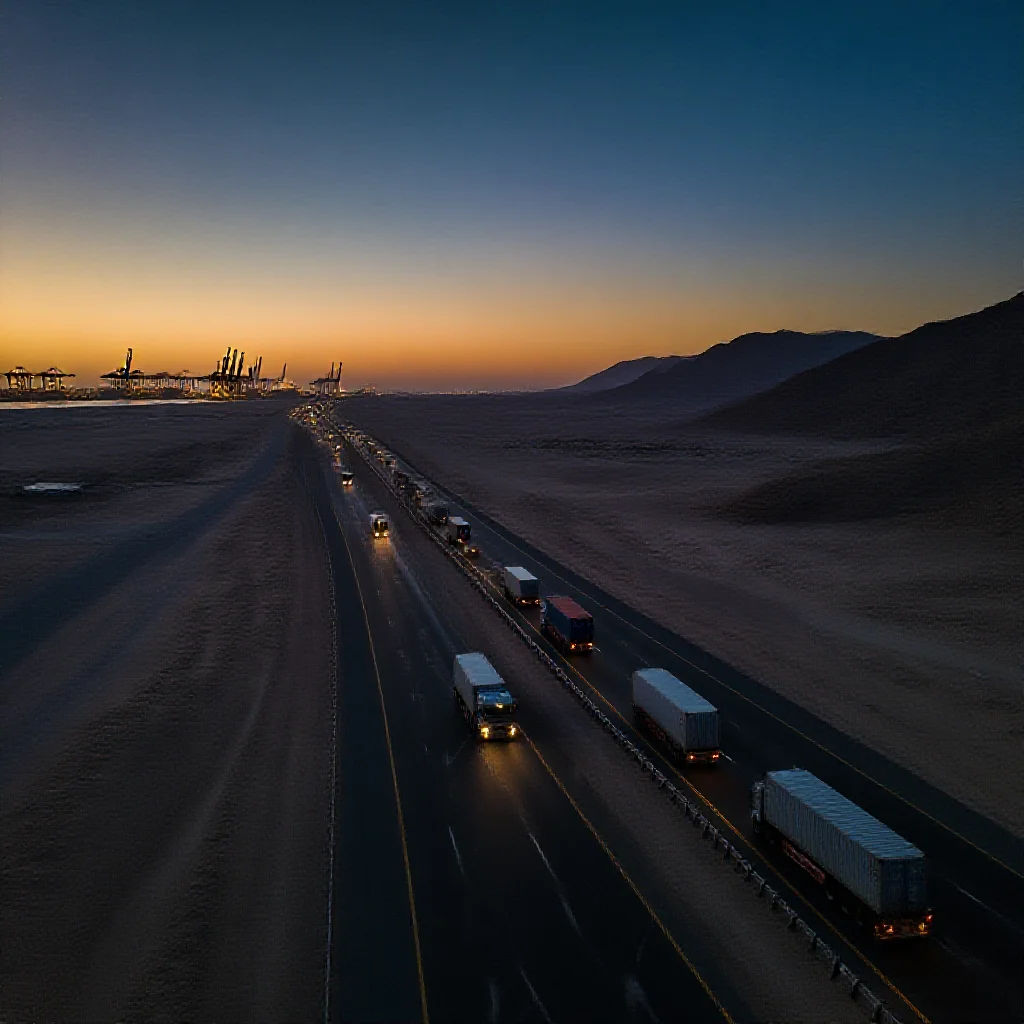
"In response to escalating regional tensions, shipping giant CMA CGM has launched"
CMA CGM's Hormuz Bypass: A Strategic Pivot in Global Logistics and Geopolitical Risk Management
Beyond the Headline: Decoding the Strategic Calculus Behind the Bypass
In response to persistent regional volatility, French shipping conglomerate CMA CGM has activated a land bridge connecting the Arabian Gulf ports of Jebel Ali (UAE) and Sohar (Oman) to the port of Fujairah on the Gulf of Oman. The service is operational for all cargo types, including dangerous goods, with transit times of approximately 24 hours from Jebel Ali and 12 hours from Sohar (Source 1: [Primary Data]). This infrastructure is not a temporary contingency plan but a permanent, marketed logistics service. It represents a capital investment in supply chain sovereignty, institutionalizing the mitigation of a specific geopolitical risk into a standard commercial offering.
The strategic calculus extends beyond physical rerouting. It reflects the financialization of geopolitical risk. Maritime transit through the Strait of Hormuz carries variable costs, including elevated war risk insurance premiums and potential surcharges imposed by carriers during periods of heightened tension. CMA CGM’s land bridge transforms this variable risk cost into a predictable, fixed operational expense. By offering a secure, 24-hour alternative, the company is effectively decoupling a portion of global trade flows from a perennial maritime chokepoint, providing clients with cost certainty amidst uncertainty.
Dual-Track Analysis: Fast Verification vs. Deep Industry Audit
A fast analysis confirms the operational reality and immediacy of the shift. The service is active, with defined transit times and explicit inclusion of all cargo categories. This verification confirms the development as an actionable change in the market, providing an immediate alternative for supply chain managers. The availability for dangerous goods is particularly significant, as these shipments are most sensitive to routing restrictions and insurance costs during regional instability.
A deeper industry audit must examine the long-term structural implications. The primary question is whether this move will trigger similar investments by other global alliances and carriers, such as MSC and Maersk. A secondary line of inquiry involves the reconfiguration of port hierarchies within the Gulf region. The land bridge inherently shifts logistical weight from purely maritime hubs to those integrated with multimodal corridors. This requires analysis of port capacity data, regional infrastructure investment flows, and historical models of traffic diversion during previous chokepoint disruptions.
The Unseen Ripple Effect: Port Hierarchies and Supply Chain Redesign
The most profound impact may be on port competitiveness and function. Fujairah’s role is fundamentally transformed. Historically a major bunkering hub outside the Strait, it is now positioned as a strategic gateway for cargo bypassing the chokepoint entirely. This pivot will likely accelerate container capacity expansion plans at Fujairah, as evidenced by its port authority’s stated ambitions to capture bypass traffic.
A subtle tension emerges between the new route and the established hub status of Jebel Ali. While Jebel Ali is the origin for one leg of the land bridge, the service also offers shippers an alternative to discharging cargo there in the first place. Vessels could potentially route directly to Sohar or Fujairah, redistributing cargo volumes. Concurrently, Oman’s Sohar Port gains enhanced relevance as a multi-modal nexus, leveraging its geographic position outside the Strait.
This development incentivizes a broader supply chain redesign. For cargo destined beyond the Gulf, the land bridge presents a calculated trade-off: added trucking cost and handling versus reduced maritime risk and potential insurance savings. This equation will be continuously evaluated by shippers, making the land bridge a permanent feature of regional logistics planning rather than an emergency option. The trend points toward the creation of "de-risked" logistics corridors, where premium is placed on predictability and security, establishing them as a core competitive advantage for logistics providers in volatile regions.
Neutral Market Prediction
The establishment of this corridor signals a maturation in how global logistics firms manage systemic geopolitical risk. It is probable that other major carriers will develop similar structured bypass solutions, either independently or in partnership, for the Strait of Hormuz and other critical chokepoints globally. Ports with inherent geographical advantages outside conflict zones will attract increased investment. The net effect will be a marginal but meaningful diversification of Asia-Europe and Asia-Gulf trade routes, increasing overall network resilience. The financial premium for secure, predictable routing is now a quantifiable and marketable service, setting a new benchmark for comprehensive logistics offerings in high-risk areas.
Trade Metrics
Related Datasets
Q4 Cross-Border Logistics Report
PDF • 4.2 MB
Automotive Parts Supply Chain Index
CSV • 1.1 MB