Atlas Air''s Airbus A350F Order: A Strategic Pivot Reshaping Global Air Cargo

Emily Rodriguez
Cross-Border Trade Reporter
March 22, 2026
DATELINE: NA TRADE WIRE
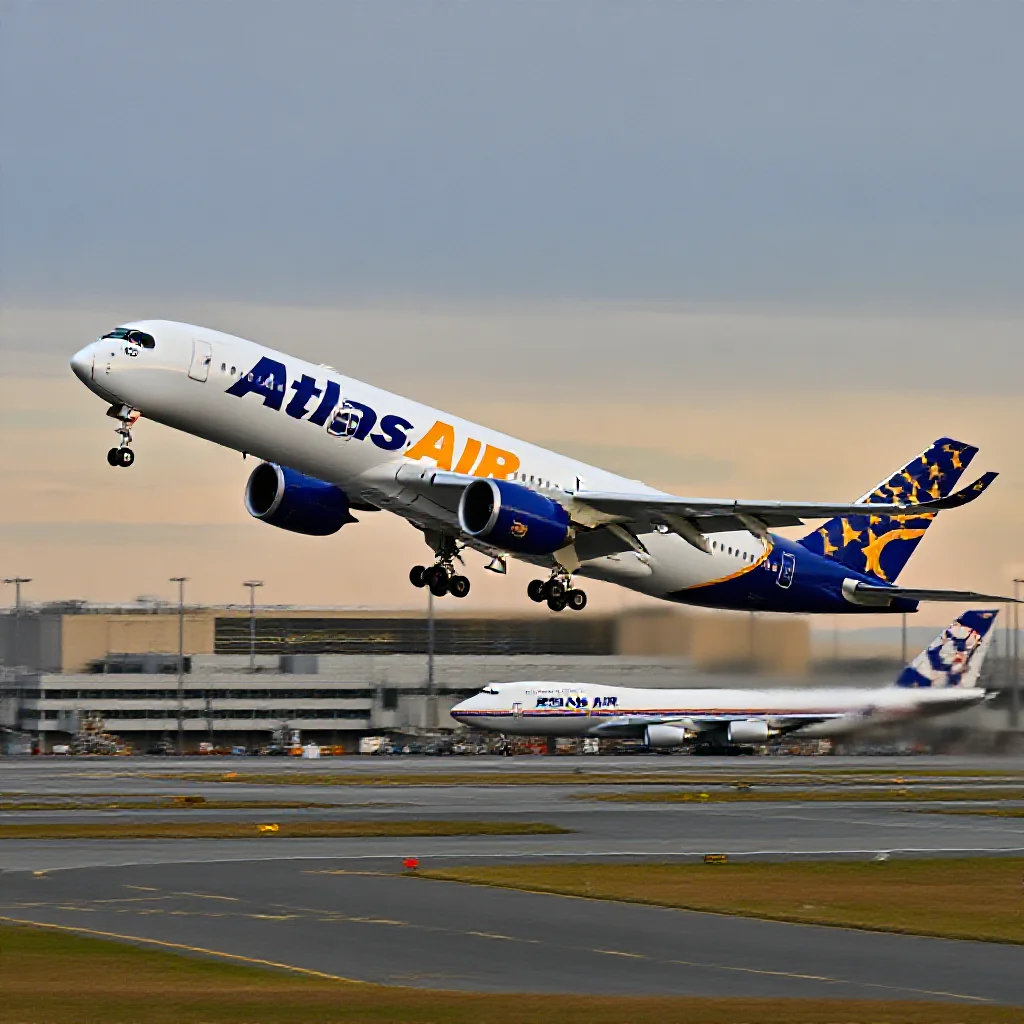
"Atlas Air Worldwide Holdings' landmark order for 20 Airbus A350-1000F freighters,"
Atlas Air's Airbus A350F Order: A Strategic Pivot Reshaping Global Air Cargo
Opening Summary
Atlas Air Worldwide Holdings has placed a firm order for 20 Airbus A350-1000F widebody freighter aircraft, with options for an additional 20 units. (Source 1: [Primary Data]) The first delivery is scheduled for 2026. (Source 1: [Primary Data]) This transaction represents a significant strategic departure for an operator historically aligned with Boeing, particularly as a major global operator of the Boeing 747 freighter.
Beyond the Headline: Decoding Atlas Air's Strategic Calculus
The scale of the order—20 firm aircraft plus 20 options—indicates a long-term fleet planning commitment extending over a decade. The core strategic narrative is a pivot away from sole-source dependency. Atlas Air's historical reliance on Boeing, especially the 747, has been a defining characteristic of its fleet. This order introduces a multi-layered strategic calculus focused on operational efficiency, market diversification, and supply chain risk mitigation. The move secures a position in the delivery queue for a next-generation aircraft, providing a hedge against potential future constraints or market shifts within the duopoly.The Duopoly Dance: Why Airbus Now?
The decision is driven by a confluence of push and pull factors within the manufacturer duopoly. Push factors originate from Boeing's operational environment. The cessation of Boeing 747 production eliminates a future source of new large freighters from that program. Concurrently, robust demand for Boeing's 767F and 777F models has led to extended backlogs, delaying delivery timelines for customers. (Contextual Analysis: Industry Production Data)Pull factors are centered on the Airbus A350-1000F's projected performance. Airbus promotes the aircraft's fuel efficiency and lower operating costs derived from its composite airframe and new-generation Rolls-Royce engines. Its range-payload profile is optimized for long-haul operations, particularly suited to the growing demand for international e-commerce and express cargo lanes where density and distance are critical. (Source 2: Airbus Performance Specifications)
The Ripple Effect: Reshaping the Global Cargo Ecosystem
Atlas Air's procurement will exert pressure on competing cargo airlines and lessors to reevaluate their fleet strategies. Operators such as Cargolux and AirBridgeCargo, which also operate large Boeing freighter fleets, now face a competitive landscape where a key peer has committed to a next-generation Airbus alternative. This may accelerate the retirement cycle for older, less efficient freighters, impacting the secondary aircraft market and the maintenance, repair, and overhaul (MRO) sector focused on legacy types.The operational capabilities of the A350F could recalibrate global logistics networks. Its efficiency on long-thin routes may enable more direct point-to-point cargo services, potentially bypassing traditional consolidation hubs and altering global freight flow patterns.
2026 and Beyond: A New Competitive Landscape
The 2026 delivery date for the first aircraft positions the order's full impact as a gradual, decade-long evolution. This timeline allows for market conditions to adjust and competitor responses to materialize. Boeing's potential counter-strategies may include accelerating the development and certification of its proposed 777-8F freighter, pursuing more aggressive pricing for existing freighter models, or further promoting its passenger-to-freighter conversion programs for aircraft like the 777-300ER.The Atlas Air order constitutes a watershed moment for the air cargo manufacturing sector. It marks Airbus's most substantive entry into the large purpose-built widebody freighter market, successfully securing a launch customer from Boeing's traditional stronghold. For the first time in a generation, the industry has a viable, competitive alternative for large new-production freighters, fundamentally altering the strategic options available to global logistics players.
Trade Metrics
Related Datasets
Q4 Cross-Border Logistics Report
PDF • 4.2 MB
Automotive Parts Supply Chain Index
CSV • 1.1 MB