Beyond the $85M Deal: How Andy Corp.''s Dual Acquisition Reshapes the Logistics

Emily Rodriguez
Cross-Border Trade Reporter
March 29, 2026
DATELINE: NA TRADE WIRE
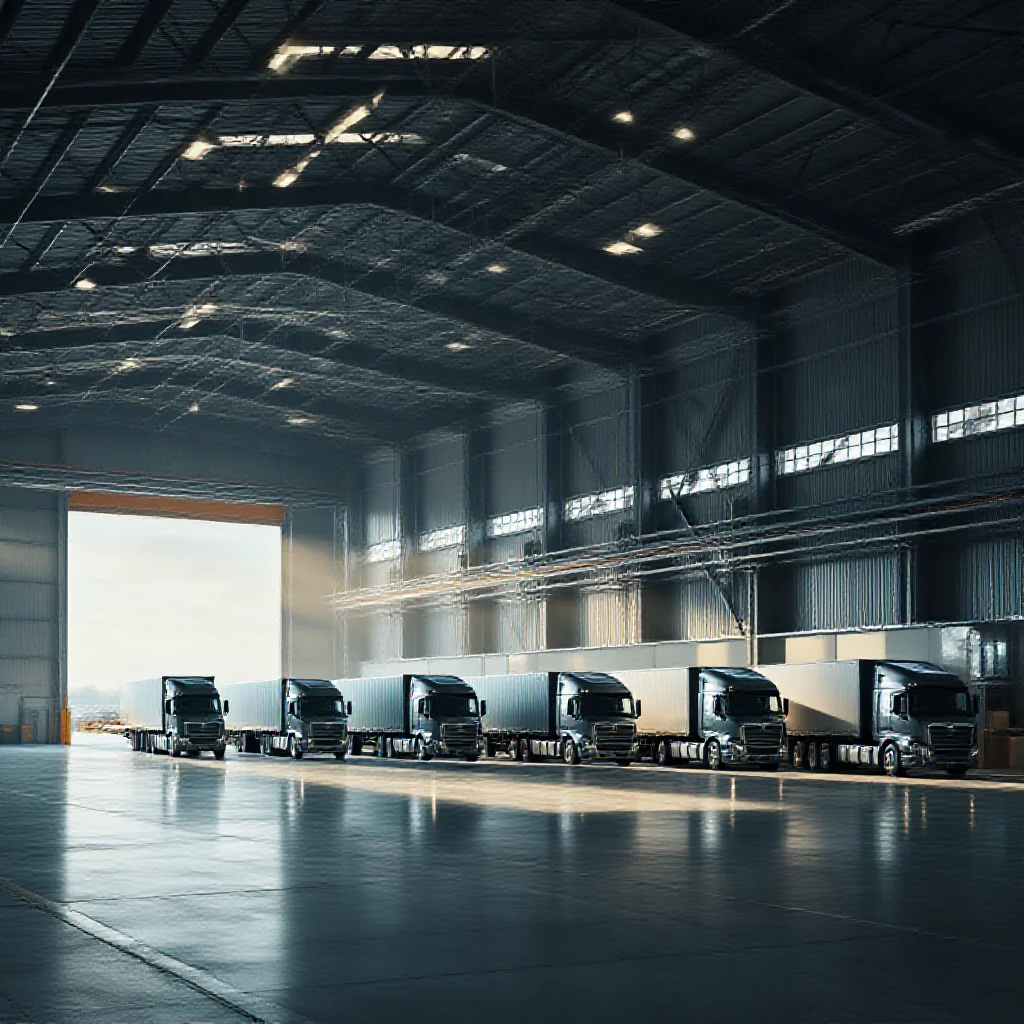
"Andy Corp.''s simultaneous $85 million acquisition of a 25-truck fleet and"
Beyond the $85M Deal: How Andy Corp.'s Dual Acquisition Reshapes the Logistics Landscape
Article Summary: Andy Corp.'s simultaneous $85 million acquisition of a 25-truck fleet and 400,000 sq ft of warehouse space is more than a simple capacity boost. This analysis argues the dual-transaction strategy reveals a calculated move to gain control over two critical, bottlenecked assets in modern supply chains: transportation velocity and flexible storage. While the headline figure and 30% capacity increase are notable, the deeper story lies in the vertical integration of assets previously held by disparate owners (a private fleet operator and a REIT). This positions Andy Corp. to insulate itself from volatile spot-market rates for both trucking and warehousing, suggesting a strategic pivot towards owned-asset reliability in an uncertain economic climate. The article examines the long-term implications for mid-market logistics competition and underlying supply chain resilience.
---
The Transaction Anatomy: More Than the Sum of Its Parts
Andy Corp. has consolidated two distinct assets into a single strategic initiative. The corporation acquired a truck fleet from a private owner, comprising 25 trucks and 50 trailers, and separately purchased two warehouse facilities totaling 400,000 square feet from a real estate investment trust (REIT) (Source 1: [Primary Data]). The combined expenditure for these transactions was $85 million (Source 1: [Primary Data]).
A preliminary financial audit of the deal suggests a strategic allocation of capital. While the exact split is undisclosed, industry benchmarks indicate the rolling stock acquisition—25 trucks and 50 trailers—likely represents a significant minority of the total outlay, with the bulk of capital directed toward the industrial real estate. This reflects the enduring premium on well-located logistics space versus depreciating equipment. The strategic nuance lies in the nature of the sellers: operational control was acquired from a private fleet operator, while the real estate was sourced from a capital-focused REIT. This bifurcated approach allowed Andy Corp. to target specialized sellers, potentially optimizing purchase terms.
The corporation projects a 30% increase in its overall logistics capacity from these acquisitions (Source 1: [Primary Data]). This metric requires scrutiny. It is not merely an additive function of square footage and truck count. True capacity expansion is measured in throughput—the velocity at which goods move from warehouse racks to a truck’s trailer and onto the road. The 30% figure gains credibility only if the newly acquired warehouses are geographically positioned to integrate seamlessly with the fleet’s operational lanes, transforming two independent capacity pools into a synchronized, higher-velocity network.
The Core Axis: Securing the Twin Pillars of Supply Chain Sovereignty
The hidden logic of this dual acquisition is defensive integration. In a fragmented logistics market, control over the two most critical and bottlenecked components—transportation velocity (trucks) and node flexibility (warehouses)—constructs a competitive moat.
The move is a direct hedge against systemic volatility. Ownership of a 25-truck fleet provides a baseline of guaranteed capacity, shielding the company from extreme spot-market freight rate spikes. Concurrently, owning 400,000 square feet of warehouse space insulates operations from tightening industrial real estate markets and unpredictable lease renewals. This dual ownership eliminates the twin vulnerabilities of relying on the transactional markets for both core moving and storage functions.
The integration premium is the central value proposition. The real strategic advantage is not in purchasing discrete assets but in eliminating the coordination friction and misaligned incentives that exist between independent third-party carriers and commercial landlords. By internalizing both functions, Andy Corp. can optimize dock scheduling, reduce dwell times, and implement unified technology systems, translating asset control into operational efficiency that external partnerships struggle to replicate.
Slow Analysis: A Deep Audit of the Mid-Market Logistics Shift
This transaction is a data point in a slower, more significant trend: the pivot towards owned, integrated physical assets by firms that previously competed on an asset-light, brokerage-based model. The analysis is not about a single $85 million deal but about the recalibration of risk assessment in the logistics sector.
The evidence arrangement contextualizes this move within broader market pressures. Industry reports consistently highlight rising costs for third-party logistics (3PL) services and sustained volatility in commercial real estate for industrial space. Andy Corp.’s capital commitment signals a valuation of long-term cost predictability and operational reliability over the short-term flexibility of rental models. It is a calculated bet that the premium paid for owned assets will be recouped by avoiding future market premiums and securing customer relationships with guaranteed service levels.
The long-term competitive impact is substantial. If Andy Corp. successfully demonstrates superior margin stability and service resilience, peer organizations in the mid-market will face pressure to make similar capital-intensive commitments. This could initiate a sector-wide stratification, dividing competitors into those with controlled, integrated asset networks and those reliant on increasingly expensive and unreliable open markets, thereby altering the fundamental competitive landscape.
The Unseen Entry Point: Warehouses as Data Hubs, Not Just Storage
A viewpoint beyond ordinary financial reports suggests the 400,000 square feet of warehouse space represents more than storage capacity; it is infrastructure for data generation and network intelligence. Modern warehouses are sensor-rich environments. Ownership of this space allows Andy Corp. to instrument these facilities fully, collecting granular data on inventory velocity, handling efficiency, and fulfillment patterns without the restrictions of a standard lease agreement.
This data, when correlated with telematics from its owned truck fleet, creates a closed-loop intelligence system. The corporation can analyze the entire sequence from goods-in to goods-out and final-mile delivery with unparalleled depth. This integrated data asset can drive predictive analytics for inventory placement, dynamic routing, and proactive maintenance, transforming physical asset ownership into a foundational platform for algorithmic optimization. In this context, the warehouse acquisition is also a strategic investment in proprietary data acquisition infrastructure.
Neutral Market Predictions: The Integration Imperative
The immediate market prediction is an increase in scrutiny of similar mid-sized logistics firms’ balance sheets for asset-ownership ratios. Investors and analysts will likely begin to differentiate between companies based on their degree of control over key physical supply chain nodes.
The broader industry prediction is a acceleration of strategic mergers and acquisitions aimed at creating similar integrated bundles of transportation and warehousing assets. Private equity and strategic buyers may target paired acquisitions, mirroring Andy Corp.’s model. Furthermore, real estate investment trusts specializing in industrial property may seek deeper operational partnerships or even develop captive transportation arms to offer bundled "capacity-as-a-service" solutions, competing directly with the owned-asset model.
The ultimate implication for supply chain resilience is a potential bifurcation. One path leads toward greater reliance on owned or tightly controlled dedicated assets for core, predictable supply chain legs, prioritizing reliability. The other path reserves the volatile spot market for overflow capacity and exceptional circumstances. Andy Corp.’s $85 million investment is a definitive step down the first path, betting that in an era of persistent disruption, sovereignty over capacity is the paramount strategic objective.
Trade Metrics
Related Datasets
Q4 Cross-Border Logistics Report
PDF • 4.2 MB
Automotive Parts Supply Chain Index
CSV • 1.1 MB