Beyond the 20% Cut: Decoding Amazon''s Strategic Shift Away from USPS

Emily Rodriguez
Cross-Border Trade Reporter
April 8, 2026
DATELINE: NA TRADE WIRE
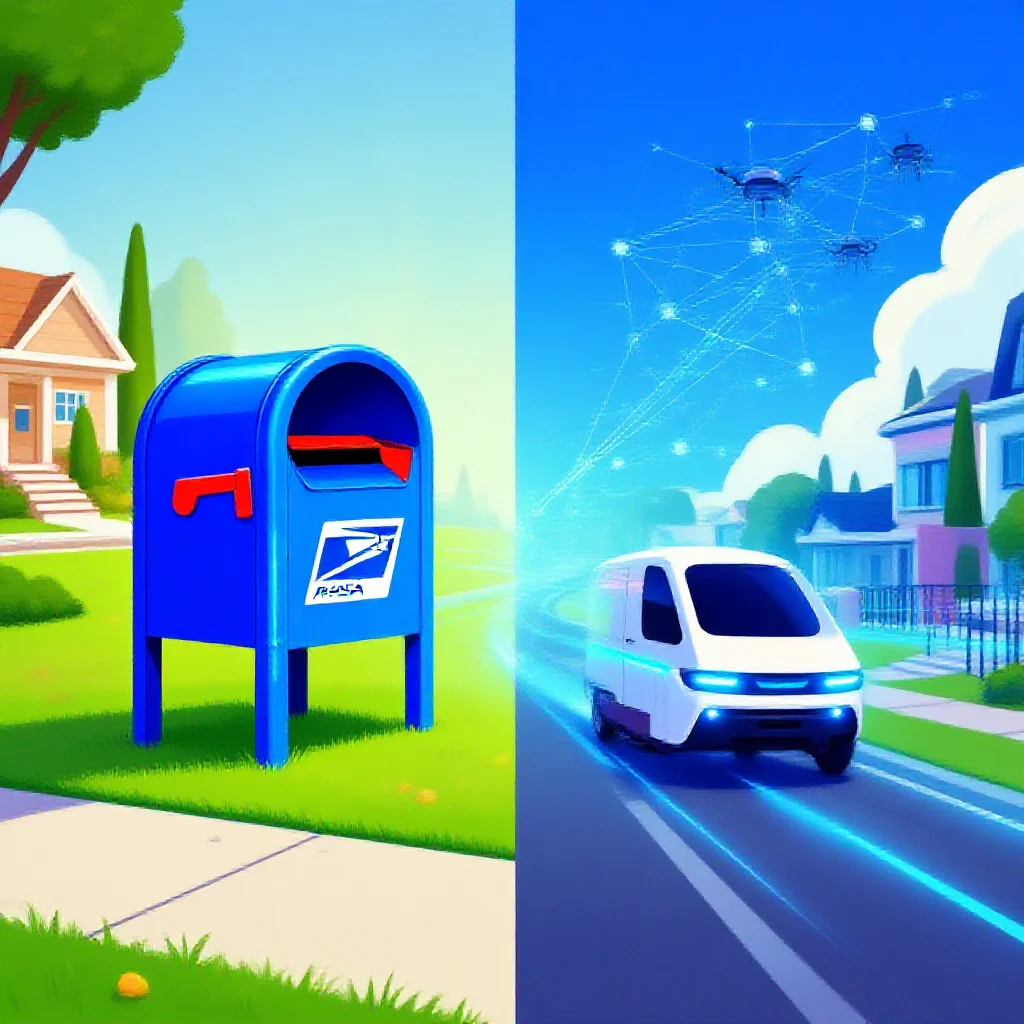
"Amazon's new contract with the USPS, involving a 20% reduction in package"
Beyond the 20% Cut: Decoding Amazon's Strategic Shift Away from USPS
The Surface-Level Fact: A Simple Volume Reduction
Amazon has signed a new delivery contract with the United States Postal Service (USPS). The core operational change is a reduction in package volume by approximately 20% compared to the previous agreement. (Source 1: [Primary Data])
Historically, the USPS served as a critical, flexible partner for Amazon, particularly for managing surges during peak holiday seasons and for reaching remote, rural delivery zones where private carrier density is low. The partnership was mutually beneficial: Amazon gained extensive last-mile reach, and the USPS secured a vital revenue stream to offset declines in first-class mail.
Initial industry analysis framed the volume reduction as a straightforward operational efficiency play or a potential response to service performance metrics. A cost-saving interpretation aligns with standard corporate procurement behavior. The 20% figure presents a tangible, quantifiable adjustment to a significant commercial relationship.
The Hidden Economic Logic: From Partner to Controlled Asset
The volume reduction transcends simple cost calculus. The strategic pivot is a direct investment in Amazon’s proprietary logistics network, comprising Amazon Logistics, its growing air cargo fleet, and the network of Delivery Service Partners (DSPs).
The economic logic shifts from evaluating postage rates to calculating the premium of control. Outsourcing to the USPS offers variable cost structure and national reach but cedes control over the final customer interaction, delivery speed, and brand experience. In-sourcing through owned and contracted assets, while capital-intensive, allows for tighter integration, process innovation, and service customization.
A critical, often unreported factor is data sovereignty. Every package delivered by an Amazon-branded van or DSP generates a continuous stream of granular operational data—from route efficiency and driver behavior to precise geolocation and delivery confirmation patterns. This data is instrumental in training algorithms, optimizing networks, and predicting demand. Sharing the last mile with the USPS inherently limits Amazon’s access to this proprietary data stream, creating a strategic liability in a data-driven competitive landscape.
The Deep Audit: Ripple Effects Across the Ecosystem
The contractual shift creates immediate ripple effects across the logistics and delivery ecosystem.
For the USPS, the reduction represents a non-trivial financial impact. The agency has come to rely on package delivery, particularly from e-commerce, as a growth segment to counter declining mail volume. This loss of volume from a top customer will pressure the USPS to seek alternative e-commerce clients, adjust its operational cost structure, or potentially advocate for different rate models to maintain financial stability.
The move sends a complex signal to competitors like UPS and FedEx. On one level, it confirms Amazon’s trajectory as a formidable, scaled competitor in parcel delivery. On another, it may temporarily alter the dynamics of Amazon’s remaining partnerships with these carriers, as displaced volume from USPS could be reallocated, changing negotiation leverage. The long-term trend, however, points toward Amazon systematically reducing reliance on all third-party national carriers.
The underlying supply chain transformation is accelerated by this decision. Amazon’s strategy is evolving toward a hyper-regionalized, automated fulfillment model. By placing inventory closer to population centers in a dense network of fulfillment and sortation centers, the need for long-haul transportation through national networks diminishes. The reduced dependence on the USPS is a symptom of this broader shift, where speed is engineered through proximity and controlled assets, not through partnerships with national infrastructure.
The Unreported Entry Point: The Long-Term Endgame for 'Logistics as a Service'
The strategic deduction points toward a long-term endgame that redefines Amazon’s market position. The systematic build-out of a massive, technologically advanced logistics network creates inherent excess capacity. The logical monetization path for this capacity is to offer logistics-as-a-service (LaaS) to other retailers and businesses.
This creates a strategic paradox. Amazon utilized public and private partners, including the USPS, to achieve the scale and operational knowledge necessary to build its own network. Having reached a critical mass of volume and capability, it can now withdraw a portion of that volume to fine-tune and create capacity within its own system. This self-sustaining network can then be offered as a competitive service to the very market segments it once relied upon for its own growth.
Evidence for this trajectory exists. Amazon has previously piloted "Shipping with Amazon" services for third-party sellers outside its marketplace. Executive commentary consistently frames the logistics build-out in ambitious, world-class terms, not merely as a cost center for retail operations. The reduction in USPS volume is a calculated step in this continuum, shifting the network’s purpose from supporting internal operations to becoming a optimized, marketable asset itself.
The revised USPS contract is not an endpoint but a waypoint. It marks Amazon’s continued evolution from a retailer that uses logistics to a logistics infrastructure owner that also retails. The control of data, customer experience, and network optimization now outweighs the short-term variable cost benefits of partnership, setting the stage for the next phase of competition in e-commerce fulfillment.
Trade Metrics
Related Datasets
Q4 Cross-Border Logistics Report
PDF • 4.2 MB
Automotive Parts Supply Chain Index
CSV • 1.1 MB