Beyond Screws & Soda: How Ace Hardware''s Uber Eats Deal Redefines Retail''s

Emily Rodriguez
Cross-Border Trade Reporter
April 21, 2026
DATELINE: NA TRADE WIRE
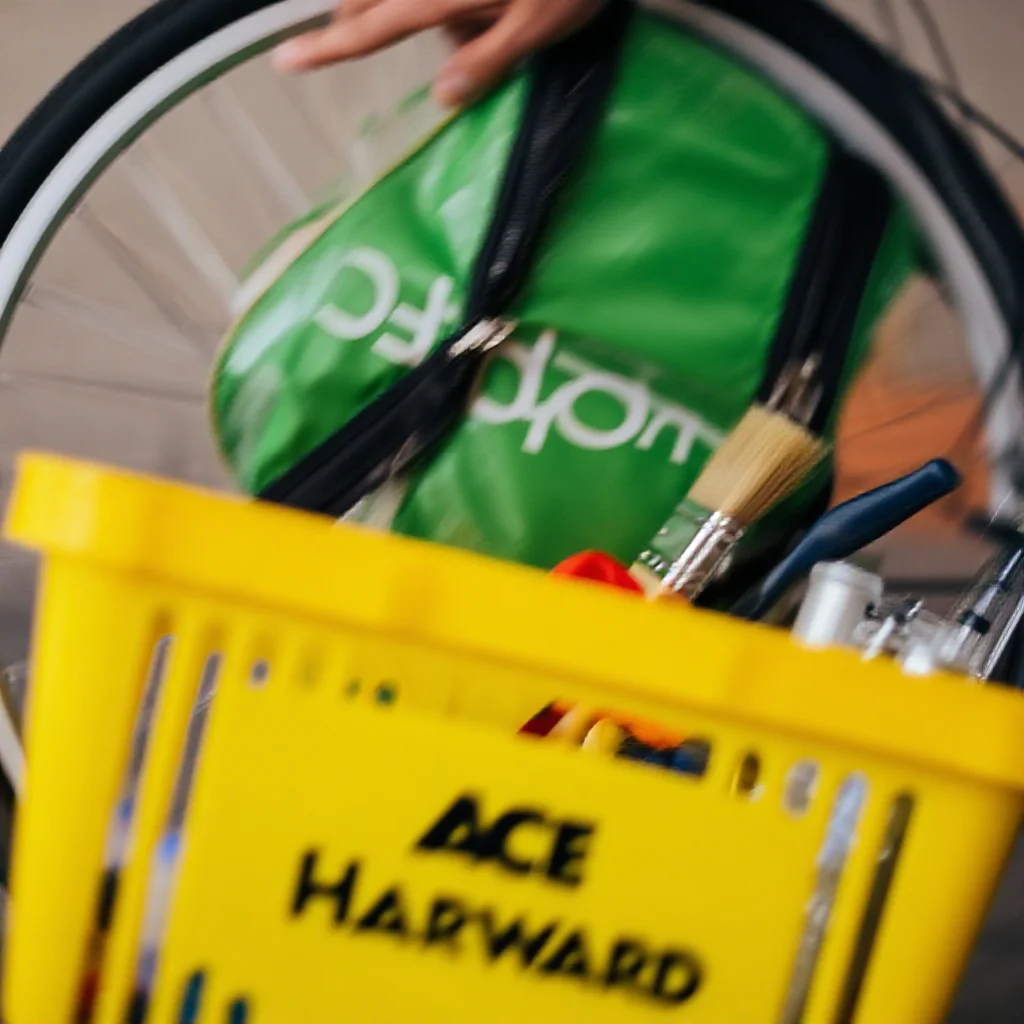
"Ace Hardware''s partnership with Uber Eats, enabling one-hour delivery from"
Beyond Screens & Soda: How Ace Hardware's Uber Eats Deal Redefines Retail's Last-Mile Battle
The Surface Deal: Convenience as a Competitive Edge
Ace Hardware has announced a partnership with Uber Eats to provide one-hour delivery from over 800 of its U.S. stores (Source 1: [Primary Data]). Customers can now order essential hardware, paint, and garden supplies directly through the Uber Eats application interface. The operational promise is immediate access, positioning the cooperative’s neighborhood stores against the vast selection of big-box retailers by competing on speed rather than inventory breadth. This move transforms a traditional retail transaction into an on-demand service, directly addressing the consumer expectation for instant gratification that has been established by digital commerce giants.
The Hidden Economic Logic: Asset-Light Logistics & Monetizing Footprint
The partnership’s strategic significance lies beneath its convenience layer. It represents a calculated shift toward an asset-light logistics model. By utilizing its existing network of approximately 5,000 stores as a distributed micro-fulfillment network, Ace Hardware bypasses the need for massive capital investment in dedicated, automated e-commerce fulfillment centers—a cost that can reach billions for competitors. This approach monetizes previously idle store capacity, converting slow hours and underutilized staff into revenue-generating delivery hubs. Furthermore, it shifts fixed logistics costs to Uber’s variable, on-demand platform. This variable cost structure provides superior margin flexibility, as delivery capacity scales precisely with demand rather than requiring fixed investment in vehicles and dedicated drivers.
The Strategic Deep Dive: Redefining the 'Store' in an On-Demand Era
This initiative signals a fundamental evolution in the primary function of brick-and-mortar retail. The store is no longer merely a showroom or a bulk purchase destination; it is now a hyper-local micro-fulfillment center. This redefinition creates a new competitive battleground focused on "instant gratification," allowing Ace to counter Amazon’s same-day delivery and The Home Depot’s Pro-focused delivery services with a uniquely decentralized model. A critical, often overlooked byproduct is data generation. The partnership provides Ace with real-time, granular data on local demand patterns, enabling more precise inventory management and merchandising decisions at the individual store level. This data advantage mirrors strategies observed in other retail sectors, such as convenience stores partnering with delivery platforms, where store-level sales velocity data becomes a key strategic asset.
Broader Implications & Unanswered Questions
The Ace-Uber Eats model has ripple effects beyond the partnership. Supply chains may adapt to support increased frequency of smaller, more localized distributor-to-store shipments to keep micro-fulfillment centers stocked for on-demand demand. Significant questions remain unresolved. The labor model is dual-faceted: store associates’ roles expand to include picking and packing, while gig economy drivers face the unique challenge of delivering potentially bulky, heavy, or hazardous hardware items. The model’s scalability is inherently limited by product category; it is optimized for emergency or small-project items like light bulbs and fasteners, not lumber or appliances. Nevertheless, it provides a viable blueprint for other specialty and neighborhood retailers to leverage their physical footprints as a last-mile advantage without the prohibitive cost of building their own delivery infrastructure. The long-term strategic risk involves ceding direct customer data and relationship control to a third-party platform, potentially turning retailers into commoditized inventory nodes within a broader on-demand ecosystem.
Conclusion: A Pivot Point in Retail Logistics
The Ace Hardware and Uber Eats partnership is a definitive pivot in retail strategy. It demonstrates how traditional retailers can weaponize their existing physical assets to compete in the last-mile logistics war. The model’s economic logic—avoiding fixed infrastructure costs, monetizing underutilized capacity, and adopting a variable cost service layer—is compelling for a sector under continuous margin pressure. While operational challenges persist, the move validates the store-as-fulfillment-center thesis and accelerates a broader industry trend toward hybrid, asset-light logistics networks. The competitive response from large-scale retailers and the evolution of platform-retailer power dynamics will define the next phase of this strategic realignment.
Trade Metrics
Related Datasets
Q4 Cross-Border Logistics Report
PDF • 4.2 MB
Automotive Parts Supply Chain Index
CSV • 1.1 MB