21 Air''s 777 Ambition: A Strategic Pivot in the U.S. Cargo Airline Landscape

Emily Rodriguez
Cross-Border Trade Reporter
April 13, 2026
DATELINE: NA TRADE WIRE
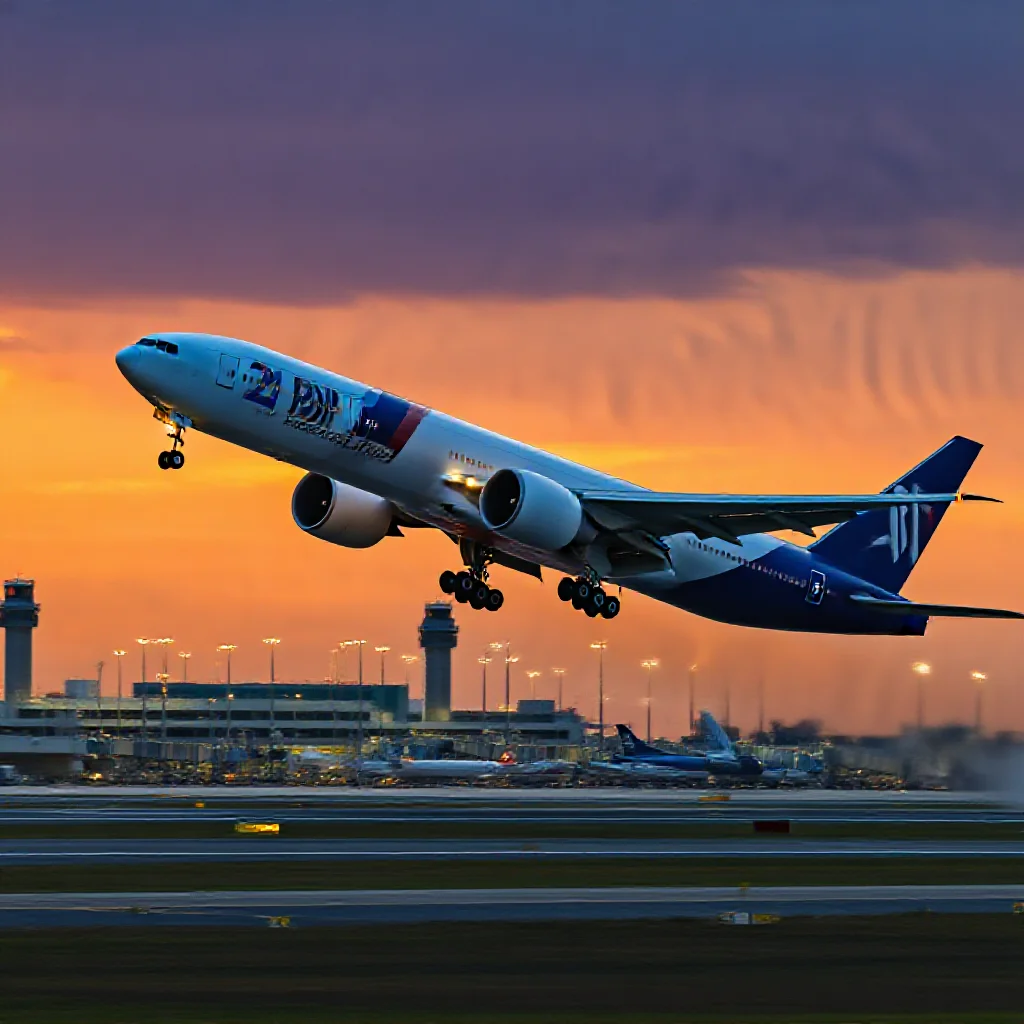
"U.S. all-cargo carrier 21 Air's consideration of Boeing 777 freighters signals"
21 Air's 777 Ambition: A Strategic Pivot in the U.S. Cargo Airline Landscape
Opening Summary: U.S. all-cargo carrier 21 Air, an operator of Boeing 767 converted freighters, is evaluating the acquisition of Boeing 777 freighters. This consideration represents a potential strategic shift from a mid-range cargo specialist to a competitor in the long-haul, heavy-lift air freight market. The move is predicated on the 777 freighter's significantly greater payload and range capabilities compared to the 767 platform.
Beyond the Headline: The Strategic Calculus of a Fleet Upgrade
The transition from the Boeing 767 to the 777 freighter is not a linear fleet expansion but a fundamental alteration of business model and addressable market. The Boeing 767-300F, a mainstay for regional and mid-range operations, offers a payload of approximately 52.7 tonnes and a range of 3,255 nautical miles. In contrast, the Boeing 777F provides a payload of 102 tonnes and a range of 4,970 nautical miles (Source 1: Boeing Commercial Airplanes specifications). This represents a near-doubling of lift capacity and a 50% increase in operational reach.
The upgrade analysis must therefore move beyond simple capacity addition. It is a competitive response to evolving market architecture, where shippers increasingly demand point-to-point, long-range solutions for high-value and time-sensitive goods. For a mid-size operator like 21 Air, the core strategic question is whether this move constitutes an aggressive play for new market share, a defensive maneuver for long-term survival, or a calculated repositioning within a stratified industry. The economics shift from optimizing cost-per-tonne over shorter stages to maximizing revenue potential on intercontinental lanes.
Image Suggestion: An infographic comparing key specs: Boeing 767-300F vs. Boeing 777F (payload, range, cube, typical operating cost).
The Long-Haul Gambit: Accessing a Crowded and Capital-Intensive Arena
Entering the long-haul freighter market means competing in an arena with entrenched, capital-rich incumbents. The landscape is dominated by integrated express carriers (FedEx, UPS) operating large 777 and 747-8F fleets for their proprietary networks, and by global pure-play cargo airlines (Atlas Air, Cargolux, AirBridgeCargo) with established customer bases and route authorities.
The 777F would allow 21 Air to target specific long-haul trade lanes, such as transpacific routes from Asia to the U.S. East Coast or connectivity between Europe and South America. However, these lanes are characterized by volatile yields and intense competition. The financial hurdles are substantial. The capital outlay for a new-production 777F is multiples that of a converted 767. Furthermore, operational scaling requires significant investment in corresponding ground handling infrastructure for the larger aircraft, international operational certifications, and the recruitment and training of flight crews qualified on the 777 type-rating—a scarce and expensive resource.
Image Suggestion: A world map highlighting primary long-haul air cargo trade lanes, with icons showing dominant carrier types on each route.
The Hidden Driver: Supply Chain Evolution and the Niche Carrier's Dilemma
The fleet consideration is inextricably linked to deeper structural shifts in global supply chains. The growth of e-commerce, demand for pharmaceutical transport, and the need for resilience have increased requirements for dedicated, long-range cargo capacity that can bypass congested hubs. The 777F’s capability to carry outsized cargo further opens niche project logistics markets.
This suggests 21 Air’s strategy may not be a direct assault on market leaders. A more plausible objective is to position the airline as a strategic "capacity partner" for larger integrators or freight forwarders, providing supplemental lift during peak seasons or on specific, underserved lanes. This charter-oriented model mitigates some commercial risk but creates dependency on a small number of large clients. The critical calculation involves the risk of abandoning the proven 767 niche—a highly efficient and versatile mid-range workhorse—for a more competitive and costly segment. The sustainability of another 777 operator depends on its ability to secure a defensible, long-term utilization profile that the incumbents do not fully serve.
Image Suggestion: A conceptual image showing a large freighter aircraft connected to a glowing, complex network of global supply chain nodes and data flows.
Verification and Context: Sourcing the Strategy
The analysis of 21 Air’s potential pivot is grounded in verifiable industry data and economic logic. The performance differentials between the 767 and 777 freighters are matters of public record from manufacturer specifications. Industry analyses, such as those published by the International Air Transport Association (IATA) on cargo demand and Boeing’s annual World Air Cargo Forecast, consistently highlight the growing demand for long-haul freighter capacity, particularly in the express and e-commerce sectors, while also noting the high barriers to entry.
The strategic move aligns with observable patterns where mid-tier operators face consolidation pressure and must either specialize intensely in a regional niche or secure the assets required to compete on a broader stage. The decision to pursue 777s indicates a judgment that the latter path offers a more viable future, contingent on securing the necessary capital and commercial agreements.
Market Prediction: The success of 21 Air’s strategic pivot will be determined by three factors: the structuring of aircraft financing in a high-interest-rate environment, the securing of long-term capacity purchase agreements or block-space agreements with anchor clients, and the management of operational scale-up risks. If executed, it will signal a further bifurcation in the cargo airline sector between large global operators and highly specialized regional carriers, with diminishing space for midsize players without a clear, asset-driven competitive advantage. The move underscores the relentless capital intensity and strategic precision required to navigate the modern air cargo landscape.
Trade Metrics
Related Datasets
Q4 Cross-Border Logistics Report
PDF • 4.2 MB
Automotive Parts Supply Chain Index
CSV • 1.1 MB